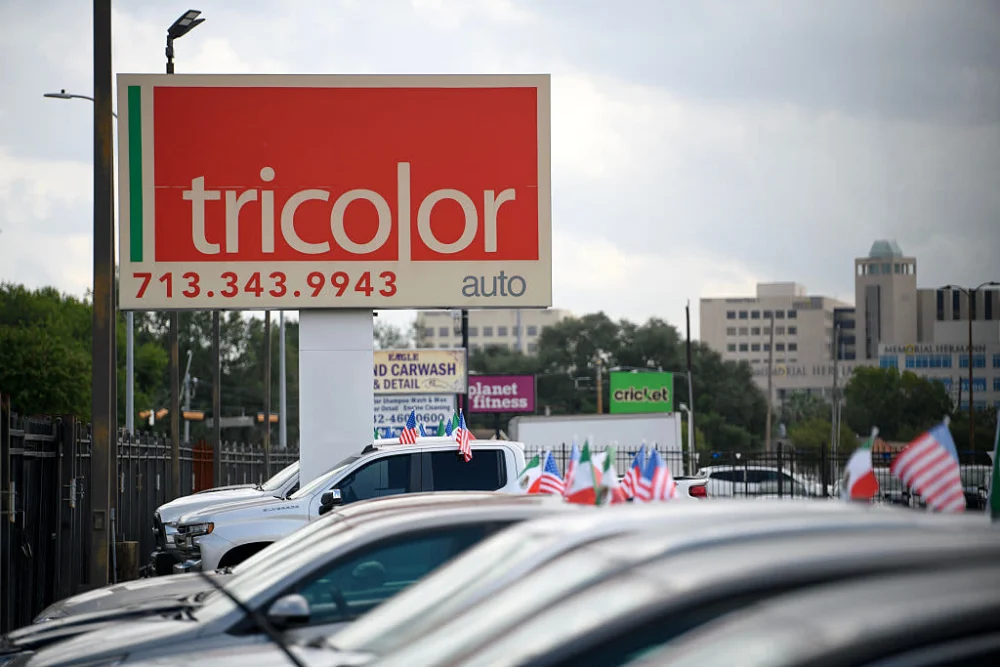
The rapid disintegration of Tricolor, once a prominent player in the subprime automotive lending sector, has transitioned from a standard corporate insolvency into a high-stakes federal criminal investigation. At the center of the controversy is Daniel Chu, the company’s founder and former Chief Executive Officer, who is now facing allegations of orchestrating a massive, multi-year fraudulent scheme that siphoned hundreds of millions of dollars from the American financial system. According to a recently unsealed federal indictment, Chu secured a personal windfall of $6.25 million in bonuses just weeks before the company’s spectacular collapse, even as he reportedly acknowledged in private that the firm’s future was non-existent.
The timing of these payments has drawn sharp scrutiny from federal prosecutors. On August 19 and 20, 2025, at a time when the company’s internal stability was allegedly a fiction maintained by manipulated data, Chu reportedly directed his Chief Financial Officer, Jerome Kollar, to expedite the final two installments of a $15 million annual bonus package. This transfer occurred as the company was teetering on the edge of a liquidity abyss. Within days of receiving the funds, Chu allegedly utilized the capital to acquire a multimillion-dollar luxury estate in Beverly Hills, California. The optics of this acquisition were particularly jarring given that, almost simultaneously, Tricolor placed more than 1,000 of its employees on unpaid leave, signaling the end of the company’s operations. By September 10, the firm had officially filed for Chapter 11 bankruptcy protection.
The Mechanics of a Seven-Year Deception
The federal indictment paints a picture of "systemic fraud" that began as early as 2018 and persisted through the company’s demise in 2025. Prosecutors allege that Tricolor, under Chu’s direct supervision, manufactured approximately $800 million in "bogus collateral." The methods described in the filing involve a sophisticated blend of accounting manipulation and asset double-pledging. In one of the more egregious examples of the alleged scheme, employees were reportedly instructed to manually alter internal records to make delinquent or non-performing loans appear as though they were current and eligible to serve as collateral for new lines of credit.
Double-pledging, a practice where the same underlying asset is used to secure multiple loans from different lenders, is a hallmark of financial fraud that often remains hidden until a liquidity crunch forces a reconciliation of accounts. In the case of Tricolor, this allowed the company to maintain an appearance of robust growth and high-quality assets while its actual financial health was deteriorating. The $800 million in phantom collateral acted as the foundation for a house of cards that eventually became too heavy to support itself, especially as interest rates and shifting market dynamics in 2025 put increased pressure on subprime lenders.
Banking Sector Contagion and Systemic Risk
The fallout from Tricolor’s collapse has not been contained within the automotive sector. Instead, it has sent shockwaves through the broader U.S. banking industry, highlighting the "underappreciated risks" inherent in the relationships between traditional banks and non-bank financial institutions (NBFIs). While the indictment did not explicitly name all the institutions involved, several of the world’s largest financial entities have already disclosed significant hits to their balance sheets tied to Tricolor’s default.
JPMorgan Chase, Barclays, and Fifth Third Bank have all publicly acknowledged exposure to the borrower, reporting charges that underscore the scale of the alleged deception. This incident has reignited a fierce debate among regulators and economists regarding the oversight of "shadow banking" entities. Unlike traditional depository institutions, firms like Tricolor often operate with less stringent capital requirements and less frequent regulatory examinations, creating blind spots where fraudulent activity can fester for years. Market analysts suggest that the Tricolor case may serve as a catalyst for more aggressive federal oversight of subprime lenders, particularly those that package their loans into asset-backed securities (ABS).
The Enron Comparison and Corporate Culture
Perhaps the most damaging evidence presented by prosecutors involves "secretly recorded" conversations from August 2025. In these recordings, Chu, Kollar, and the company’s Chief Operating Officer allegedly discussed desperate strategies to keep their lenders at bay. In a moment of startling candor, Chu reportedly compared the situation at Tricolor to that of Enron, the energy giant whose 2001 collapse remains the definitive example of corporate accounting fraud.
"Enron obviously has a nice ring to it, right?" Chu reportedly said during one of the calls. "I mean, Enron, Enron raises the blood pressure of the lender when they see that." The comparison was not merely rhetorical; Chu allegedly considered using the threat of an Enron-style scandal as leverage to extract settlements from banks, essentially blaming the lenders for failing to spot the "red flags" that he and his team had allegedly worked so hard to conceal.
This "blame-the-victim" strategy extended to other areas as well. When confronted by lenders regarding the discrepancies in their collateral pools, Chu reportedly suggested a fabrication: that the manipulated data was actually a result of administrative complexities related to a federal loan deferment program. This willingness to weaponize government policy and use the company’s own history of fraud as a bargaining chip suggests a corporate culture that had completely decoupled from ethical and legal norms.
Impact on the Subprime Auto Market
The collapse of Tricolor is more than just a story of executive greed; it is a symptom of broader vulnerabilities in the subprime auto market. For much of the last decade, subprime auto lending has been a high-yield darling for investors, driven by the increasing price of vehicles and a lack of alternative credit options for low-income borrowers. Tricolor specifically marketed itself as a solution for the "underserved" Hispanic community, often providing loans to individuals with little to no credit history.
However, the economic environment of late 2024 and early 2025, characterized by persistent inflation and a cooling labor market, began to expose the fragility of these loans. As delinquency rates rose across the industry, firms like Tricolor found it increasingly difficult to mask their losses. When a company relies on fraudulent collateral to bridge the gap between actual performance and investor expectations, a market downturn becomes a death sentence.
The human cost of this failure is significant. Beyond the 1,000 employees who lost their livelihoods without warning, thousands of borrowers now face uncertainty regarding their vehicle titles and the servicing of their loans. If the underlying collateral was double-pledged, the legal battle over who actually owns the debt—and the cars themselves—could take years to resolve in bankruptcy court, leaving vulnerable consumers caught in the crossfire.
Legal and Regulatory Repercussions
As the criminal case against Daniel Chu and his deputies moves forward, the legal community is watching closely. The charges of "systemic fraud" carry the potential for decades of prison time and massive financial restitution orders. Legal experts note that the use of wiretaps and recorded conversations provides prosecutors with a powerful "smoking gun" that is often missing in complex white-collar cases.
Furthermore, the Securities and Exchange Commission (SEC) and the Consumer Financial Protection Bureau (CFPB) are expected to launch their own investigations into the matter. The focus will likely be on whether Tricolor’s disclosures to investors in its asset-backed securities were intentionally misleading. If it is proven that the company sold bonds backed by "bogus collateral," it could trigger a wave of litigation from institutional investors who purchased those securities under false pretenses.
In the wider economic context, the Tricolor scandal is being viewed as a cautionary tale about the dangers of unchecked growth in the NBFI sector. While these firms provide essential credit to segments of the population that traditional banks often ignore, the lack of transparency can lead to catastrophic outcomes when leadership chooses to bypass the law. As the U.S. financial system continues to grapple with the aftermath of this collapse, the "Enron of the auto world" may well become a case study in the necessity of rigorous, proactive financial regulation.
The case against Chu remains in its early stages, and his legal representatives have yet to provide a comprehensive response to the specific allegations contained in the indictment. However, the details already made public suggest a calculated effort to prioritize executive wealth over the survival of the company and the well-being of its stakeholders. In the end, the $6.25 million bonus may be remembered not as a reward for success, but as the final act of a multi-million dollar deception that left a trail of financial destruction in its wake.