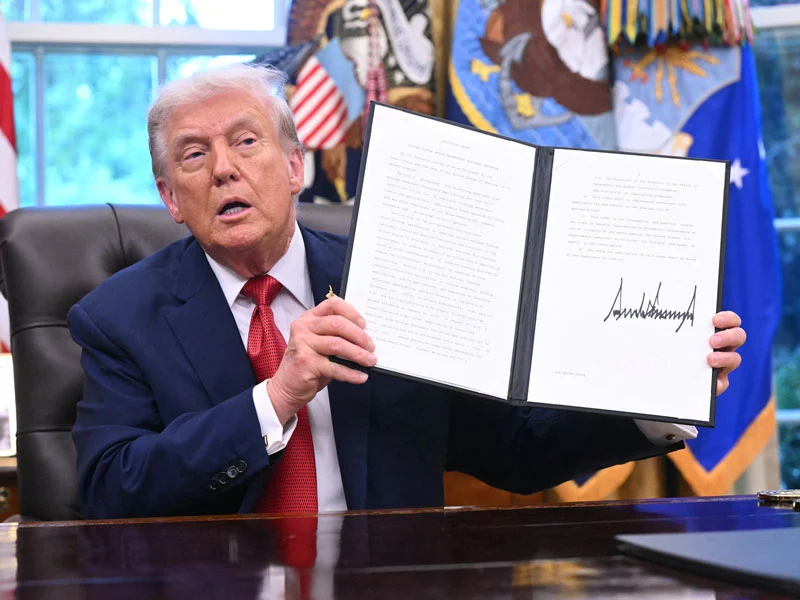
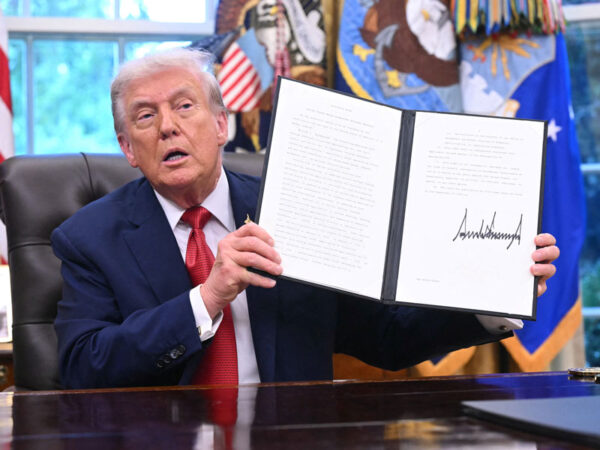
Following an extended period of intense geopolitical scrutiny, regulatory hurdles, and multiple deadline extensions, a significant shift in the ownership structure of the popular social media platform TikTok has been mandated by U.S. authorities. While the executive order signals a move towards American control, a closer examination reveals that Beijing may retain considerable influence, potentially transforming this divestiture into a strategic victory for China. The agreement, struck after years of diplomatic tension and legal challenges, ostensibly aims to address U.S. national security concerns by separating the platform’s operations from its Chinese parent company, ByteDance. However, the intricate details of the deal suggest a more nuanced outcome, one where underlying technological control, particularly over the core recommendation algorithms, remains a potent lever for Beijing.
On the surface, the proposed arrangement appears to satisfy many of the U.S. government’s demands. Oracle, a prominent American technology firm, along with a consortium of U.S. investors, is set to acquire an 80% stake in a newly formed U.S. entity responsible for managing TikTok’s operations within the United States. A cornerstone of this agreement is the commitment to house all U.S. user data on Oracle’s secure servers located in Texas, a move designed to allay fears of unauthorized access by the Chinese government. Furthermore, the new American company is expected to license TikTok’s highly coveted recommendation algorithms and retrain them using exclusively U.S. user data. The governance structure also emphasizes American oversight, with six out of seven board seats in the new entity designated for U.S. nationals. The deal is further sweetened by a substantial financial contribution from the investors, essentially a payment to the U.S. administration for facilitating the resolution. This framework seemingly addresses immediate security anxieties and positions the platform as an American enterprise.
However, a deeper dive into the ownership and operational intricacies reveals a less straightforward picture. Global investors already hold a significant portion, approximately 60%, of ByteDance, TikTok’s parent company. An additional 20% is owned by ByteDance’s founders, with employees holding the remaining 20%. The new structure, therefore, elevates U.S. ownership of the American operational arm to 80%, but it leaves ByteDance with a substantial, albeit reduced, stake of just under 20%. This makes ByteDance the single largest shareholder in the U.S. entity, a fact that cannot be overlooked. More critically, the intellectual property that underpins TikTok’s powerful recommendation engine remains firmly within ByteDance’s control. The U.S. investors and Oracle are not acquiring the core technology outright; instead, they are being granted a license to use it.
This licensing arrangement presents a fundamental challenge. Algorithms, particularly those powering sophisticated social media platforms, are not static assets. Unlike tangible property, their efficacy and relevance are contingent upon continuous development, refinement, and substantial ongoing engineering support. Oracle may gain access to the algorithm’s code and be permitted to adapt it using American data, but the inherent dynamism of these systems means that the U.S. entity will remain dependent on China for periodic updates and improvements. This dependency raises critical questions regarding the U.S. entity’s ability to receive these updates, its capacity to meaningfully monitor and audit them, and the transparency surrounding their development. The very essence of what makes an algorithm potent lies not only in its architectural design but also in the vast and diverse datasets upon which it is trained. By restricting the U.S. version to American user data, Oracle’s retrained algorithm may be deprived of the comprehensive global dataset that currently fuels ByteDance’s cutting-edge models, potentially leading to a less competitive or sophisticated recommendation system.
From a diplomatic perspective, China holds significant leverage through its control over the export of sensitive technologies. Since 2020, China has classified personalized recommendation algorithms as strategic technology subject to its export-control regulations. This classification means that any transfer of updates or enhancements to TikTok’s algorithm requires explicit approval from the Chinese government. Consequently, Beijing can wield TikTok as a diplomatic tool, potentially delaying or withholding licensing approvals in response to broader geopolitical tensions. Issues ranging from cross-strait relations and trade disputes to international conflicts and semiconductor export restrictions could become bargaining chips, with TikTok’s algorithmic updates held hostage. This transforms the platform into a potent instrument of Chinese statecraft, capable of influencing international relations beyond its immediate commercial operations.
U.S. investors involved in the new TikTok entity must therefore prepare for a landscape characterized by heightened uncertainty. The agreement, rather than definitively transferring control from Chinese to American hands, effectively substitutes one form of dependence for another. While the daily oversight of content recommendations may shift to Oracle, mitigating the most immediate security concerns for the U.S. government, China’s residual control over the algorithms persists. Beijing retains the prerogative to define the scope of the license, dictate the frequency of necessary updates, and determine whether the U.S. version can maintain parity with its global counterpart. This arrangement, far from diminishing China’s influence, risks solidifying its technological hold.
The fear of Chinese access to sensitive U.S. user data or direct algorithmic manipulation may recede with this agreement. However, it is replaced by a more subtle yet enduring risk: technological dependence on China, which maintains a critical chokehold over TikTok’s powerful recommendation engine. The U.S. administration has, in essence, traded one vulnerability for another. Paradoxically, a less competitive or potent version of TikTok operating in the U.S. might not be entirely detrimental from certain perspectives. Some analysts suggest that a less addictive platform could ultimately benefit American teenagers, potentially leading to improved digital well-being, even if users themselves are not consciously aware of this outcome. This nuanced outcome underscores the complex interplay of technology, economics, and geopolitics in the digital age, where even seemingly decisive regulatory actions can harbor unforeseen strategic implications. The global digital economy continues to grapple with these challenges, as national security imperatives clash with the interconnected nature of technological development and international commerce. The TikTok saga serves as a potent case study in this ongoing struggle, highlighting the enduring power of technological sovereignty and the intricate dance of influence in the global marketplace.