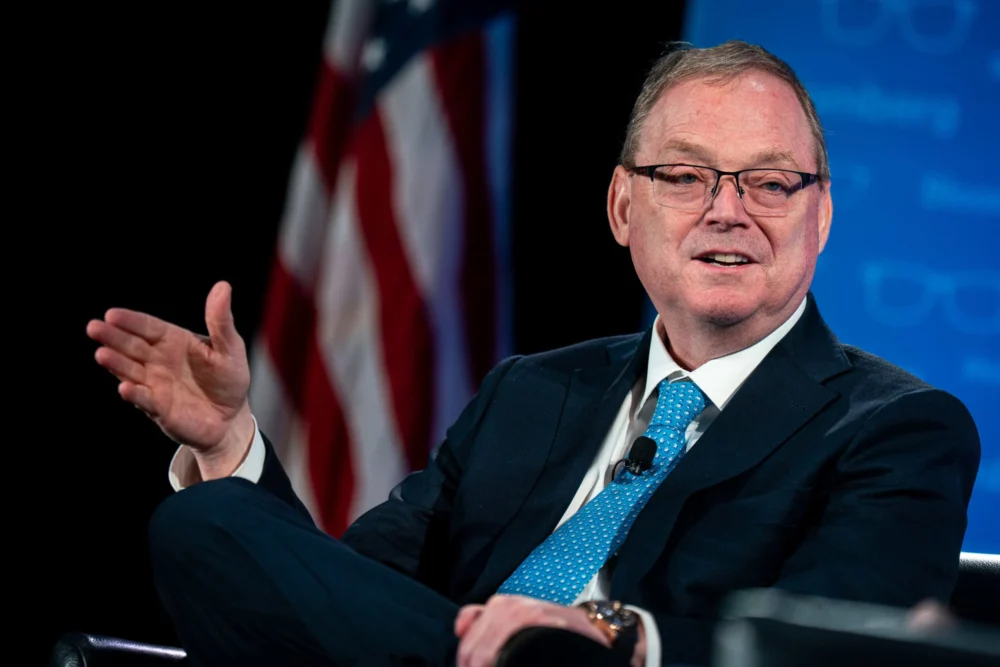
In a significant recalibration of its approach to the American financial sector, the White House has signaled a pivot from mandatory interest rate caps toward a collaborative, voluntary model aimed at expanding credit access for the nation’s "underbanked" population. Kevin Hassett, the Director of the National Economic Council, recently unveiled a vision for what the administration is calling "Trump cards"—specialized credit products designed by major financial institutions to serve Americans who possess stable incomes but remain excluded from traditional revolving credit markets. This strategic shift arrives after a period of intense friction between the executive branch and Wall Street’s largest lenders over the feasibility of a hard 10% ceiling on credit card interest rates.
The genesis of this policy evolution lies in a bold populist proposal issued just weeks ago, in which the administration called for a universal 10% cap on credit card APRs. In an era where the average credit card interest rate in the United States hovers between 21% and 25%, such a mandate would have represented the most aggressive federal intervention in consumer lending since the passage of the Credit CARD Act of 2009. However, the proposal was met with immediate and uniform resistance from the banking industry. Industry lobbyists and CEOs from institutions such as JPMorgan Chase, Bank of America, and Citigroup warned that a 10% cap would not merely reduce profits but would fundamentally break the risk-pricing model of unsecured lending. Bankers argued that because credit cards are unsecured—meaning they are not backed by collateral like a home or a car—the higher interest rates are necessary to offset the inherent risk of default.
Faced with the prospect of a protracted legal and legislative battle, and the very real threat that banks would respond to a rate cap by mass-canceling accounts for millions of middle-class consumers, the National Economic Council appears to be seeking a middle ground. Hassett’s recent communications suggest that the administration is now focusing its energy on a "sweet spot" of the American demographic: individuals who have the financial stability and income to handle debt but lack the established credit history or "leverage" required to qualify for premium financial products. By encouraging banks to "voluntarily" issue these new cards, the administration hopes to bypass the need for a divided Congress to pass new usury laws while still delivering a tangible win for consumer affordability.
The economic logic behind the "Trump card" concept rests on the premise that a significant portion of the American public is "thin-filed" rather than "high-risk." According to data from the Federal Deposit Insurance Corporation (FDIC), approximately 4.5% of U.S. households—representing roughly 5.9 million homes—are "unbanked," meaning no one in the household has a checking or savings account. A much larger segment is considered "underbanked," relying on alternative financial services like payday loans and check-cashing stores despite having traditional bank accounts. For these consumers, the barrier to credit is often not a lack of income, but a lack of visibility within the traditional FICO scoring systems. Hassett’s proposal suggests that if banks use alternative data—such as rent payments, utility bills, and consistent employment records—they could safely extend credit to these populations at rates lower than the current market average, even if they don’t reach the elusive 10% mark.
However, the transition from a mandatory cap to a voluntary "Trump card" program raises complex questions about the relationship between the federal government and the private banking sector. While Hassett expressed confidence that major CEOs are "onto something" and may be willing to cooperate, the banking industry’s initial reaction has been one of cautious silence. Representatives from several major card issuers have privately noted that they have yet to see a formal framework for how such a voluntary program would work. The tension lies in the fiduciary duty banks owe to their shareholders. If a "Trump card" is offered at a rate significantly below the market average for a specific risk profile, it could be viewed as a subsidized product that dilutes earnings.

From a global perspective, the United States remains an outlier in its approach to interest rate regulation. In many European Union member states, usury laws are strictly enforced, with caps often tied to a multiple of the central bank’s base rate. In the United Kingdom, the Financial Conduct Authority (FCA) does not set a hard cap on interest rates but imposes strict "affordability assessments" that limit the total cost of credit for high-cost short-term loans. The Japanese market, conversely, saw a massive contraction in consumer lending after the government lowered the maximum interest rate to 20% in 2006, leading many smaller lenders to exit the market entirely. These international examples serve as a cautionary tale for U.S. policymakers: while caps can protect consumers from predatory lending, they can also inadvertently dry up the supply of credit, pushing the most vulnerable borrowers toward the unregulated "shadow banking" sector.
The current economic environment adds another layer of difficulty to the administration’s goals. With the Federal Reserve maintaining a "higher-for-longer" stance on interest rates to combat persistent inflation, the "cost of funds" for banks has risen significantly. When banks themselves must pay 5% or more to borrow money or attract deposits, the margin left over to cover defaults, administrative costs, and profit on a 10% loan is razor-thin. If the administration pushes for a voluntary 10% "Trump card," it may find that banks are only willing to offer it to the most pristine borrowers—those who likely already have access to low-interest credit—thereby failing to reach the underserved populations Hassett identified.
Market analysts suggest that the "Trump card" pivot may be as much about political signaling as it is about economic reform. By framing the initiative as a voluntary partnership, the administration avoids the "anti-business" label that often accompanies price controls, while still maintaining pressure on Wall Street to address the cost-of-living crisis. For the banks, participating in such a program could serve as a strategic olive branch, potentially staving off more heavy-handed regulations or antitrust scrutiny in other areas of their operations.
The potential impact on consumer spending cannot be overstated. Credit card debt in the United States recently surpassed $1.1 trillion, a record high that reflects both the resilience of American consumers and the growing pressure of inflation. If the "Trump card" initiative succeeds in lowering the cost of debt for even a small percentage of the population, it could provide a meaningful boost to disposable income. Conversely, if the initiative is perceived as a failure or if banks remain recalcitrant, the administration may feel forced to return to its original, more aggressive legislative agenda.
As the National Economic Council moves forward, the focus will likely shift to the technical details of the "Trump card." Will these cards come with federal guarantees? Will there be regulatory incentives, such as Community Reinvestment Act (CRA) credits, for banks that issue them? And perhaps most importantly, how will the administration define "voluntary" in an environment where the executive branch wields significant influence over the banking sector’s regulatory landscape?
For now, the "Trump card" remains a conceptual framework—a tactical retreat from a direct confrontation over interest rate caps in favor of a more nuanced, market-driven approach. It represents a gamble that the prestige of a White House-backed financial product, combined with the untapped potential of the underbanked market, will be enough to entice Wall Street into a deal. Whether the banks will deal themselves in, or fold in the face of political pressure, will be one of the defining economic stories of the coming year. The outcome will not only determine the future of credit access for millions of Americans but will also serve as a litmus test for the administration’s ability to reshape the financial industry through the power of persuasion rather than the force of law.