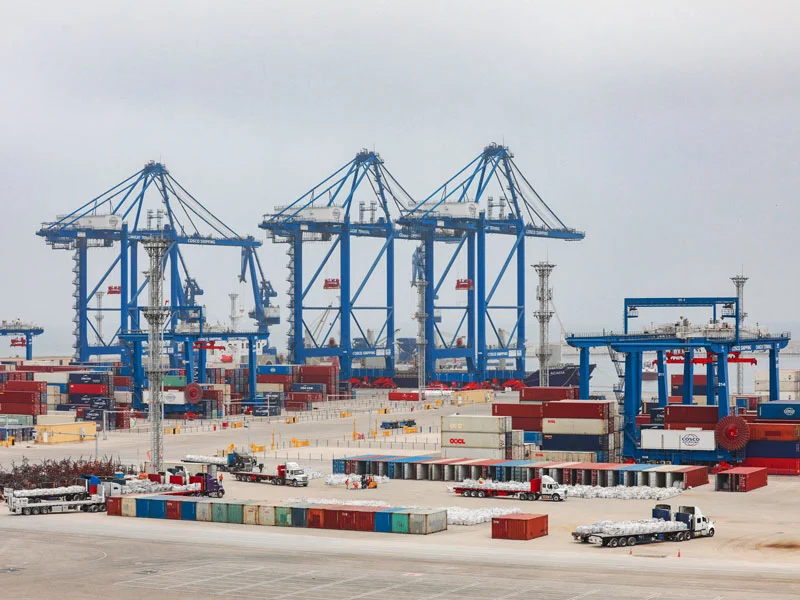
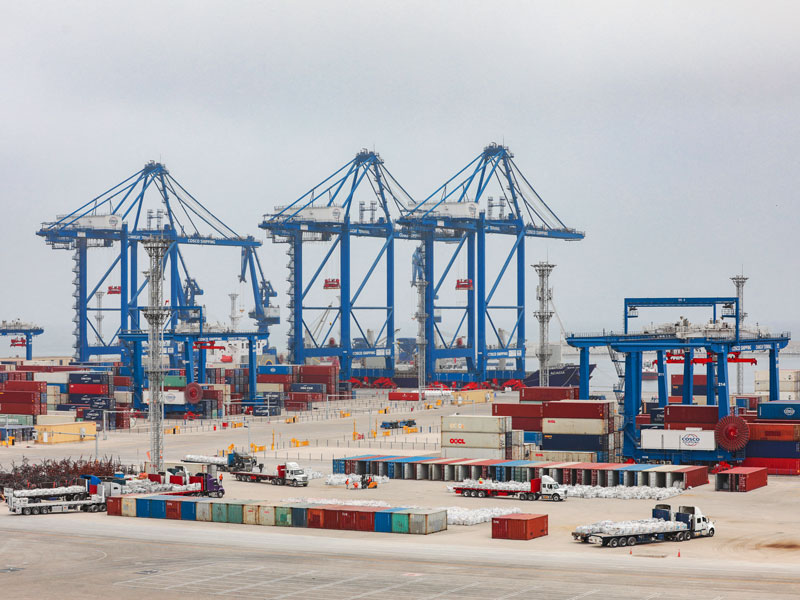
The recent inauguration of Peru’s $3.6 billion Chancay mega-port marks a significant milestone in China’s ambitious global infrastructure initiative, the Belt and Road (B&R) program, and underscores Beijing’s escalating economic influence across Latin America. This colossal undertaking, largely financed and developed by Chinese state-owned entities, exemplifies a strategic approach that yields substantial benefits for China, while raising questions about the long-term economic sovereignty of recipient nations. The Chancay port, for instance, is poised to dramatically reduce shipping times between Latin America and Asia by a fortnight, enabling faster delivery of Chinese manufactured goods, such as electric vehicles, into the region, and facilitating the swift repatriation of raw materials essential for China’s vast industrial base.
Beyond the logistical advantages, the financial architecture of these projects often disproportionately favors Beijing. In the case of Chancay, Chinese state-owned port giant Cosco secured a 60% stake for an investment of approximately $1.6 billion, a fraction of the total project cost. Furthermore, regulatory adjustments by the Peruvian government granted Cosco exclusive rights to utilize the deep-water port for up to six decades. This favorable long-term arrangement was celebrated by President Xi Jinping, who, during the port’s opening ceremony, pledged an additional $9 billion in credit for B&R-aligned projects in Latin America, signaling China’s sustained commitment despite recent economic headwinds. These investments are typically channeled through a multifaceted network comprising policy banks, commercial lenders, state-owned enterprises, sovereign wealth funds, and public-private partnerships, as detailed in a United Nations report.
Historically, B&R-funded projects in Latin America primarily focused on conventional infrastructure development, including roads, railways, airports, dams, and ports. The Chancay port is but one of many facilities that are either wholly owned, partially funded, or operated by Chinese entities. However, Beijing’s strategy has evolved, with Chinese state-controlled conglomerates now venturing into new and technologically advanced sectors. Recent analyses indicate that PowerChina has established a presence in at least eleven Latin American countries, including Peru, where it acquired two electricity suppliers for approximately $3 billion, effectively granting China considerable control over the nation’s power distribution network. Additionally, Chinese companies are actively involved in operating significant renewable energy projects, such as the largest solar plant in Jujuy, Argentina, and a wind farm in Coquimbo, Chile.
The technological reach of Chinese firms extends to high-tech domains like artificial intelligence, smart city development, and 5G telecommunications. Huawei, a prominent Chinese technology giant, has carved out a substantial market share in these emerging sectors. By 2020, the company was reportedly responsible for managing over half of internet connections in Curitiba, Brazil. While Brazil is not formally a participant in the Belt and Road initiative, it has emerged as Beijing’s preeminent trading partner within the region. Tulio Cariello, director of content and research at the Brazil-China Business Council, articulated this alignment by stating, "Even though Brazil is not formally part of the Belt and Road, we are in many ways very much aligned with its spirit. We have been receiving investments in infrastructure for quite some time now – especially in the energy sector – but also in ports, storage, logistics and more." This sentiment reflects a broader regional receptiveness to Chinese investment in areas critical for economic modernization.
In a continent actively seeking foreign capital, Brazil stands as one of twenty nations that have entered into agreements with China, with Colombia being the most recent signatory. Among these, Brazil, Argentina, Peru, Chile, Ecuador, and, most controversially, Venezuela, have engaged deeply with Chinese initiatives. This extensive involvement has drawn considerable criticism from activist organizations, who express concerns about the potential for Beijing to exert undue influence over their nations’ future economic trajectories. China’s investment portfolio in Peru, for example, is extensive, encompassing mining operations, hydropower projects, transmission infrastructure, and significant copper ventures. Discussions are also underway for a trans-continental rail link connecting the Amazon basin – an area where China already holds substantial interests – to the Pacific coast, thereby offering an alternative to the Panama Canal.
Argentina, having received an $18 billion currency swap facility from Chinese banks to alleviate its debt crisis, is also a beneficiary of B&R-financed hydropower dams and space-tracking facilities, the latter of which has raised alarms in the United States. Venezuela, meanwhile, is repaying billions of dollars in debt to China through oil exports, a arrangement that has reportedly had a detrimental impact on its domestic economy. A primary driver for China’s engagement in Latin America remains the region’s abundant critical minerals, particularly the "lithium triangle" encompassing Chile, Argentina, and Bolivia. This strategic interest has fueled domestic criticism regarding the extensive export of raw and rare materials that could potentially be processed and exploited more profitably within the region itself.
The initial phase of the Belt and Road initiative in Latin America saw Chinese officials preferentially engaging with authoritarian or dictatorial regimes, rather than democratically elected, market-oriented governments. Parsifal D’Sola, an expert on China based in Colombia, diplomatically noted that Beijing "has tended to favour state-to-state relations, which facilitates the entry of projects and financing in countries where decision-making is concentrated in a small group and the market plays a secondary role." In contrast, Evan Ellis, a professor of Latin American Studies at the U.S. Army War College Strategic Studies Institute, offers a more direct assessment, suggesting that China acts as "an incubator of populism." He elaborates that while Beijing may not actively seek to foster anti-democratic regimes, such governments find a willing partner in China. Prior to President Xi’s recent pledge of significant additional credit, China had adopted a more cautious approach to large-scale project financing in the past two to three years, awaiting returns on earlier investments, which have indeed proven to be highly profitable.
Official Chinese figures indicate that bilateral trade between China and the Latin America and Caribbean (LAC) region reached $518 billion in 2024. China relies heavily on the region for agricultural produce to feed its vast population and for metals and minerals essential for its advanced industries. For instance, BYD, the world’s leading manufacturer of electric vehicles, has acquired a former Ford plant in Brazil’s Bahia region, underscoring the deepening integration of supply chains. Essentially, Latin American nations are exporting low-value commodities such as soy, copper, lithium, iron ore, and oil, while importing high-value manufactured goods including machinery, electronics, electric vehicles, and sophisticated technologies. This dynamic positions Latin America at a less advantageous point in the global supply chain.
The consistent and strategic execution of China’s economic agenda stands in stark contrast to the perceived neglect of the region by its traditional economic partner, the United States. In recent years, few American companies have actively competed for the infrastructure projects that China’s B&R initiative has readily secured. Peru’s Chancay Port serves as a prime example of an investment that could have offered immense benefits to the capital-rich United States, yet Peru now conducts substantially more trade with China than with the U.S., a trend expected to accelerate.
While China has been actively cultivating relationships across Latin America, the United States has, by many accounts, overlooked the region’s growing economic significance. Despite the U.S. remaining the region’s largest trading partner, engagement has been notably sparse. Former President Joe Biden made only two visits to South America, and Donald Trump undertook just one trip during his first term. Trump’s approach, characterized by punitive tariffs on Brazil and threats concerning the Panama Canal, has been seen as alienating rather than fostering closer ties. Senior U.S. military officials have expressed increasing concern over Beijing’s expanding leverage in Latin America. General Laura Richardson of the U.S. Southern Command has issued warnings about China’s proximity, stating that the nation is "on the 20-yard line, to our homeland," and highlighting the potential dual-use nature of facilities like Chancay Port for military intelligence gathering on American naval and commercial vessels.
Strategic think tanks, such as the Atlantic Council, have echoed these concerns, cautioning that China’s global network of 38 Cosco-operated ports could present significant logistical challenges for foreign militaries in the event of a conflict in regions like Taiwan or the South China Sea, impacting the movement of ships and supplies to the Indo-Pacific. The B&R initiative is not without its challenges; research indicates that up to a third of global projects face delays, are incomplete, or encounter significant issues. An Ecuadorian dam project, for example, is entangled in disputes over structural defects, and recipient nations frequently find themselves burdened by unsustainable debt, with China often extracting repayment in kind, as seen with Venezuela’s oil exports. Reports of environmental damage at the Chancay site were reportedly suppressed.
Panama stands as an exception, with its president, Jose Raul Mulino, opting to exclude China from planned projects, despite asserting the nation’s canal sovereignty. Mexico, among other nations, has expressed reservations and chosen to remain outside the B&R framework. Nevertheless, China’s trade expansion in the region appears robust. Trade with Latin America, which exceeded $450 billion in 2021, climbed to $518 billion by 2024, representing an increase of over 40% since the turn of the century. Projections suggest that this figure could reach $700 billion within the next decade, underscoring the sustained and growing economic entanglement between China and Latin America.