The landscape of American monetary policy was thrown into a state of profound uncertainty this week as Senator Thom Tillis, a key Republican member of the Senate Banking Committee, announced a definitive blockade against any Trump administration nominees to the Federal Reserve. This legislative rebellion, originating from within the President’s own party, marks a significant escalation in the conflict over the institutional autonomy of the United States central bank. The move by Tillis comes in direct response to the revelation that the Department of Justice has launched a criminal investigation into the sitting Federal Reserve Chair, Jerome Powell, regarding allegations of perjury. The intersection of a criminal probe, a pending vacancy at the helm of the world’s most powerful financial institution, and a razor-thin majority in the Senate committee responsible for confirmations has created a volatile cocktail that threatens to disrupt global financial markets and the traditional norms of Washington governance.
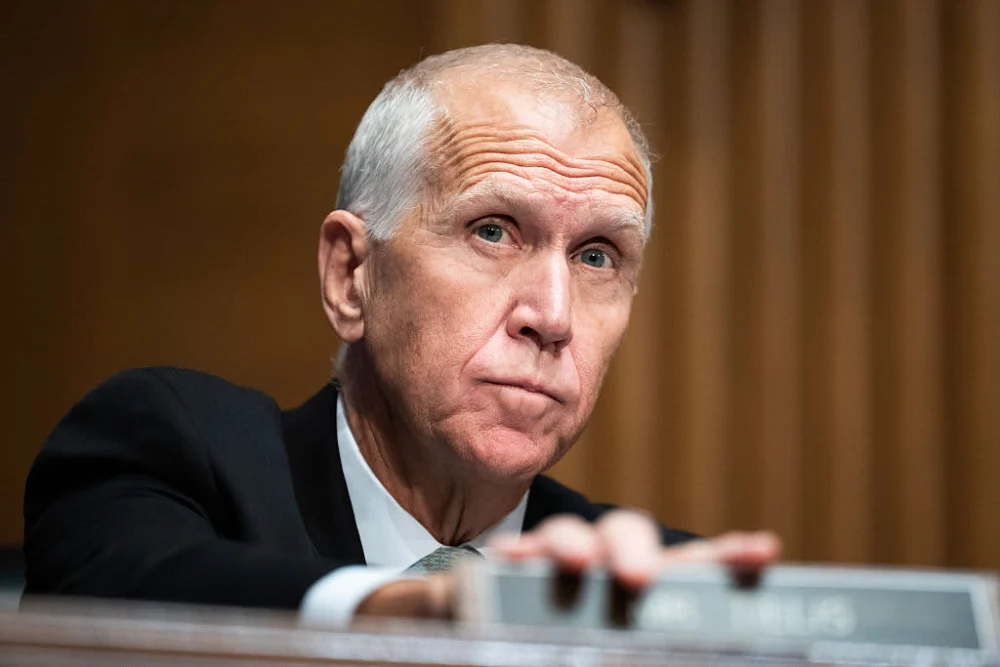
Senator Tillis, a North Carolinian Republican who has historically aligned with the executive branch but occasionally asserted his independence, framed his opposition as a defense of the democratic and economic foundations of the country. In an uncompromising public statement, Tillis argued that the pursuit of Powell by the Department of Justice is not merely a legal matter but a calculated attempt to erode the firewall between political interests and monetary decision-making. He asserted that if any doubt remained regarding the administration’s intent to end the Federal Reserve’s independence, the current investigation into Powell has effectively erased it. By vowing to oppose any nominee until the legal cloud over Powell is dissipated, Tillis has effectively utilized his leverage on the Senate Banking Committee to halt the President’s agenda for the central bank.
The arithmetic of the Senate Banking Committee is the primary reason why a single defection carries such weight. The committee is currently comprised of 13 Republicans and 11 Democrats. Under standard operating procedures, a tie vote in committee can stall a nomination, preventing it from reaching the Senate floor for a full vote. With Tillis joining the unified Democratic opposition—which has also signaled a refusal to move forward with nominees under these circumstances—the administration faces a mathematical impossibility in advancing a successor to Powell. This stalemate arrives at a critical juncture, as Jerome Powell’s four-year term as Chair is set to expire in May. While the President has been vetting a shortlist of five potential candidates to lead the Fed, the path to confirmation now appears entirely obstructed.
The controversy centers on a probe led by U.S. Attorney Jeanine Pirro, a former judge and media personality known for her close ties to the President. The investigation into Powell for alleged perjury stems from his previous testimony before Congress, though specific details of the alleged falsehoods remain sparse. Powell, in a rare and pointed defense, released a statement acknowledging the investigation while dismissing it as a "pretext" designed to facilitate executive control over the central bank. His assertion that the move is an "unprecedented action" highlights the deepening rift between the Eccles Building and the White House. Powell’s defenders argue that using the Department of Justice to pressure a central banker is a tactic more commonly seen in developing economies with weak institutional safeguards, rather than in a G7 nation.
The concept of central bank independence is not merely a matter of bureaucratic tradition; it is a fundamental pillar of modern economic stability. Economists argue that for a central bank to effectively manage inflation and maintain maximum employment—the Fed’s "dual mandate"—it must be able to make unpopular decisions, such as raising interest rates, without fear of political reprisal. When a central bank loses this independence, it often leads to a "political business cycle" where interest rates are kept artificially low to boost short-term economic growth ahead of elections, ultimately resulting in runaway inflation and long-term currency devaluation. Global investors view the Federal Reserve’s autonomy as a guarantee of the U.S. dollar’s reliability as the world’s primary reserve currency. Any perceived politicization of the Fed risks a spike in Treasury yields and a loss of confidence in American debt markets.

The current situation has created an unusual alliance in the Senate. Senator Elizabeth Warren, the Massachusetts Democrat who has famously clashed with Powell in the past—once labeling him a "dangerous man" due to his approach to banking deregulation—has found common ground with Tillis. Warren’s opposition, however, is rooted in her concern over executive overreach. She accused the administration of attempting to install a "sock puppet" who would prioritize the interests of billionaires and the President’s personal political standing over the health of the broader economy. This alignment of a progressive firebrand and a retiring Republican institutionalist underscores the gravity of the perceived threat to the Fed’s structure.
The timing of this standoff is particularly sensitive given the broader vacancies within the Federal Reserve Board of Governors. Beyond the Chairmanship, the term of Governor Stephen Miran is set to conclude in January, and rumors have circulated regarding the potential early retirement of Vice Chair Philip Jefferson. If the Senate Banking Committee remains paralyzed, the Fed could face a significant leadership vacuum. While Powell could technically remain on the Board of Governors until his term as a governor expires in 2028, his role as Chair is a specific four-year appointment that requires re-confirmation or a new appointment. A leadership void at the Fed during a period of global economic transition could lead to heightened market volatility, as investors look for clear guidance on interest rate trajectories and quantitative tightening measures.
Historical precedents for such tension are rare but illuminating. During the Nixon administration, President Richard Nixon famously pressured then-Chair Arthur Burns to maintain low interest rates to aid his re-election campaign, a move many historians believe contributed to the "Great Inflation" of the 1970s. It was not until Paul Volcker was appointed by Jimmy Carter and supported by Ronald Reagan that the Fed re-established its independence by aggressively raising rates to crush inflation, despite immense political pressure. The current conflict suggests a return to an era where the executive branch views the central bank as an arm of its economic policy rather than an independent arbiter of monetary value.
Market analysts are already weighing the potential impacts of a prolonged confirmation battle. If the market perceives that the next Fed Chair will be chosen based on loyalty to the executive branch rather than economic expertise, the "inflation risk premium" on long-term bonds is likely to rise. Furthermore, the credibility of the Department of Justice is also under the microscope. Critics argue that using criminal investigations as a tool for administrative reshuffling sets a dangerous precedent for all independent agencies, including the Federal Trade Commission (FTC) and the Securities and Exchange Commission (SEC).
Senator Tillis, who is not seeking re-election, appears to be positioning himself as a guardian of institutional integrity in his final months in office. His decision to break ranks with the White House on such a high-profile issue suggests that for some legislators, the long-term health of the republic’s financial institutions outweighs short-term partisan loyalty. As the White House prepares to announce its nominee later this month, the administration must now decide whether to engage in a bruising and likely futile confirmation battle or to seek a de-escalation of the legal pursuit of Powell.
In the coming weeks, the focus will remain on the Senate Banking Committee’s deliberations and the specific findings, if any, of the Justice Department’s probe. The global financial community is watching closely, understanding that the outcome of this dispute will define the boundaries of executive power and the future of the U.S. economy for years to come. Whether the Federal Reserve emerges from this crisis with its independence intact or becomes a subsidiary of the executive branch remains the most pressing question facing the American financial system. For now, the "legal matter" cited by Tillis remains the gatekeeper to the future of the Fed, and until it is resolved, the machinery of monetary appointments remains at a total standstill.