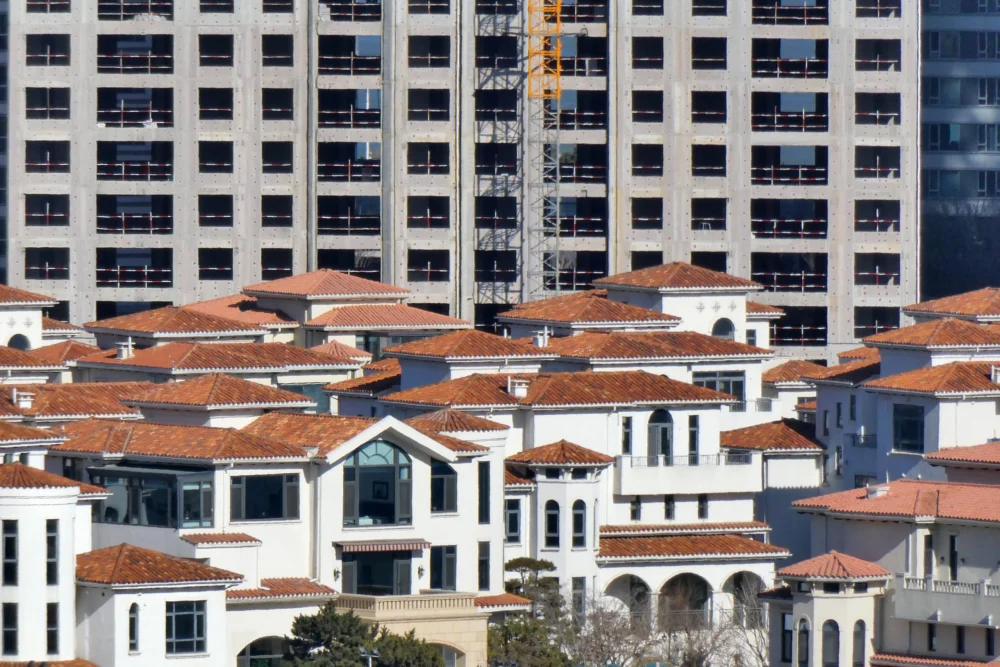
The landscape of the Chinese economy is facing a potential watershed moment as policymakers in Beijing signal a more aggressive stance toward rectifying the nation’s protracted real estate crisis. After years of incremental measures that failed to arrest a downward spiral in property values and sales, a series of high-level communications and market movements suggest that a more decisive intervention may be on the horizon. This shift in sentiment comes at a critical juncture, as the government prepares for the annual parliamentary meetings in March, where the trajectory of the world’s second-largest economy for the next half-decade will be codified.
The catalyst for this renewed optimism was an authoritative article published in Qiushi, the Communist Party’s flagship theoretical journal. Traditionally used to broadcast the internal consensus of the leadership, the journal’s New Year dispatch called for "more powerful and precise measures" to stabilize the property market. The impact on investor sentiment was immediate; the Hang Seng China A Properties Index, which tracks major developers including industry heavyweights like Vanke and Seazen, surged by more than 6% in the opening weeks of 2026. This rally reflects a growing belief among institutional investors that the "wait-and-see" approach that characterized much of 2025 is being replaced by a sense of urgency within the halls of power.
The significance of the Qiushi commentary lies in its breadth and timing. Economists note that this represents the most comprehensive official assessment of the real estate sector since the liquidity crisis first erupted in mid-2021 with the default of several high-profile developers. In the opaque world of Chinese policymaking, such publications serve as a bellwether for shifting priorities. The call to "shorten the adjustment period as much as possible" indicates a departure from previous rhetoric that framed the slump as a necessary, albeit painful, transition toward a "new model" of development. Instead, there is a burgeoning recognition that the correction has overshot its targets, threatening broader systemic stability.

The scale of the challenge facing Beijing is underscored by sobering market data. Despite a top-level directive in late 2024 to halt the sector’s decline, the real estate market has continued to contract. New home sales have effectively halved since the government initiated its "Three Red Lines" policy intended to deleverage the sector. According to data from the China Real Estate Information Corp, the floor space sold in 2025 plummeted to levels not seen since 2009. This nearly two-decade regression in market activity has had a profound "wealth effect" on Chinese households, who traditionally hold approximately 70% of their assets in real estate. As property values stagnate or decline, consumer confidence has withered, fueling deflationary pressures that haunt the wider economy.
Financial distress remains a persistent shadow over the industry. Vanke, once considered the gold standard of fiscal prudence among Chinese developers, has found itself navigating treacherous waters. The company recently narrowly avoided a default on a 2 billion yuan ($283 million) onshore bond by securing a last-minute extension. The fact that even state-linked and historically stable firms are struggling to meet debt obligations highlights the depth of the liquidity crunch. Official data indicates that the outstanding loan balance for real estate developers saw a year-on-year decline in the third quarter of 2025—the first such contraction in over a decade. This credit freeze has created a vicious cycle: without access to fresh capital, developers cannot complete existing projects; without completed projects, buyer confidence remains shattered, further starving developers of sales revenue.
In response to these systemic risks, experts anticipate a shift toward more innovative and centralized support mechanisms. Analysts from HSBC suggest that the next phase of policy will likely focus on "meaningful reductions" in the financial burdens placed on homebuyers and, crucially, a more robust state-led effort to absorb excess inventory. The "piecemeal" approach of the past—which included lowering down payment requirements and easing residency-linked purchase restrictions—is increasingly viewed as insufficient. Instead, the "one-go" strategy advocated in recent official commentary suggests a preference for a massive, coordinated stimulus that could involve the state purchasing unsold stock to convert into affordable housing, thereby clearing the glut that has depressed prices for years.
The timing of this potential policy pivot is inextricably linked to China’s broader geopolitical and macroeconomic environment. For much of 2025, a resilient export sector provided a buffer for the Chinese economy, allowing Beijing to prioritize the "high-quality growth" of its technology and green energy sectors while letting the property market undergo a slow burn. However, that buffer is thinning. Rising trade tensions, the implementation of new tariffs by major trading partners, and a potential cooling in global demand for electronics and electric vehicles have made the export-led growth model look increasingly precarious. If the "external engine" of the Chinese economy falters, Beijing will be forced to reignite the "internal engine" of domestic demand, which is currently stalled by the property slump.

The upcoming parliamentary session in March is expected to provide the definitive roadmap for this transition. This meeting is of particular importance as it will unveil the full details of China’s next Five-Year Plan. Historically, these plans set the tone for credit allocation and provincial spending. There is growing speculation that the government will raise its deficit targets to fund a more substantial bailout or support package for the housing sector. Some economists argue that Beijing can no longer afford to treat real estate as a sunset industry, noting its critical role in local government finance. For decades, local municipalities relied on land sales to fund infrastructure and public services; with that revenue stream largely dried up, the fiscal health of regional governments has reached a breaking point.
However, the path to a full recovery remains fraught with internal debate. Some analysts caution that the recent signals, while positive, may not yet represent a unanimous consensus at the highest levels of the Communist Party. The distinction between a "housing ministry" initiative and a "central leadership" mandate is subtle but vital in the Chinese context. While the Housing Ministry may be pushing for immediate relief to prevent project abandonments and social unrest, the central leadership may still be wary of reinflating a property bubble that they spent years trying to pop. This tension suggests that while support is coming, it will be carefully calibrated to avoid returning to the debt-fueled excesses of the past.
The global implications of China’s property policy cannot be overstated. As the world’s largest consumer of commodities like iron ore, copper, and cement, the health of China’s construction sector dictates global market trends. A successful stabilization of the Chinese property market would provide a significant tailwind for emerging markets and commodity-exporting nations. Conversely, a continued slide could export deflationary shocks to the rest of the world.
As 2026 progresses, the focus will remain on whether the rhetoric of "powerful and precise measures" translates into actual capital injections and structural reforms. The market is no longer satisfied with verbal assurances; it is looking for a comprehensive plan to resolve the "unfinished home" crisis and provide a floor for property valuations. Whether through the direct acquisition of inventory or a massive expansion of credit to "white-listed" developers, the steps taken in the coming months will likely determine if the Chinese economy can successfully pivot toward a more sustainable growth path or if it faces a "lost decade" similar to Japan’s post-bubble experience. For now, the signals from Beijing suggest that the government is finally ready to confront its most pressing economic demon, recognizing that a stable property sector is the prerequisite for the nation’s broader ambitions on the global stage.