The latest quarterly performance from Citigroup has provided a critical barometer for the health of both the global financial system and the American consumer, as the New York-based lender reported fourth-quarter results that surpassed Wall Street’s expectations. While the banking giant faced significant one-time costs associated with its strategic withdrawal from the Russian market, its core operations showed remarkable resilience. The centerpiece of the report was a lighter-than-anticipated provision for credit losses, a move that suggests a growing confidence among banking executives regarding the trajectory of the broader economy. By setting aside $2.2 billion for potential loan defaults—roughly $330 million less than analysts had forecasted—Citigroup has signaled that the anticipated "hard landing" for the economy may be giving way to a more manageable period of stabilization.
For the final three months of the fiscal year, Citigroup reported a net income of $2.47 billion, or $1.19 per share. This figure represented a 13% decline from the previous year, though the contraction was largely attributed to a specific, non-recurring headwind: a $1.1 billion after-tax loss tied to the bank’s ongoing divestiture of its Russian operations. When stripping away these idiosyncratic charges, the bank’s underlying profitability appeared much more robust. Adjusted profit climbed to $3.6 billion, or $1.81 per share, comfortably clearing the hurdles set by market analysts. This performance was underpinned by a revenue base that, excluding the Russia-related impact, rose 8% to $21.0 billion. The growth was distributed across several of the bank’s key pillars, including banking services, wealth management, and institutional client services, reflecting a diversified revenue stream that is increasingly less dependent on volatile trading cycles.
The lower-than-expected loan loss provisions are particularly noteworthy given the prevailing narrative of high interest rates and inflationary pressures. When a bank reduces its reserves for troubled loans, it is effectively placing a bet on the solvency of its borrowers. This optimism is not unique to Citigroup; similar trends have been observed at peers like Bank of America, suggesting a sector-wide belief that the U.S. labor market remains strong enough to support debt repayment. For Citigroup, which has a massive global footprint in credit cards and retail banking, this data point is a vital indicator of consumer health. It suggests that despite the "higher-for-longer" interest rate environment orchestrated by the Federal Reserve, the average consumer and corporate client are managing their debt obligations with greater efficacy than many economists had feared six months ago.
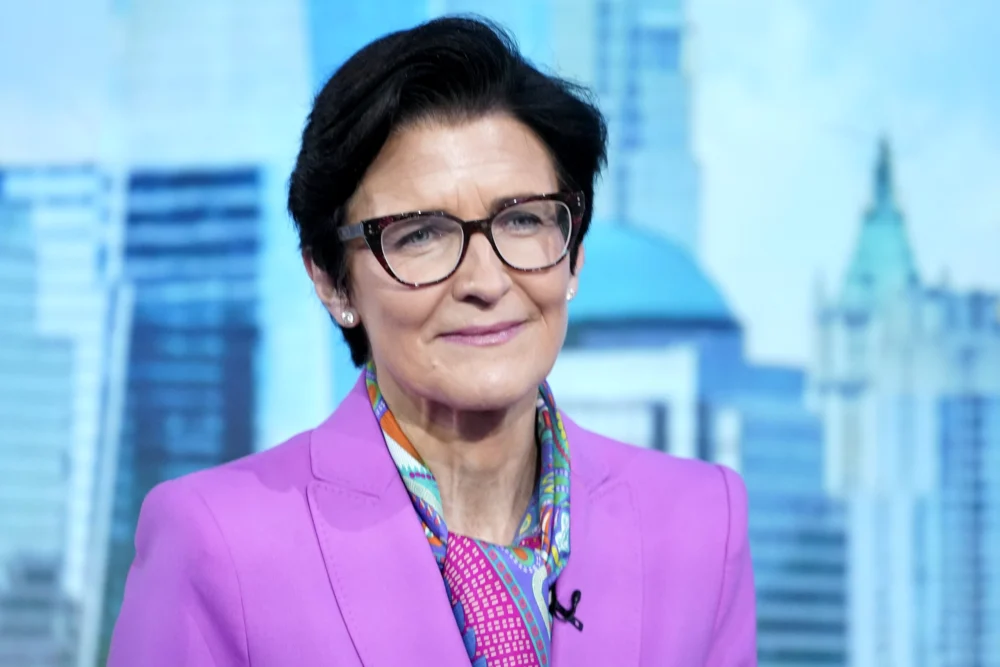
Under the leadership of Chief Executive Officer Jane Fraser, Citigroup is currently in the midst of one of the most significant corporate overhauls in its century-long history. Fraser has been vocal about her mission to simplify the bank’s sprawling structure, which had long been criticized by investors for being overly complex and inefficient compared to its leaner rivals. The bank is systematically exiting non-core international consumer markets—including several in Asia and Europe—to double down on high-growth areas like global wealth management and commercial banking. In her remarks following the earnings release, Fraser emphasized that the bank has achieved "positive operating leverage" across all five of its core business segments. This indicates that revenue is growing faster than expenses—a key metric for a bank that has historically struggled with a high cost-to-income ratio.
Fraser’s strategic "Project Bora Bora" restructuring plan is not merely about cutting costs; it is about fundamentally retooling the bank’s return on equity. The bank has reiterated its commitment to achieving a return on tangible common equity (ROTCE) of at least 10% by 2026. While this target is still below the returns generated by industry leaders like JPMorgan Chase, it represents a significant milestone for a firm that has spent much of the last decade trading at a discount to its book value. To reach this goal, Citigroup is aggressively pruning its workforce and reducing management layers, a move that is expected to save billions in annual operating expenses once the transition is complete.

The market reaction to the earnings beat was cautiously optimistic, with shares ticking higher in premarket trading. Investors are increasingly viewing Citigroup as a "turnaround story" rather than a laggard. Mike Mayo, a highly influential banking analyst at Wells Fargo, has consistently named Citigroup his top pick for the year, citing the potential for massive value creation as the bank sheds its "legacy" image. Mayo’s thesis rests on the idea that as Citigroup cleans up its balance sheet and simplifies its operations, it will eventually be re-rated by the market, potentially closing the valuation gap with its peers. The current results provide the necessary "proof of concept" that the restructuring is beginning to bear fruit on the top and bottom lines.
However, the path forward is not without its obstacles. The $1.1 billion loss from the Russia divestiture serves as a stark reminder of the geopolitical risks inherent in Citigroup’s global model. As one of the most internationally connected U.S. banks, Citigroup is uniquely exposed to cross-border tensions, currency fluctuations, and varying regulatory regimes. While the exit from Russia is a strategic necessity in the current climate, it underscores the costs associated with untangling a global financial web. Furthermore, the banking sector at large is bracing for the "Basel III Endgame" regulatory changes, which could require large lenders to hold significantly more capital against their assets. Citigroup’s ability to maintain its 10% return target will depend heavily on how these final capital rules are implemented and whether the bank can continue to optimize its risk-weighted assets.
Comparing Citigroup to its Wall Street contemporaries reveals a landscape of diverging fortunes. Earlier in the week, JPMorgan Chase posted record-breaking results, driven by a surge in trading revenue and its successful integration of First Republic. While Citigroup may not yet match the sheer scale of JPMorgan’s dominance, its growth in wealth management and institutional services suggests it is successfully carving out its own niche. The bank is pivoting toward being a "service provider" to the world’s largest corporations and wealthiest individuals—a model that generates steady, fee-based income that is highly prized by investors for its predictability.
The broader economic impact of Citigroup’s performance cannot be overstated. As a primary dealer of U.S. Treasuries and a major player in the global repo markets, Citigroup’s stability is essential for the smooth functioning of global capital markets. Its 8% revenue growth in institutional services indicates that corporate activity—ranging from cash management to trade finance—remains robust despite the high-interest-rate environment. This suggests that the "real economy" is continuing to invest and move capital, even as the cost of borrowing remains at multi-decade highs.
Looking toward the remainder of 2025 and into 2026, the focus for Citigroup will remain squarely on execution. Jane Fraser has noted that the firm enters the new year with "visible momentum," but the true test will be the bank’s ability to maintain this trajectory if the U.S. economy finally begins to cool. Analysts will be watching closely to see if the bank can continue to keep credit costs low while simultaneously funding the massive technology investments required to modernize its infrastructure. The bank’s digital transformation is a critical component of its strategy, aimed at reducing manual processes and improving the client experience in its wealth and banking divisions.
In conclusion, Citigroup’s fourth-quarter performance is a testament to the resilience of a financial giant in transition. By exceeding earnings expectations and demonstrating improved credit quality, the bank has provided a measure of relief to a market that has been on edge regarding the health of the banking sector. While the costs of restructuring and geopolitical exits continue to weigh on the headline figures, the underlying trends point toward a leaner, more focused institution. As the bank moves closer to its 2026 targets, the narrative surrounding Citigroup is shifting from one of perpetual recovery to one of strategic growth, marking a potential turning point for one of the world’s most significant financial institutions.