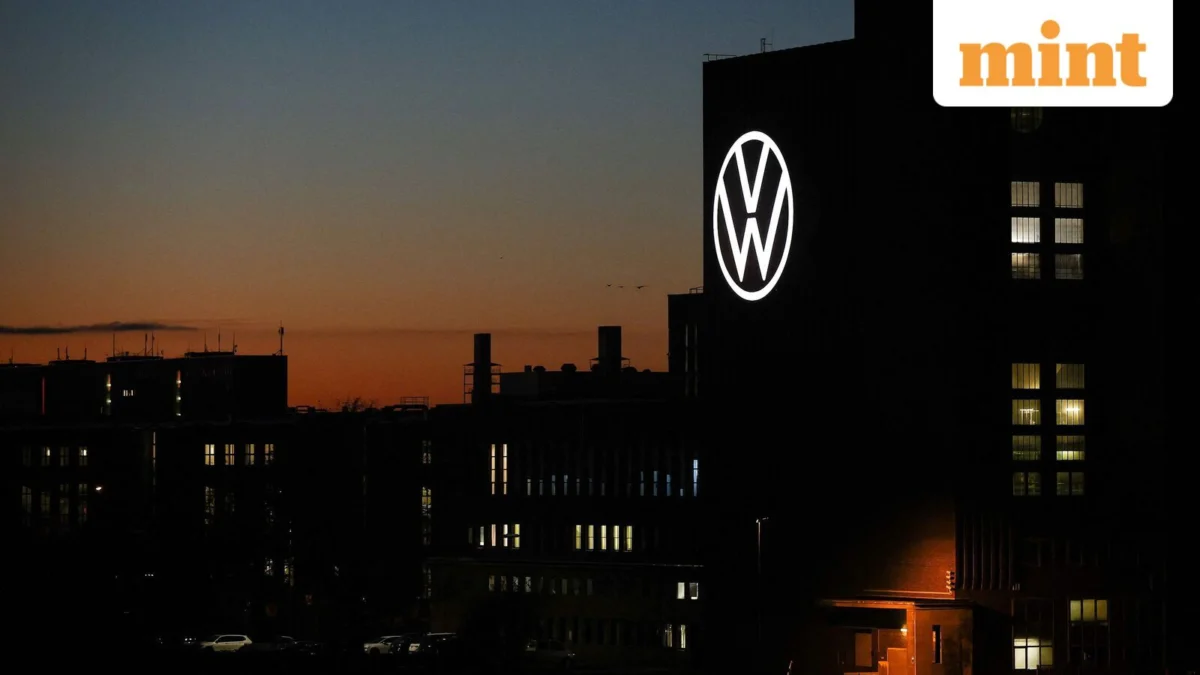
Volkswagen Group’s Indian operations have signaled a significant financial turnaround, reporting a robust return to profit growth in Financial Year 2026 (FY26) after navigating two consecutive years of decline. This pivotal shift was primarily propelled by an exceptional surge in sales for its Skoda brand, complemented by a substantial and strategic increase in financial assistance from its global parent entities, designed to fortify operating margins and sustain aggressive market expansion. The combined entity, Skoda Auto Volkswagen India Pvt Ltd (SAVWI), declared a 48% leap in net profit, reaching ₹139 crore for FY26, a stark contrast to the 2% dip to ₹93.9 crore in FY25 and a steep 69% fall to ₹95.9 crore in FY24. This resurgence underscores a critical inflection point for the German automotive giant in one of the world’s most challenging yet rapidly expanding car markets.
The cornerstone of this financial revival was undoubtedly Skoda’s stellar performance. Retail sales for Skoda, which has emerged as the largest brand within the Volkswagen Group’s Indian portfolio, skyrocketed by 68% during FY26, culminating in 75,556 units sold. This impressive growth was significantly bolstered by the market reception of the Kylaq SUV, a model strategically positioned to tap into India’s burgeoning utility vehicle segment. The success of the Kylaq mirrors a broader industry trend where SUVs continue to dominate new vehicle purchases, driven by evolving consumer preferences for higher ground clearance, commanding road presence, and versatile interiors suited to diverse Indian road conditions and family needs. Skoda’s ability to localize and price its offerings competitively, while retaining its European design ethos and quality, has been instrumental in carving out this niche.
Overall, SAVWI’s total revenue for FY26 climbed by 11% to ₹22,338 crore. Even when accounting for the significant financial support from its parent, revenue from core operations still demonstrated a healthy 8% growth, reaching ₹20,649 crore. This indicates genuine market traction for its products, albeit with the strategic cushioning provided by the group. The Indian automotive market itself has been on an upward trajectory, with passenger vehicle sales consistently breaking records, fueled by robust economic growth, rising disposable incomes, and improved credit availability. This buoyant market environment, coupled with Skoda’s tailored product strategy under the ‘India 2.0’ project, created fertile ground for the brand’s accelerated growth.
A crucial element underpinning this turnaround was the more than doubling of financial assistance from the Germany-headquartered Volkswagen Group to its Indian subsidiary. This support reached a four-year high of ₹1,341 crore in FY26, a substantial increase from ₹564 crore in the preceding year. Such payments from group entities are strategically deployed to maintain the Indian unit’s operating margins and are recorded as ‘other income,’ effectively boosting the total reported revenue. This mechanism is vital in navigating the complexities of transfer pricing regulations, which mandate that inter-company transactions, such as the sale of vehicles, parts, and technology from global Volkswagen Group companies to their Indian counterpart, must be conducted at arm’s length, i.e., at fair market prices.
The stated purpose of this financial aid, as detailed in regulatory filings, is to ensure the Indian unit complies with transfer pricing regulations by maintaining requisite operating margins. In essence, if the Indian subsidiary’s profitability from these intra-group transactions falls below the stipulated thresholds, the parent companies inject capital to bridge the gap. This isn’t merely a bailout but a calculated strategic investment, providing the Indian business with greater latitude to invest in critical areas such as new product development, aggressive marketing campaigns, deeper localization efforts, and the expansion of its dealership network, without the immediate pressure of short-term profitability constraints. Industry experts like Vinay Piparsania, founder at MillenStrat Research and Advisory, highlight that this additional support empowers the India business to pursue growth initiatives more robustly.
The bulk of this financial reinforcement originated from Czechia-based Skoda Auto a.s., which contributed a significant ₹969 crore. Further support came from Germany-based Volkswagen AG (₹211 crore), Audi AG (₹107 crore), Porsche AG (₹42 crore), and UK-based Bentley Motors Ltd (₹12 crore). This diversified support from various group entities underscores a collective commitment to strengthening the Indian operations, particularly leveraging Skoda’s leadership in the ‘India 2.0’ strategy. This initiative, launched in 2018, aimed to enhance localization to over 90% and develop a new product portfolio specifically for the Indian market, mitigating the high costs associated with importing components and vehicles.
While Skoda celebrated phenomenal growth, the performance of other brands within the SAVWI umbrella presented a mixed picture. Domestic sales for the Volkswagen Cars brand, for instance, experienced an 11% decline, settling at 37,576 units in FY26. This contrast highlights the efficacy of Skoda’s focused product strategy, particularly its SUV offensive, compared to Volkswagen’s offerings in India. The group also houses luxury brands like Porsche, Lamborghini, Audi, and Bentley, which contribute to brand image and high-margin sales, though their volume figures are typically not disclosed in mass-market reports. The overall strategy appears to be leveraging Skoda as the primary volume driver and growth engine, while other brands cater to niche premium segments.
Adding another layer of strategic complexity, the Volkswagen Group is reportedly in advanced discussions with the Sajjan Jindal-led JSW Group regarding a potential stake sale in its Indian unit. Such a move could bring a fresh injection of capital, local market expertise, and shared risk, potentially accelerating the group’s ambitions in India. For a global automotive giant navigating an expensive transition towards electric vehicles and facing intense competition worldwide, strategic partnerships in key emerging markets like India can prove invaluable.
Looking ahead, the Volkswagen Group in India is actively formulating its clean fuel strategy, a multi-pronged approach tailored to the country’s evolving energy landscape and regulatory environment. This includes plans for optimizing existing internal combustion engines for higher efficiency, readiness for E20 blended fuels (20% ethanol), exploring flex-fuel options, expanding CNG offerings, and significantly advancing electrification initiatives. This comprehensive strategy acknowledges India’s diverse energy mix and the need for flexible solutions to cater to varied consumer demands and infrastructure availability, rather than a singular focus on electric vehicles alone.
The Indian market presents a unique blend of opportunities and challenges. While the growth trajectory for passenger vehicles is compelling, intense competition from established players like Maruti Suzuki, Hyundai, Tata Motors, Mahindra, and Kia, coupled with the price sensitivity of Indian consumers, demands constant innovation and cost efficiency. The sustainability of Skoda’s growth post the initial Kylaq surge, as noted by experts, will depend on continuous product refreshes, network expansion, and maintaining a strong value proposition. However, the financial results and strategic maneuvers signal a renewed, robust commitment from the Volkswagen Group to solidify its position in India, transforming it from a challenging outpost into a cornerstone of its global growth strategy amidst an era of profound automotive transformation. This long-term investment in India reflects a broader understanding of its strategic importance as one of the few global markets poised for sustained, significant expansion in the coming decades.