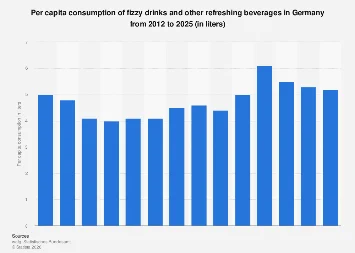
Germany’s per capita consumption of carbonated beverages is projected to see a subtle but persistent upward trend through 2025, indicating a continued robust market for effervescent drinks within Europe’s largest economy. While not a dramatic surge, this steady growth signals sustained consumer engagement with a category that encompasses a wide array of products, from traditional colas and fruit-flavored sodas to sparkling mineral waters and innovative functional beverages. Understanding these consumption patterns is crucial for beverage manufacturers, retailers, and investors navigating the dynamic German beverage landscape.
The projected increase, though modest, reflects several underlying economic and social factors. In a mature market like Germany, significant year-on-year jumps in per capita consumption are rare. Instead, shifts tend to be gradual, driven by evolving consumer preferences, marketing strategies, and the introduction of new product lines. The continued popularity of sparkling water, driven by health consciousness and a desire for refreshing, calorie-free options, is a significant contributor. This segment has seen consistent growth over the past decade, fueled by a perception of naturalness and purity. Simultaneously, traditional soft drinks, while facing some challenges from health-focused alternatives, maintain a strong foothold, particularly among younger demographics and as affordable treats.
Global context for Germany’s carbonated beverage market reveals a complex picture. While Western European nations like Germany often exhibit more mature consumption patterns, with per capita volumes perhaps lower than in emerging markets, they represent high-value markets characterized by sophisticated consumer demands and strong brand loyalty. Countries in North America and parts of Latin America historically report higher per capita consumption of sugary soft drinks. However, a growing global emphasis on health and wellness is influencing these figures, leading to a gradual diversification of product offerings and a potential moderation of growth in traditionally high-volume segments. Germany’s trajectory, therefore, can be seen as part of a broader global shift towards more mindful consumption, even within the effervescent category.
The economic impact of the carbonated beverage sector in Germany is substantial, extending beyond direct sales. The industry supports a vast supply chain, including agriculture for ingredients (sugar, fruit concentrates, flavorings), packaging manufacturing (glass, PET bottles, aluminum cans), logistics and distribution networks, and extensive retail operations. Furthermore, significant investment in marketing and advertising stimulates economic activity and supports media industries. The sector also contributes to employment across these various sub-sectors. Any growth, however incremental, translates into sustained economic activity and employment opportunities.
Looking at specific segments within the carbonated beverage market provides further nuance. The demand for sugar-free and low-sugar options has been a dominant trend, driven by public health campaigns, government initiatives, and increasing consumer awareness of the links between sugar intake and health issues like obesity and diabetes. Beverage companies have responded by reformulating existing products and launching new lines that utilize artificial sweeteners or natural alternatives. This has allowed them to retain consumers who might otherwise switch to non-carbonated beverages or reduce their intake altogether. The market for functional carbonated drinks, such as those fortified with vitamins, minerals, or probiotics, is also an emerging area of growth, catering to consumers seeking added health benefits beyond simple refreshment.
Statistics from market research firms consistently highlight the resilience of the carbonated beverage market, even amidst evolving health trends. While data specific to 2025 projections requires specialized access, historical trends suggest a stable to slightly increasing per capita consumption. For instance, in recent years, per capita consumption of soft drinks in Germany has hovered around the 100-liter mark annually, with a significant portion attributed to sparkling waters and diet beverages. The anticipated growth indicates that the sector is adapting effectively to consumer demands for healthier options and novel product experiences, rather than experiencing a decline.
The competitive landscape in Germany is characterized by a mix of global giants and strong domestic players. Companies like Coca-Cola and PepsiCo maintain significant market share, but regional breweries and independent beverage producers also play a vital role, often specializing in local flavors or artisanal products. The intense competition fosters innovation, with companies constantly vying for shelf space and consumer attention through new product launches, packaging innovations, and targeted marketing campaigns. Pricing strategies also remain critical, especially for mass-market products, where affordability is a key purchasing driver.
Challenges remain for the sector. The ongoing debate surrounding the health impacts of artificial sweeteners, the environmental concerns associated with plastic packaging, and potential future regulatory measures regarding sugar content or marketing practices all pose risks. However, the industry’s capacity for adaptation, demonstrated by its shift towards healthier formulations and sustainable packaging initiatives, suggests a continued ability to navigate these challenges. The introduction of deposit-return schemes for beverage containers in many European countries, including Germany, has also influenced packaging choices and consumer behavior, encouraging recycling and the use of reusable options.
Ultimately, the projected increase in per capita consumption of fizzy drinks in Germany up to 2025 underscores the enduring appeal of carbonated beverages. It reflects a market that is not static but rather a dynamic environment where established products coexist with innovative offerings, and where consumer preferences are constantly being shaped by health trends, economic conditions, and marketing influences. For businesses operating within or looking to enter this market, a nuanced understanding of these evolving dynamics, coupled with a commitment to product innovation and consumer engagement, will be paramount to success. The German thirst for bubbles, it appears, is set to continue, albeit with a more discerning palate.