
The traditional American mortgage process, long criticized for its glacial pace and mountain of paperwork, is facing a radical technological reckoning. In a move that could fundamentally alter the landscape of the $1.5 trillion U.S. home loan market, the digital mortgage platform Better.com has unveiled a strategic partnership with OpenAI. The collaboration has birthed a first-of-its-kind application within the ChatGPT ecosystem, designed to slash underwriting times from weeks to less than a minute. By combining Better’s proprietary mortgage engine with OpenAI’s advanced generative models, the companies claim they can complete a comprehensive credit decision in as little as 47 seconds—a feat that previously required a 21-day industry average.
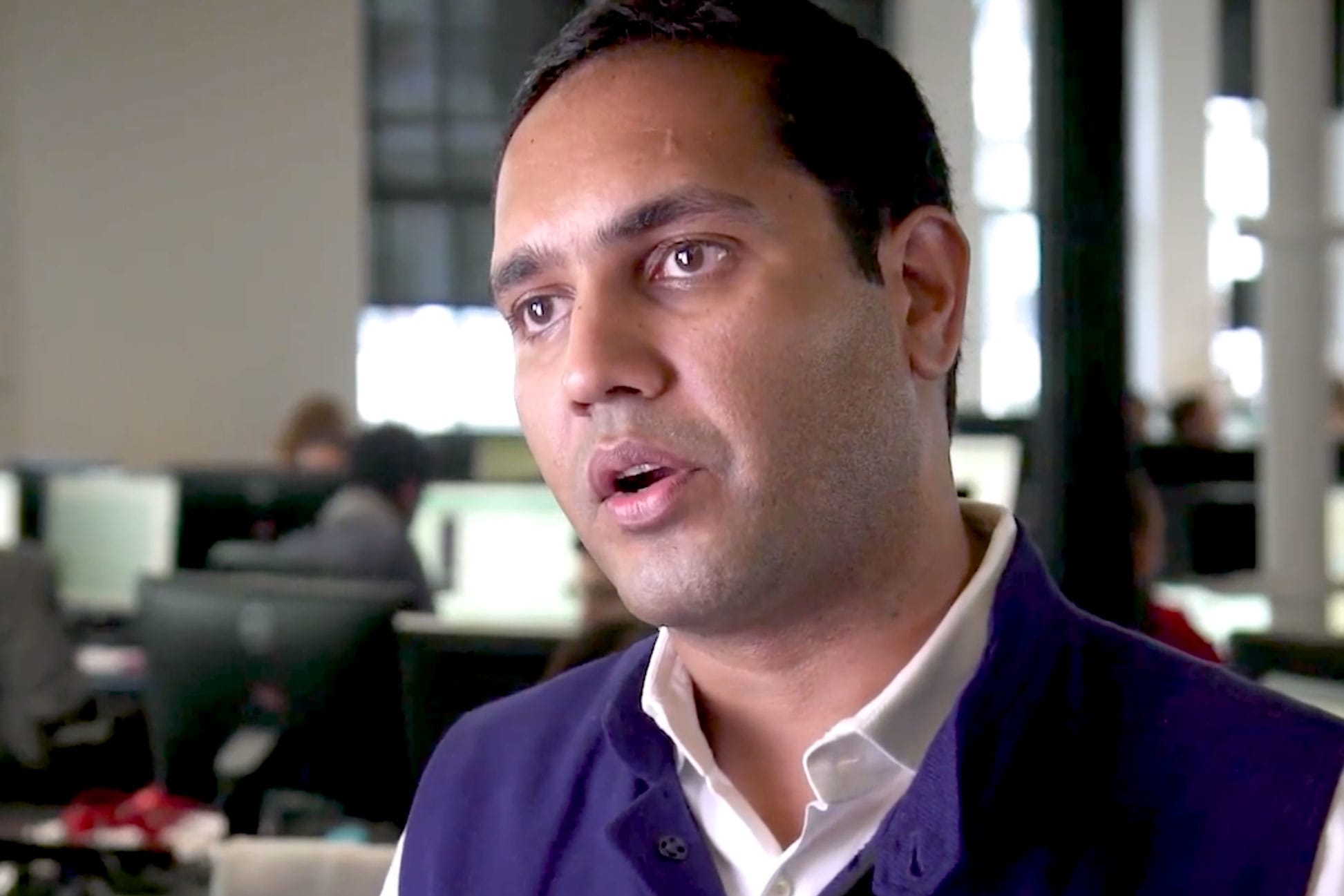
This technological leap is not merely a play for consumer convenience; it represents a calculated assault on the dominant players of the non-bank lending sector. Following the 2008 financial crisis, traditional powerhouse banks like JPMorgan Chase and Wells Fargo significantly curtailed their presence in the residential mortgage space, citing regulatory complexities and capital requirements. This retreat allowed non-bank entities, most notably Rocket Mortgage and United Wholesale Mortgage (UWM), to seize massive market shares. However, these incumbents now find themselves in the crosshairs of a Silicon Valley-led automation wave. Better CEO Vishal Garg has positioned this new tool as a "mortgage-as-a-service" platform, signaling a strategic pivot from being a direct-to-consumer lender to becoming the technological backbone for the entire industry.
The End of the "Underwriting Tax"
The economic implications of this transition are profound. According to Garg, the current mortgage infrastructure imposes what is effectively a 1.5% "tax" on every loan originated in the United States, representing approximately $20 billion in annual fees paid by the American public. This overhead is largely driven by the manual labor required to verify income, assess creditworthiness, and cross-reference property appraisals. By automating these "parallel workflows," the Better-OpenAI integration aims to dissolve these costs.
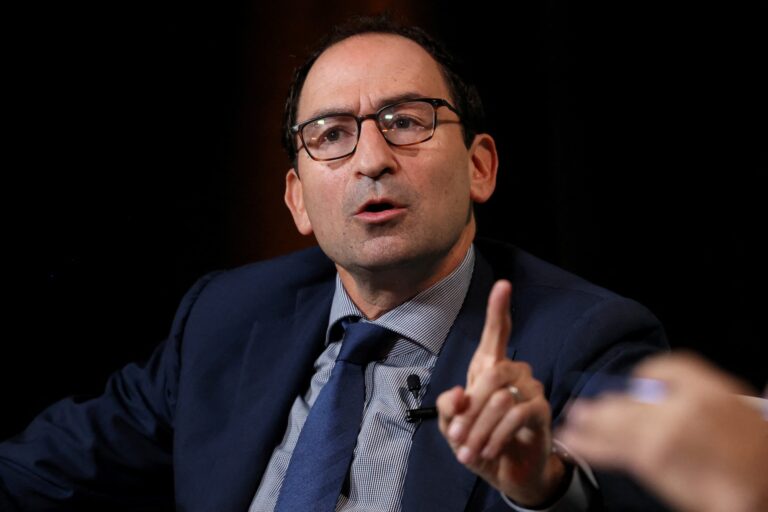
Giancarlo Lionetti, Chief Commercial Officer at OpenAI, characterized the partnership as a "huge unlock" for the financial sector. The app functions by deploying sophisticated AI agents that simultaneously execute dozens of checkpoints. While a human loan officer might spend days waiting for a title report or manually reviewing tax returns, the AI operates across a "super long, extended logic tree," utilizing a massive context window to synthesize disparate data points instantly. This includes everything from real-time credit pulls and income verification to the analysis of complex title reports and property valuations.
Market Reaction and the Threat to Incumbents
The financial markets reacted swiftly to the news of the partnership, reflecting investor anxiety over the potential disruption of established profit models. Better’s stock surged by 5% following the announcement, while the industry’s "Big Two" saw significant pullbacks. Rocket Mortgage shares tumbled by as much as 6%, and UWM shares fell nearly 4%. This divergence highlights a growing belief among institutional investors that the competitive advantage held by large-scale manual lenders—often built on massive call centers and human processing hubs—may be rapidly evaporating.
For companies like Rocket and UWM, the threat is twofold. First, the reduction in underwriting time removes a key differentiator for their proprietary platforms. Second, if Better successfully licenses this technology to smaller banks, credit unions, and independent mortgage brokers, it effectively "democratizes" the high-speed lending capabilities that were once the exclusive domain of the industry’s wealthiest players. This could lead to a significant fragmentation of the market, as local lenders gain the ability to offer the same speed and efficiency as national giants without the associated overhead.
The Mechanics of Agentic Underwriting
The sophistication of the Better app goes beyond simple data entry. It utilizes "agentic AI," a subset of generative technology where the model doesn’t just respond to prompts but actively executes tasks. In the context of a mortgage, this means the AI can identify missing documentation, flag discrepancies in a borrower’s debt-to-income ratio, and even suggest alternative loan products that better fit the applicant’s financial profile.

"It’s not a simple tool call," Garg explained during the product reveal. "It’s a multiple tool call with an extended logic tree." This technical distinction is crucial. Traditional mortgage software often relies on rigid, "if-this-then-that" programming which frequently breaks when confronted with the complexities of real-world financial data. Generative AI, by contrast, can navigate the nuances of a borrower’s unique financial history, interpreting context in a way that mimics human judgment but at a computational speed.
Global Context and Economic Impact
While the United States mortgage market is uniquely cumbersome due to a patchwork of federal and state regulations, the move toward AI-driven lending is part of a broader global trend. In markets like the United Kingdom and Australia, "open banking" initiatives have already begun to accelerate the mortgage process by allowing lenders direct access to a borrower’s digital financial records. However, the integration of a Large Language Model (LLM) like ChatGPT into the actual decision-making engine marks a new frontier in global fintech.
The economic impact of 47-second underwriting extends to the broader housing market. In a high-interest-rate environment where every day of a rate lock matters, the ability to secure a firm commitment in under a minute provides borrowers with significant leverage. Furthermore, by reducing the cost to produce a loan—which currently averages between $9,000 and $12,000 per mortgage for many lenders—the technology has the potential to lower the interest rates or closing costs passed on to consumers. If the $20 billion in annual underwriting costs can be halved through automation, it would represent a massive infusion of liquidity back into the pockets of American homeowners.
Regulatory Hurdles and Ethical Considerations
Despite the technological promise, the road to total automation is paved with regulatory challenges. The Consumer Financial Protection Bureau (CFPB) has recently signaled increased scrutiny of AI in lending, specifically regarding the "black box" nature of algorithmic decisions. Under the Equal Credit Opportunity Act (ECOA), lenders are required to provide specific reasons for denying credit. Ensuring that an AI can explain its decision-making process in a transparent, non-discriminatory manner remains a primary hurdle for Better and OpenAI.
Critics of rapid AI integration also point to the risk of "hallucinations"—instances where generative models produce factually incorrect information. In the high-stakes world of mortgage lending, where a single error can lead to a foreclosure or a systemic risk to a bank’s balance sheet, the margin for error is zero. Better has addressed these concerns by emphasizing that the app serves to empower loan officers rather than replace them entirely, though the sheer speed of the 47-second decision suggests that the human role is being pushed further to the periphery of the process.
A Strategic Rebirth for Better.com
For Better.com, this partnership represents a significant moment of redemption and evolution. The company, which faced intense public scrutiny following a series of high-profile layoffs and a volatile path to its public listing via a SPAC (Special Purpose Acquisition Company), is now positioning itself as an AI pioneer. By shifting its focus to "mortgage-as-a-service," the company is following a playbook similar to that of Amazon Web Services (AWS)—building the infrastructure that its competitors eventually have to pay to use.
If successful, the Better-OpenAI app could transform the mortgage from a stressful, weeks-long ordeal into a frictionless transaction as simple as an e-commerce checkout. For the titans of the industry, the message is clear: the era of competing on the size of one’s workforce is ending. The new battleground is the context window, the logic tree, and the speed of the algorithm. As the first 47-second mortgages begin to clear the system, the rest of the financial world will be watching to see if this is merely a temporary disruption or the permanent automation of the American Dream.