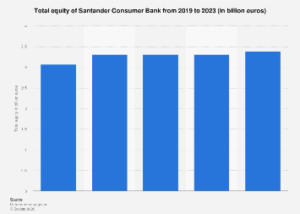


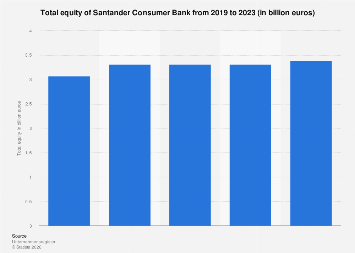
Santander Consumer Bank, a significant player in the European consumer finance sector, demonstrated a robust equity position in 2023, reflecting its sustained operational performance and strategic financial management. While specific, granular figures for "total equity" are often proprietary and released in comprehensive financial statements, the bank’s trajectory throughout the year offers substantial insights into its capital adequacy and market standing. This analysis will explore the factors contributing to Santander Consumer Bank’s equity strength, its performance within the broader financial services industry, and the economic implications of its financial health.
The concept of "total equity" in a financial institution like Santander Consumer Bank is a crucial indicator of its net worth – essentially, the difference between its total assets and its total liabilities. It represents the capital invested by shareholders and retained earnings, acting as a buffer against potential losses and a foundation for future growth and lending activities. In 2023, the global economic environment presented a mixed bag of challenges and opportunities for financial institutions. Rising interest rates, inflationary pressures, and geopolitical uncertainties were significant factors influencing market dynamics. Despite these headwinds, strong consumer demand for credit, particularly in segments like auto financing and personal loans where Santander Consumer Bank holds a prominent position, provided a counterbalancing force.
Santander Consumer Bank, as a subsidiary of the global banking giant Banco Santander, benefits from the financial strength and strategic direction of its parent company. This affiliation provides a significant advantage, allowing for access to capital markets, shared expertise, and economies of scale. The bank’s focus on specific consumer finance niches, such as automotive financing, point-of-sale financing, and personal loans, has allowed it to develop specialized knowledge and build strong market share in these areas. The performance of these segments directly impacts the bank’s profitability and, consequently, its equity.
Market data from financial analysts and rating agencies typically assess a bank’s equity through key ratios. Common metrics include the Common Equity Tier 1 (CET1) ratio, Tier 1 capital ratio, and Total Capital ratio. These ratios are critical for regulatory compliance, particularly under frameworks like Basel III, which mandate minimum capital requirements to ensure the stability of the financial system. A healthy CET1 ratio, for instance, signifies a strong core capital base relative to a bank’s risk-weighted assets. While precise 2023 figures for Santander Consumer Bank’s equity ratios are detailed in their official quarterly and annual reports, industry observers would have been closely monitoring these to gauge the bank’s financial resilience. Generally, European banks have been proactive in meeting and exceeding regulatory capital requirements, and Santander Consumer Bank, being a significant entity, would be expected to maintain a strong standing.
The automotive finance sector, a cornerstone of Santander Consumer Bank’s business, experienced dynamic shifts in 2023. While supply chain issues that had plagued the industry in prior years began to ease, leading to increased vehicle availability, higher interest rates presented a new challenge for borrowers. However, the underlying demand for vehicle financing remained robust, driven by the necessity of personal transportation and consumer confidence in certain markets. The bank’s ability to navigate these fluctuating conditions, through competitive pricing, flexible loan products, and efficient risk assessment, would have been pivotal in maintaining asset quality and profitability, thereby bolstering its equity.
Beyond automotive finance, the bank’s presence in other consumer lending segments also contributes to its overall financial picture. Personal loans, for example, cater to a diverse range of consumer needs, from home improvements to debt consolidation. The performance of this segment is sensitive to macroeconomic conditions, including employment levels and disposable income. In 2023, while inflation may have squeezed household budgets, the demand for accessible credit solutions persisted. Santander Consumer Bank’s success here would depend on its underwriting standards and its ability to offer competitive rates in a market that, while potentially more challenging, still offered significant volume.
Global comparisons provide further context. Across Europe, consumer finance markets vary in maturity and regulatory oversight. Countries like Germany, where Santander Consumer Bank has a significant presence, often exhibit strong consumer credit penetration. In contrast, markets with less developed financial infrastructures might offer different growth dynamics. The bank’s strategic approach would involve adapting its product offerings and risk management strategies to suit the specific characteristics of each national market it operates in. The aggregate performance across these diverse markets directly influences the consolidated equity position of Santander Consumer Bank.
The economic impact of a well-capitalized financial institution like Santander Consumer Bank is multifaceted. A strong equity base allows the bank to lend more freely, supporting economic activity by providing businesses and consumers with the capital they need to invest, purchase goods and services, and drive growth. Furthermore, a financially sound bank contributes to overall financial stability, reducing the risk of systemic crises. In times of economic downturn, institutions with substantial equity are better positioned to absorb losses and continue providing essential financial services, thereby mitigating the severity of economic contractions.
For investors, the equity of Santander Consumer Bank represents an investment in a company with a proven track record in a vital sector of the economy. The growth in equity over time, driven by retained earnings and potentially new capital injections, signals a healthy and expanding business. Shareholder returns, in the form of dividends and capital appreciation, are directly linked to the bank’s profitability and its ability to prudently manage its capital. Analyzing the trend in total equity, alongside profitability metrics like Return on Equity (ROE), provides a comprehensive view of the bank’s value creation for its shareholders.
Looking ahead, the landscape for consumer finance is likely to remain dynamic. The ongoing digital transformation within the banking sector, with increasing adoption of fintech solutions and a greater reliance on data analytics for credit scoring and customer engagement, will continue to shape competitive dynamics. Santander Consumer Bank’s investment in technology and its ability to adapt to these evolving trends will be crucial for maintaining its market position and ensuring sustained equity growth. The bank’s strategic initiatives, including partnerships with car manufacturers, dealerships, and e-commerce platforms, are designed to capitalize on these trends and secure future revenue streams.
In conclusion, while the precise numerical value of Santander Consumer Bank’s total equity for 2023 is best found in its official financial disclosures, the bank’s operational performance, strategic positioning within key consumer finance segments, and its affiliation with Banco Santander collectively point towards a solid and resilient equity base. This financial strength not only underpins its ability to serve its customers and generate returns for its shareholders but also contributes to the broader stability and dynamism of the European financial ecosystem. The bank’s continued focus on innovation, risk management, and market adaptation will be key determinants of its equity trajectory in the years to come.