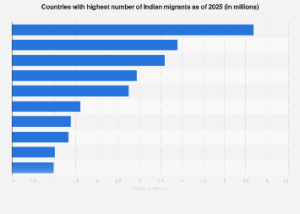


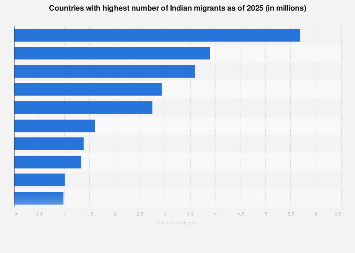
As of January 2025, projections indicate that the United States of America stands as the primary host nation for Indian migrants, with an estimated population of approximately 4.5 million individuals. Following closely is the United Arab Emirates (UAE), expected to be home to over 3.4 million Indian expatriates. These figures highlight the significant scale of India’s global diaspora, which collectively numbers over 32 million individuals residing across various continents. This vast network of overseas Indians represents a crucial element in India’s economic, social, and cultural fabric, influencing global labor markets, driving remittance flows, and fostering international connections.
The sheer magnitude of the Indian diaspora underscores its multifaceted economic impact. Remittances from these expatriates have become a vital source of foreign exchange for India, significantly contributing to its balance of payments and supporting household consumption and investment. Global economic trends, labor market demands in destination countries, and India’s own economic development trajectory all play a role in shaping migration patterns. Factors such as the availability of skilled job opportunities, higher earning potential, and quality of life often draw Indian nationals to countries like the U.S. and UAE.
The United States, with its robust economy and high demand for skilled professionals, particularly in sectors like technology, healthcare, and engineering, has long been a favored destination. The presence of established Indian communities, academic institutions, and professional networks further facilitates integration and provides a supportive environment for new arrivals. This sustained influx of Indian talent has not only enriched American society but has also been instrumental in driving innovation and economic growth within the U.S.
Similarly, the UAE’s strategic location, burgeoning economy, and significant investment in infrastructure and development projects have created a substantial demand for labor across various skill levels. Indians constitute a significant portion of the UAE’s workforce, contributing to sectors ranging from construction and hospitality to finance and education. The cultural proximity and the presence of a large existing Indian community also make the UAE an attractive option for many.
Beyond these two leading destinations, other countries host substantial Indian migrant populations. While precise, up-to-the-minute figures for all countries require access to premium data, general trends suggest that nations such as Canada, the United Kingdom, Australia, Saudi Arabia, and Singapore also represent significant hubs for Indian expatriates. These countries offer diverse opportunities driven by their own economic landscapes and immigration policies, often attracting Indian professionals, students, and families.
The composition of the Indian diaspora is not monolithic. It encompasses a wide spectrum of individuals, from highly skilled professionals and entrepreneurs to semi-skilled workers and students. This diversity is reflected in the varied reasons for migration and the different types of contributions made by the diaspora to both their host countries and India. For instance, the high-skilled segment often plays a crucial role in research and development, technological advancement, and the establishment of businesses, while the semi-skilled and skilled labor force is vital for the operational efficiency of key industries in many host nations.
Economically, the impact of these migration flows is profound. Remittances, as mentioned, are a cornerstone of this impact. According to various reports, India consistently ranks among the top recipients of remittances globally. These funds are crucial for poverty reduction, improving health and education outcomes, and stimulating local economies in India. Beyond remittances, the diaspora also contributes through foreign direct investment (FDI), establishing businesses, and transferring knowledge and technology back to India, fostering entrepreneurship and innovation.
Furthermore, the Indian diaspora acts as a crucial bridge in international trade and cultural exchange. Indian professionals and business leaders living abroad often facilitate trade agreements, investment partnerships, and market access for Indian companies. Their cultural influence is also felt globally, with Indian cuisine, arts, and traditions gaining wider appreciation and adoption in host countries.
Analyzing the trends, several factors influence the distribution of Indian migrants. Geopolitical stability, economic opportunities, ease of immigration, and social integration policies in destination countries are paramount. For example, changes in visa regulations or labor market demands in countries like Canada or Australia can lead to shifts in migration flows. The global pursuit of higher education also plays a significant role, with many Indian students opting to study in countries like the U.S., UK, and Canada, with a portion of them subsequently choosing to work and reside there.
The future trajectory of Indian migration will likely be shaped by ongoing global economic shifts, technological advancements, and evolving demographic trends in both India and its major host countries. As India continues its economic ascent, the nature of migration might also evolve, with potentially more return migration of skilled professionals or an increase in investment-driven migration.
Understanding the scale and distribution of the Indian diaspora is crucial for policymakers, businesses, and researchers alike. It provides insights into global talent mobility, economic interdependence, and the evolving nature of international relations. The presence of millions of Indians across the globe is not just a demographic statistic; it represents a dynamic force shaping economies, societies, and cultures on an international scale, with the United States and the UAE standing as the preeminent anchors of this expansive global community.