
The conclusion of an epoch in American capitalism was marked this week by a complex set of financial results from Berkshire Hathaway, as the Omaha-based conglomerate reported a significant contraction in operating performance during the final quarter of Warren Buffett’s historic tenure as Chief Executive Officer. The transition, which sees Greg Abel officially take the helm as CEO for the 2026 fiscal year, comes at a moment of decelerating momentum for the diversified giant’s core business units, particularly within its sprawling insurance operations. As the market digests the handoff of power, the latest figures underscore both the immense financial fortress Buffett has constructed and the operational headwinds that await his successor in an increasingly volatile global economy.
For the fourth quarter of 2025, Berkshire Hathaway’s operating earnings—a metric Buffett has long championed as the most accurate reflection of the company’s underlying health—fell by nearly 30%, dropping to $10.2 billion from $14.56 billion in the same period a year earlier. This sharp decline was primarily driven by a cooling in the insurance sector, which has traditionally served as the primary engine for Berkshire’s massive "float." For the full year, operating earnings totaled $44.49 billion, a modest retreat from the $47.44 billion recorded in 2024, signaling that the conglomerate’s diverse array of subsidiaries, from railroads to utilities, faced a more challenging macroeconomic environment as the year progressed.
The insurance division, which includes pillars such as GEICO and General Re, bore the brunt of the quarterly downturn. Profits from insurance underwriting plummeted 54% in the fourth quarter to $1.56 billion, down from $3.41 billion in the prior-year period. Simultaneously, insurance investment income, which tracks the yield generated from the company’s vast holdings of bonds and cash equivalents, slid approximately 25% to $3.1 billion. Analysts point to a confluence of factors for this compression, including a shifting landscape in catastrophe reinsurance and a normalization of the personal auto insurance market following several years of erratic pricing and claims frequency. Despite the quarterly volatility, the insurance segment remained a formidable contributor for the full year, yielding $7.26 billion in underwriting profit, though this still represented a decrease from the $9 billion achieved in 2024.
While operating earnings provide a window into the day-to-day profitability of Berkshire’s owned businesses, the company’s net income remains subject to the dramatic swings of the equity markets. Total earnings for the fourth quarter, which include unrealized gains and losses from Berkshire’s $300 billion-plus stock portfolio, remained relatively stable at $19.2 billion, compared to $19.7 billion a year prior. However, these figures were weighed down by a combined $4.5 billion impairment charge related to the company’s significant stakes in Kraft Heinz and Occidental Petroleum. The impairment of Occidental is particularly noteworthy given Buffett’s aggressive accumulation of the energy giant’s shares in recent years, suggesting that a recalibration of long-term energy price expectations or operational hurdles may be impacting the carrying value of the investment.
In a characteristic move, the company used its annual release to caution investors against overreacting to these headline net income figures. Berkshire’s management has long maintained that the inclusion of investment gains and losses in quarterly reports is often "meaningless" and can lead to misleading interpretations of the company’s actual earning power. This accounting reality is a byproduct of GAAP rules that require companies to mark their equity portfolios to market each quarter, a practice Buffett has frequently criticized as being disconnected from the long-term intrinsic value of the businesses Berkshire owns.
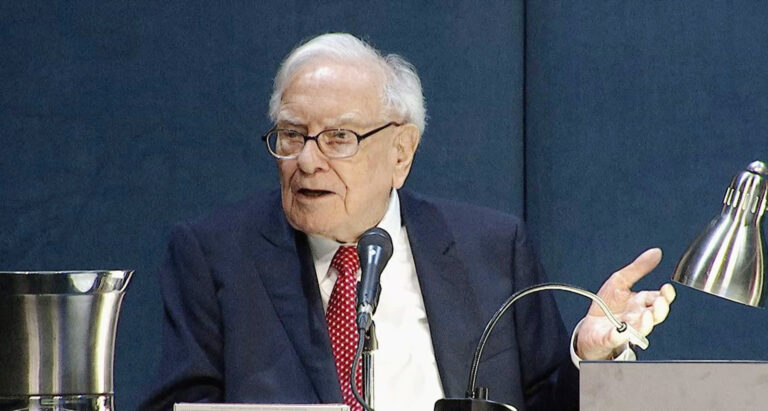
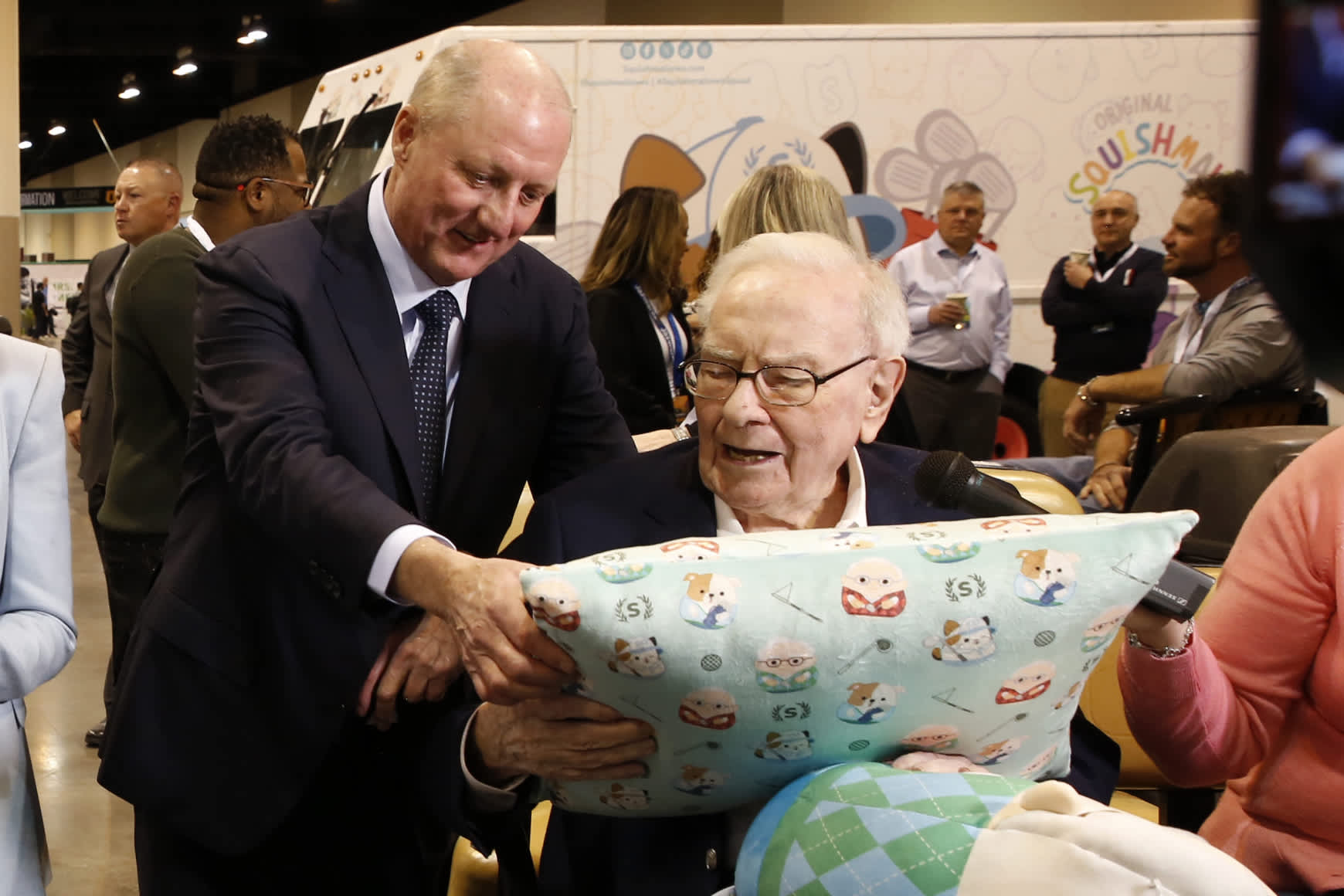
The leadership transition from Buffett to Greg Abel marks the most significant change in Berkshire’s corporate structure since Buffett took control of the erstwhile textile mill in 1965. Abel, who formerly oversaw Berkshire’s energy and non-insurance operations, assumed the CEO role at the start of 2026 following Buffett’s announcement at the May 2025 annual meeting. In his inaugural annual letter to shareholders, Abel sought to project a sense of continuity, vowing to maintain the "culture of disciplined investing" and "unshakeable financial strength" that became the hallmarks of the Buffett era. While Buffett remains the company’s Chairman, the day-to-day capital allocation and operational oversight now rest with Abel and insurance chief Ajit Jain.
One of the most scrutinized aspects of the year-end report was the status of Berkshire’s "cash hoard." The company’s liquidity remained near historic highs, though it dipped slightly to $373.3 billion from a record $381.6 billion in the third quarter. Perhaps more surprising to some market observers was Buffett’s continued restraint regarding share buybacks. Despite the stock ending the year relatively flat in terms of valuation multiples, Berkshire refrained from repurchasing its own shares in the final quarter. This lack of buyback activity, combined with a massive cash balance, suggests that Buffett—and perhaps Abel—find current market valuations unattractive, even for their own stock. It reinforces the company’s long-standing philosophy of "waiting for the fat pitch" rather than deploying capital into a market they perceive as overheated.
The performance of Berkshire’s stock in 2025 reflected this cautious stance. Class A shares rose by 10% over the year, a respectable gain but one that lagged the S&P 500’s robust 16.4% advance. This period of underperformance is not unprecedented for Berkshire, which often trails in speculative or momentum-driven bull markets while outperforming during periods of economic stress. When viewed through a historical lens, the scale of wealth creation under Buffett remains staggering. Since 1965, Berkshire has achieved a compounded annual gain of 19.7%, nearly double the S&P 500’s return over the same period. In cumulative terms, the conglomerate has seen its value surge by more than 6,000,000%, dwarfing the broader market’s 46,061% total return.
As Greg Abel enters his first year as CEO, he inherits a corporate structure that is as much a sovereign wealth fund as it is an industrial conglomerate. The challenges ahead are significant: managing a capital base so large that moving the needle on growth requires multi-billion-dollar acquisitions, navigating the transition to renewable energy within Berkshire Hathaway Energy, and maintaining the decentralized culture that has allowed hundreds of subsidiaries to thrive with minimal interference from Omaha.
Market analysts will be watching closely to see if Abel’s approach to capital allocation differs from his predecessor’s. While Abel has pledged to uphold the Buffett tradition, he faces a different economic reality—one characterized by higher structural inflation, geopolitical fragmentation, and the rapid rise of artificial intelligence. The slight dip in the cash hoard and the impairment of key holdings like Occidental suggest that the new leadership may already be cleaning up the balance sheet and preparing for a new phase of strategic deployment.
The fourth-quarter results, while disappointing on a purely numerical basis compared to the previous year, highlight the resilience of the Berkshire model. Even with a 29% drop in operating income, the company remains one of the most profitable entities on the planet, generating billions in free cash flow every month. The transition of the CEO role is less a change in direction and more a passing of the torch to a leader who has been groomed for decades to protect the "moat" Buffett spent a lifetime building. For shareholders, the message from Omaha remains clear: the era of Buffett may be evolving, but the principles of financial discipline and long-term value creation are intended to endure for generations to come. As Abel noted in his letter, the focus remains on the "extraordinary endurance" of the Berkshire system—a system that is now being tested in a post-Buffett world.