

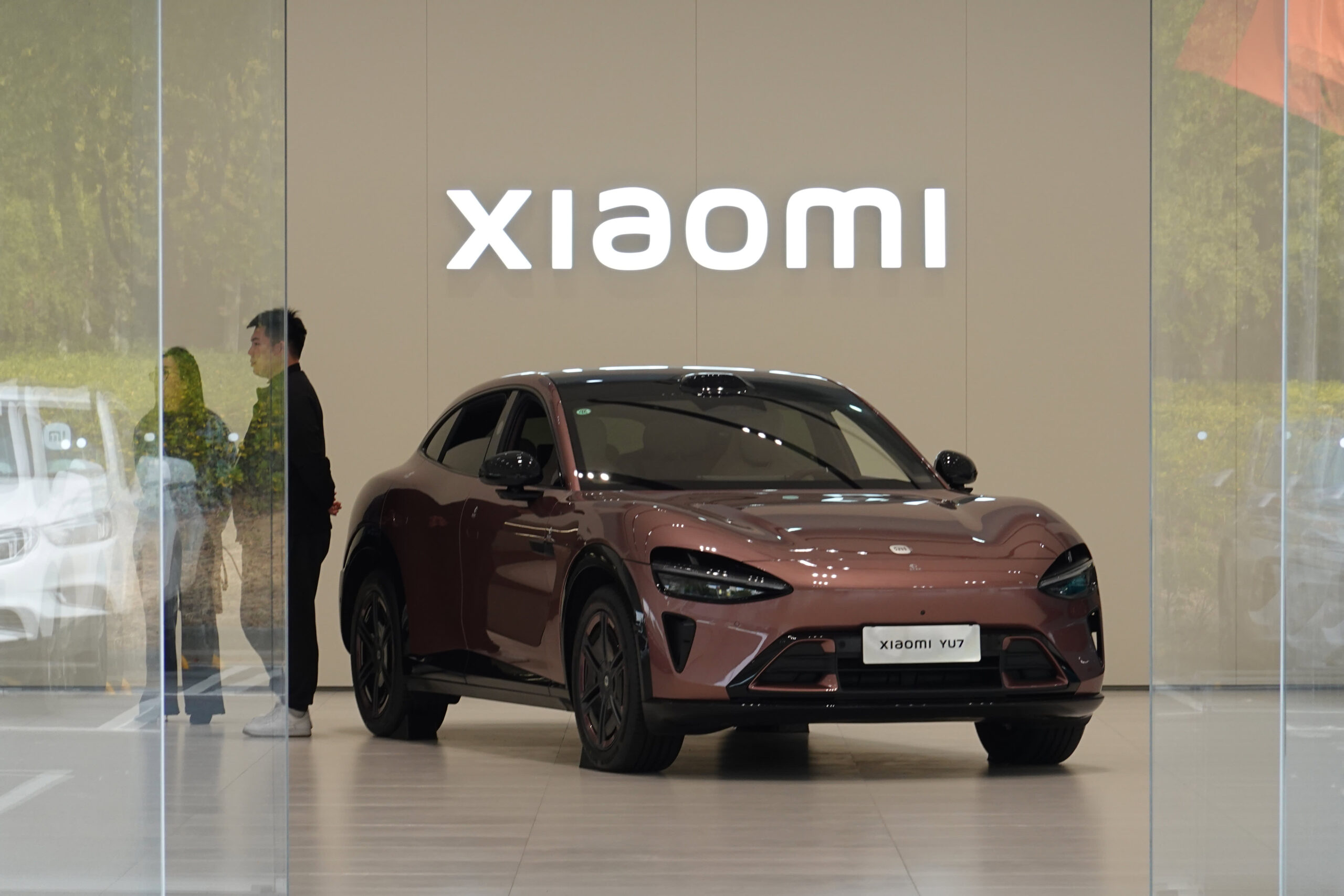
The landscape of the Chinese automotive industry underwent a seismic shift in the opening month of 2026, as the consumer electronics titan Xiaomi effectively disrupted the established hierarchy of the electric vehicle (EV) sector. Data released by the China Passenger Car Association (CPCA) confirms that Xiaomi’s YU7, a flagship electric SUV launched only months prior, has surged to the top of the national sales charts. In a performance that has sent ripples through global capital markets, the YU7 recorded 37,869 units sold in January, a figure that more than doubles the 16,845 units achieved by Tesla’s Model Y during the same period. This transition marks a critical juncture in the "smartphone-to-smartcar" evolution, signaling that the era of Western dominance in the premium Chinese EV segment may be facing its most significant challenge to date.
The decline of the Tesla Model Y in the Chinese market is particularly striking given its historical performance. Throughout much of 2025, the Model Y remained the benchmark for success, ending December as the best-selling vehicle across all categories. However, the January figures reveal a precipitous drop, with the Model Y tumbling to 20th place in overall sales and falling to seventh place within the specific New Energy Vehicle (NEV) category. While monthly sales in the automotive sector are notoriously volatile—often influenced by seasonal subsidies, lunar new year distortions, and inventory clearing—the magnitude of the YU7’s lead suggests a more structural shift in consumer preference.
Xiaomi’s entry into the automotive arena was initially met with skepticism by industry traditionalists, yet the company has leveraged its vast ecosystem of consumer electronics to create a seamless technological integration that competitors struggle to match. The YU7, Xiaomi’s second foray into the EV space following the SU7 sedan, was strategically positioned to dismantle Tesla’s market share. Launched in the summer of 2025, the SUV was priced with surgical precision, entering the market at a starting point approximately 10,000 yuan ($1,450) lower than the Model Y. Beyond price, Xiaomi’s marketing emphasized superior hardware specifications, specifically targeting Tesla on driving range per charge and the integration of its proprietary "HyperOS" operating system, which connects the vehicle to the user’s smartphone and home appliances.

The success of the YU7 is not merely a triumph of pricing but a testament to the "Xiaomi Effect"—the ability of a brand with massive existing loyalty to pivot into high-value manufacturing. For years, Apple’s rumored "Project Titan" was viewed as the ultimate threat to the automotive status quo; however, while Apple retreated from the space, Xiaomi executed a rapid-fire development cycle. By the end of 2025, Xiaomi had already climbed to tenth place in total NEV sales for the year. Its jump to the top spot in January 2026 indicates that the brand has successfully transitioned from a niche "tech-enthusiast" choice to a mainstream powerhouse capable of outselling legacy giants and specialized EV makers alike.
The broader context of the Chinese market remains complex. While Xiaomi celebrates its January victory, the overall electric vehicle sector in China has shown signs of a cooling growth trajectory. After years of triple-digit expansion fueled by government incentives, the market is now entering a phase of consolidation and intense price competition. BYD remains the undisputed volume leader, finishing 2025 with over 3 million vehicles sold, followed closely by Geely with 2.6 million. In this environment, market share is no longer being "created" by new buyers but is instead being "cannibalized" from competitors. The YU7’s gain appears to come directly at the expense of Tesla, which has struggled to refresh its aging lineup at a pace that matches the iterative speed of Chinese tech firms.
Tesla’s current predicament in China reflects a broader economic challenge for foreign multinationals. As domestic manufacturers achieve economies of scale and technological parity, the "prestige" factor of Western brands is diminishing among younger, tech-savvy Chinese consumers. These buyers prioritize software-defined features, such as advanced autonomous driving assistance and sophisticated in-cabin entertainment, over traditional brand heritage. Xiaomi’s ability to treat a car like a high-end mobile device—offering frequent over-the-air updates and a familiar interface—has resonated deeply with a demographic that views the vehicle as an extension of their digital life.
However, the path to dominance has not been without its hurdles for the Beijing-based company. The earlier SU7 sedan faced intense scrutiny following a series of high-profile accidents involving its driver-assist systems and controversial hardware designs, such as electrically-powered "hidden" door handles that reportedly malfunctioned during emergencies. These incidents prompted a swift regulatory response from Chinese authorities. Beijing has since moved to ban hidden door handles on new models, citing safety concerns during post-crash rescue operations. Furthermore, new mandates require vehicles to be equipped with external lighting indicators to signal when automated driving features are active. Xiaomi has had to navigate these shifting regulatory sands while maintaining its "innovator" image, a balance that is increasingly difficult as the government tightens its grip on automotive safety standards.

From an economic perspective, the rise of Xiaomi’s auto division is a cornerstone of China’s broader industrial strategy. The "New Three" drivers of Chinese export growth—EVs, lithium-ion batteries, and solar products—are intended to offset the slowdown in the real estate sector. Xiaomi’s success provides a blueprint for how China’s domestic tech giants can pivot toward high-end manufacturing, creating a new tier of industrial conglomerates. The vertical integration displayed by Xiaomi, which includes developing its own electric motors and die-casting technology (similar to Tesla’s "Gigapress"), allows it to maintain margins even in the face of aggressive price wars.
Looking ahead, the rivalry between Xiaomi and Tesla is set to go global. Xiaomi has already signaled its intentions to expand into international markets, with a planned entry into Europe scheduled for 2027. This expansion will likely face significant geopolitical headwinds, including the European Union’s ongoing anti-subsidy investigations into Chinese-made EVs and the potential for increased tariffs. Nevertheless, Xiaomi’s strategy of building localized showrooms and manufacturing partnerships suggests a long-term commitment to becoming a top-five global automaker, a goal explicitly stated by the company’s founder, Lei Jun.
Tesla, meanwhile, is unlikely to remain stagnant. Industry analysts expect the American firm to respond with further price cuts or an accelerated rollout of its next-generation "Redwood" platform. However, the January data serves as a stark warning: the window of time in which Tesla could rely on brand recognition alone is closing. In the world’s largest car market, the competition is no longer just other car companies; it is agile, well-funded tech ecosystems that move at the speed of the smartphone industry.
As the first quarter of 2026 progresses, market observers will be watching to see if Xiaomi can maintain its momentum or if Tesla’s January dip was a temporary anomaly. If the YU7 continues to lead the charts, it will confirm a fundamental realignment of the global auto industry—one where the software and the ecosystem are the primary drivers of value, and where a company that once only made phones can, in less than two years, become the king of the road. For now, the numbers speak for themselves: in the battle for the Chinese driveway, the smartphone giant has taken the lead.