

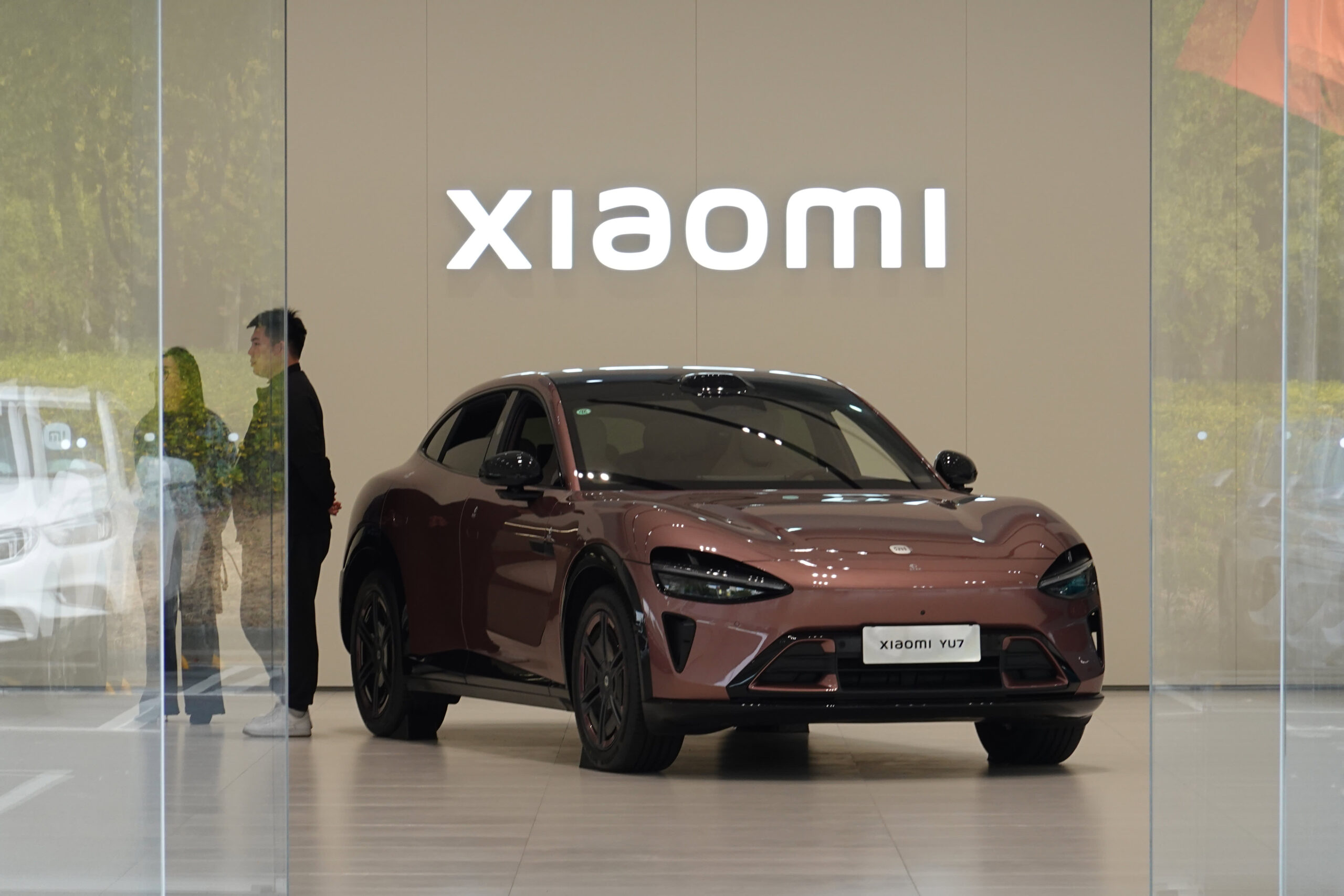
The landscape of the Chinese automotive industry underwent a seismic shift in January as Xiaomi, the consumer electronics giant that only recently pivoted to vehicle manufacturing, delivered a stunning blow to Tesla’s long-standing dominance. According to the latest data released by the China Passenger Car Association (CPCA) and corroborated by the industry platform Autohome, Xiaomi’s YU7 electric SUV surged to the top of the sales charts, moving 37,869 units in a single month. This figure represents more than double the volume achieved by Tesla’s Model Y, which recorded 16,845 sales in the same period, signaling a potential changing of the guard in the hyper-competitive New Energy Vehicle (NEV) sector.
The ascent of the YU7 is particularly noteworthy given its relatively short time on the market. Launched in the summer of 2025 as the follow-up to Xiaomi’s successful SU7 sedan, the YU7 was engineered specifically to disrupt the mid-to-large SUV segment—a category that has been the primary engine of Tesla’s profitability in China for years. By January, the Model Y, which had finished December as the nation’s best-selling vehicle across all fuel types, experienced a precipitous decline, tumbling to 20th place in overall sales and falling from first to seventh within the NEV category. While monthly sales in the Chinese market are notoriously volatile due to seasonal factors and production cycles, the sheer scale of Xiaomi’s lead suggests that the company’s "smartphone-to-smart-car" ecosystem strategy is resonating with consumers at an unprecedented level.
Xiaomi’s strategy for the YU7 was one of aggressive positioning, both in terms of technical specifications and pricing. Upon its release, Xiaomi priced the base model of the YU7 at approximately 10,000 yuan (roughly $1,450) lower than the entry-level Model Y. This pricing delta, while seemingly modest, is a critical psychological threshold in a market currently defined by a brutal price war. Beyond the price tag, Xiaomi leaned heavily on its heritage as a technology leader, claiming the YU7 outperformed Tesla on several key performance metrics, including superior battery range on a single charge and a more integrated software experience. The vehicle’s seamless connectivity with Xiaomi’s existing suite of smartphones, tablets, and smart home devices has created a "walled garden" effect that traditional automakers struggle to replicate.

The broader economic context of this shift cannot be ignored. China’s electric vehicle market, while still the largest in the world, has entered a period of cooling growth. After years of triple-digit expansion, the industry is now grappling with market saturation in Tier 1 cities and a general slowdown in consumer spending. In this environment, value-for-money and technological novelty have become the primary drivers of purchase decisions. Tesla, which has not significantly refreshed the exterior design of the Model Y in several years, is increasingly viewed by some Chinese tech-savvy consumers as a "legacy" electric brand, whereas Xiaomi represents the vanguard of the next generation of intelligent mobility.
However, the path to the top has not been without its obstacles for Xiaomi. The company’s foray into the automotive world has been scrutinized following a series of high-profile incidents involving its first model, the SU7 sedan. Reports of fatal accidents linked to driver-assistance systems and mechanical issues with electronic door handles prompted a swift regulatory response from Beijing. In a move that forced several manufacturers to redesign their future lineups, the Chinese government recently banned "hidden" or flush-mounted door handles that do not have a mechanical override, citing safety concerns during emergency extractions. Furthermore, new mandates now require vehicles to be equipped with external indicator lights that signal to pedestrians and other drivers when autonomous or semi-autonomous driving features are active. Xiaomi has had to navigate these shifting regulatory sands while simultaneously scaling up production at its state-of-the-art Beijing manufacturing facility.
Despite Xiaomi’s January triumph, the wider market remains dominated by established industrial titans. For the full year of 2025, BYD remained the undisputed leader of the Chinese market, delivering over 3 million vehicles, followed by Geely with 2.6 million units. Tesla, while facing headwinds, maintained a respectable fifth-place ranking in annual sales, whereas Xiaomi finished the year in tenth. The volatility of January’s data—where Tesla’s numbers often dip as the company prioritizes export shipments from its Giga Shanghai plant to European and Asian markets at the start of a quarter—suggests that while Xiaomi has won a significant battle, the war for long-term market share is far from over.
Industry analysts point out that Tesla’s strategy in China has traditionally relied on high-volume production of a limited number of models to maximize economies of scale. In contrast, Chinese domestic players like Xiaomi, NIO, and Li Auto are flooding the market with frequent updates, niche models, and localized features such as in-car karaoke systems, sophisticated voice assistants, and advanced "Smart Cockpit" configurations. This rapid iteration cycle places immense pressure on Tesla to accelerate its product development timeline.

Looking ahead, the competition is set to move beyond China’s borders. Xiaomi has already signaled its intention to take its automotive division global, with plans to enter the European market by 2027. This expansion comes at a time of heightened geopolitical tension, as the European Union and the United States have both moved to impose significant tariffs on Chinese-made EVs, alleging that state subsidies have created an unfair competitive advantage. Xiaomi’s status as a publicly traded consumer electronics firm may offer it a slightly different narrative than state-owned enterprises, but it will still face the same protectionist hurdles as its peers.
The economic impact of Xiaomi’s success extends into the supply chain as well. The company’s rise has bolstered a network of domestic suppliers, ranging from battery giant CATL to specialized semiconductor firms. By vertically integrating its software and leveraging its massive existing retail footprint—thousands of "Mi Stores" across China—Xiaomi has drastically reduced the customer acquisition costs that typically plague new car companies. This synergy between the "Human x Car x Home" ecosystem is what Xiaomi CEO Lei Jun has described as the company’s ultimate competitive moat.
As 2026 progresses, the industry will be watching to see if Xiaomi can maintain its momentum or if Tesla will respond with its long-rumored "Model 2" or a significant refresh of the Model Y. For now, the January sales data serves as a potent reminder that in the age of the software-defined vehicle, brand loyalty can be fleeting, and technological agility is the ultimate currency. Xiaomi’s ability to outsell an established icon like the Model Y by a factor of two is not just a milestone for the company; it is a signal that the traditional automotive hierarchy is being permanently dismantled by the titans of the digital age.
The stakes for the coming year are remarkably high. If Xiaomi can prove that its January performance was not an anomaly but the start of a sustained trend, it will validate the theory that the future of the car lies in its identity as a mobile computing platform. For Tesla, the challenge is to reclaim its status as the world’s primary innovator in a market that is no longer satisfied with the status quo. As the "New Energy" transition enters its most mature and difficult phase, the rivalry between the smartphone king and the EV pioneer will likely define the trajectory of the global auto industry for the next decade.