

The landscape of global high finance is undergoing a structural metamorphosis that rivals the introduction of computerized trading in the late 20th century, with JPMorgan Chase & Co. positioned at the vanguard of this technological frontier. Jamie Dimon, the bank’s long-standing Chairman and CEO, recently signaled a definitive shift in the institution’s human capital strategy, revealing that the "huge redeployment" of the workforce is no longer a theoretical future prospect but an active, operational reality. As the world’s largest bank by market capitalization, JPMorgan’s internal maneuvers serve as a bellwether for the broader global economy, illustrating the complex friction between unprecedented efficiency gains and the potential for large-scale labor displacement.
At the heart of this transition is a staggering commitment to infrastructure. JPMorgan Chase currently maintains an annual technology budget approaching $20 billion, a figure that exceeds the gross domestic product of several small nations. This capital is being funneled into a vision Dimon describes as being "fundamentally rewired" for the age of artificial intelligence. This is not merely an incremental upgrade to existing systems but a foundational reconstruction of how a global financial powerhouse operates, from the back-office processing of millions of transactions to the front-line interactions with institutional and retail clients.
The empirical data emerging from the bank’s internal metrics provides a stark visualization of AI’s impact on headcount. While the firm’s total workforce remained relatively stable over the past fiscal year at approximately 318,512 employees, the internal composition of that staff has shifted significantly. Analysis of the bank’s latest disclosures reveals a targeted reduction in roles traditionally vulnerable to automation: operations staff fell by 4% and support roles decreased by 2%. Conversely, the bank expanded its "revenue-generating" and client-facing roles by 4%. This data suggests a strategic pivot where the "drudgery" of administrative and operational tasks is being offloaded to algorithmic systems, allowing human capital to be concentrated in areas that require high-level relationship management and complex decision-making.
The efficiency gains reported by the bank are equally illuminating. By integrating generative AI models—leveraging partnerships with industry leaders like OpenAI and Anthropic through a proprietary internal portal—JPMorgan has seen a 10% increase in the efficiency of its software engineers. In the realm of operations, the number of accounts managed per employee has risen by 6%, while the per-unit cost of fraud detection and mitigation has plummeted by 11%. These figures represent a significant improvement in operational leverage, allowing the bank to scale its services without a linear increase in human labor costs.
Chief Financial Officer Jeremy Barnum has highlighted that the bank has doubled its generative AI use cases within a single calendar year. These applications are currently concentrated in two high-impact sectors: customer service and internal technology development. By utilizing large language models (LLMs) to handle routine inquiries and assist developers in writing and debugging code, the bank is effectively shortening the "innovation-to-market" cycle. However, this rapid adoption brings with it a profound responsibility that Dimon has begun to address with increasing urgency: the fate of the workers whose roles are being automated out of existence.
Dimon’s "huge redeployment" plan is a corporate acknowledgment that the Fourth Industrial Revolution will create winners and losers within the office walls. The bank’s strategy involves moving displaced workers into new roles within the firm, a process that requires massive investments in retraining and internal mobility. "We have to up that a little bit so we can take people who are displaced—and we have displaced people from AI—and we offer them other jobs," Dimon noted during a recent investor gathering. This internal "safety net" is designed to preserve institutional knowledge while transitioning the workforce toward more value-added activities. Yet, the scalability of such redeployment programs remains an open question for the wider corporate world.

The economic implications of this shift extend far beyond the balance sheets of Wall Street. Dimon has frequently compared the impact of AI to that of electricity or the printing press—innovations that fundamentally altered the trajectory of human civilization. While these historical precedents eventually led to greater prosperity and new categories of employment, the transition periods were often marked by social upheaval and economic pain for those in legacy industries. Dimon’s recent public reflections include a sobering thought experiment regarding the sudden arrival of autonomous trucking. If two million drivers were displaced overnight, he posits, the immediate economic alternative might be low-wage roles, such as stocking shelves for $25,000 a year. This "wage cliff" represents a systemic risk to social stability that Dimon argues must be addressed by both the private sector and government policy.
Globally, the financial sector is watching JPMorgan’s experiment with a mix of emulation and anxiety. In Europe, where labor laws are more stringent, banks like HSBC and BNP Paribas are navigating AI integration through a more regulated lens, focusing heavily on ethical AI frameworks and the "right to disconnect." In Asia, institutions such as Singapore’s DBS have already integrated AI into their core DNA, using it for everything from credit scoring to personalized wealth management advice. However, the sheer scale of JPMorgan’s $20 billion war chest gives it a unique ability to set the pace for the global industry.
The "disruption risk" is not just a matter of internal bank policy but a macroeconomic concern that is beginning to influence equity markets. Investors are increasingly scrutinizing how companies manage the "AI transition." Firms that can successfully automate while maintaining a productive and loyal workforce are being rewarded with higher valuations, while those perceived as lagging or facing labor unrest are being penalized. The volatility in the shares of public companies following every major AI model update underscores the market’s sensitivity to this technological sea change.
To mitigate the broader societal fallout, Dimon is calling for a proactive, multi-stakeholder approach to labor market shifts. This includes enhanced vocational training, government-sponsored transition assistance, and a rethink of the educational pipeline to ensure future workers possess the "AI fluency" required in a modern economy. The bank’s leadership argues that the time to build these frameworks is now, before the full force of autonomous technologies hits the broader labor market.
The "fundamentally rewired" JPMorgan Chase is a blueprint for the future of the multinational corporation. It is a future where the distinction between a "bank" and a "tech company" continues to blur. In this new paradigm, competitive advantage is derived not just from the size of one’s balance sheet, but from the sophistication of one’s algorithms and the agility of one’s human talent. The success of Dimon’s "redeployment" strategy will be a critical case study for CEOs worldwide. If the world’s largest bank can successfully navigate the AI transition by elevating its workforce rather than merely discarding it, it may provide a template for a more inclusive technological revolution. If it fails, the "wage cliff" and the resulting social friction may become the defining economic challenge of the mid-21st century.
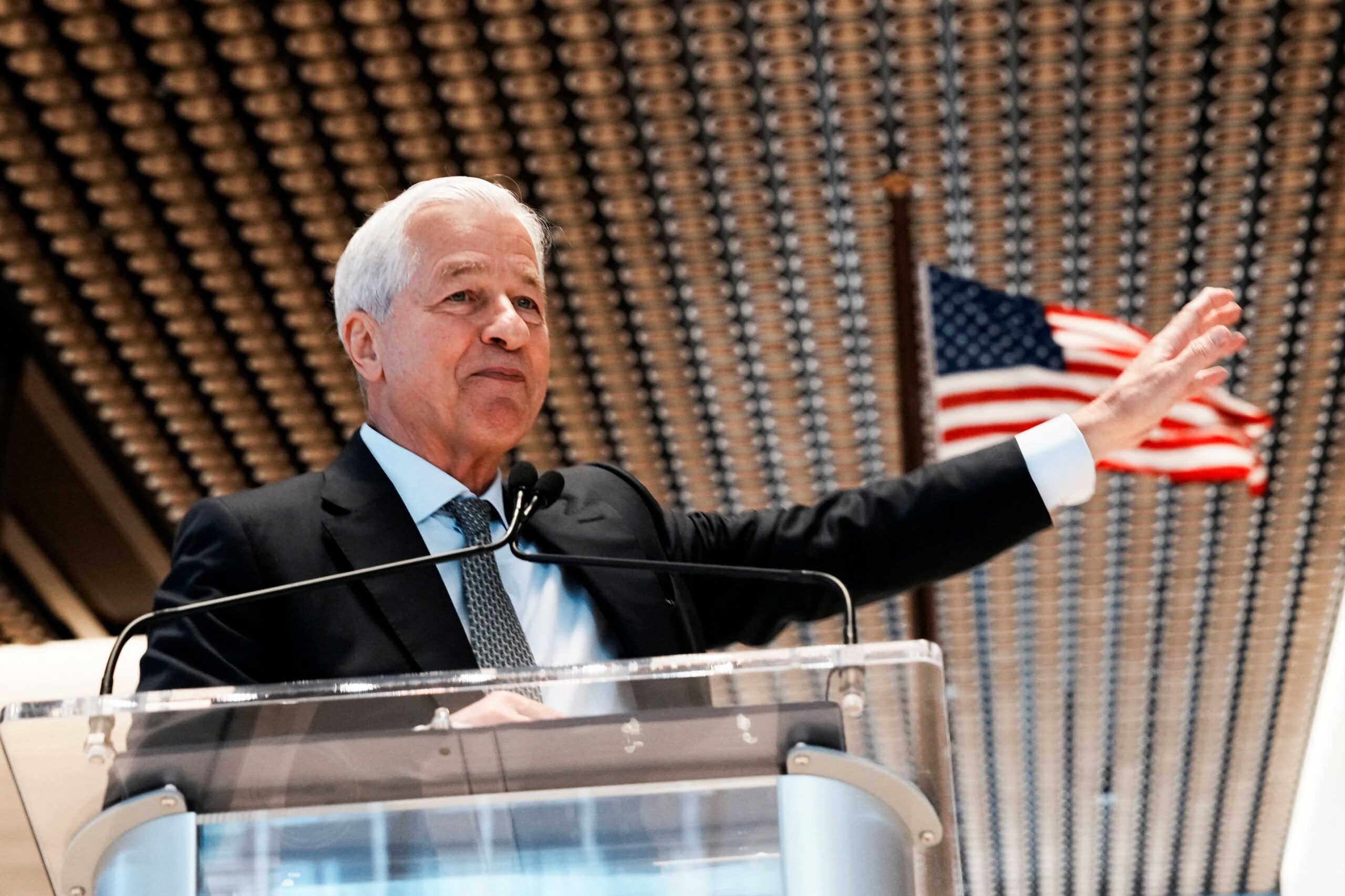
As the ribbon-cutting for the bank’s new headquarters at 270 Park Avenue symbolizes a commitment to physical infrastructure, the internal shift toward AI symbolizes a commitment to a digital-first future. The bank’s leadership remains steadfast in its belief that AI will ultimately do a "better job for customers," but the human cost of that improvement remains the most significant variable in the equation. For now, the "huge redeployment" continues, marking a historic chapter in the evolution of labor, capital, and the machines that are increasingly bridging the gap between the two.