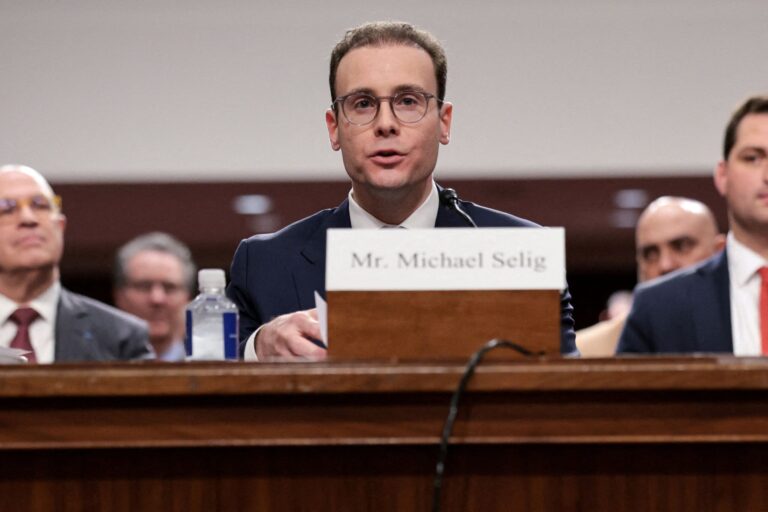


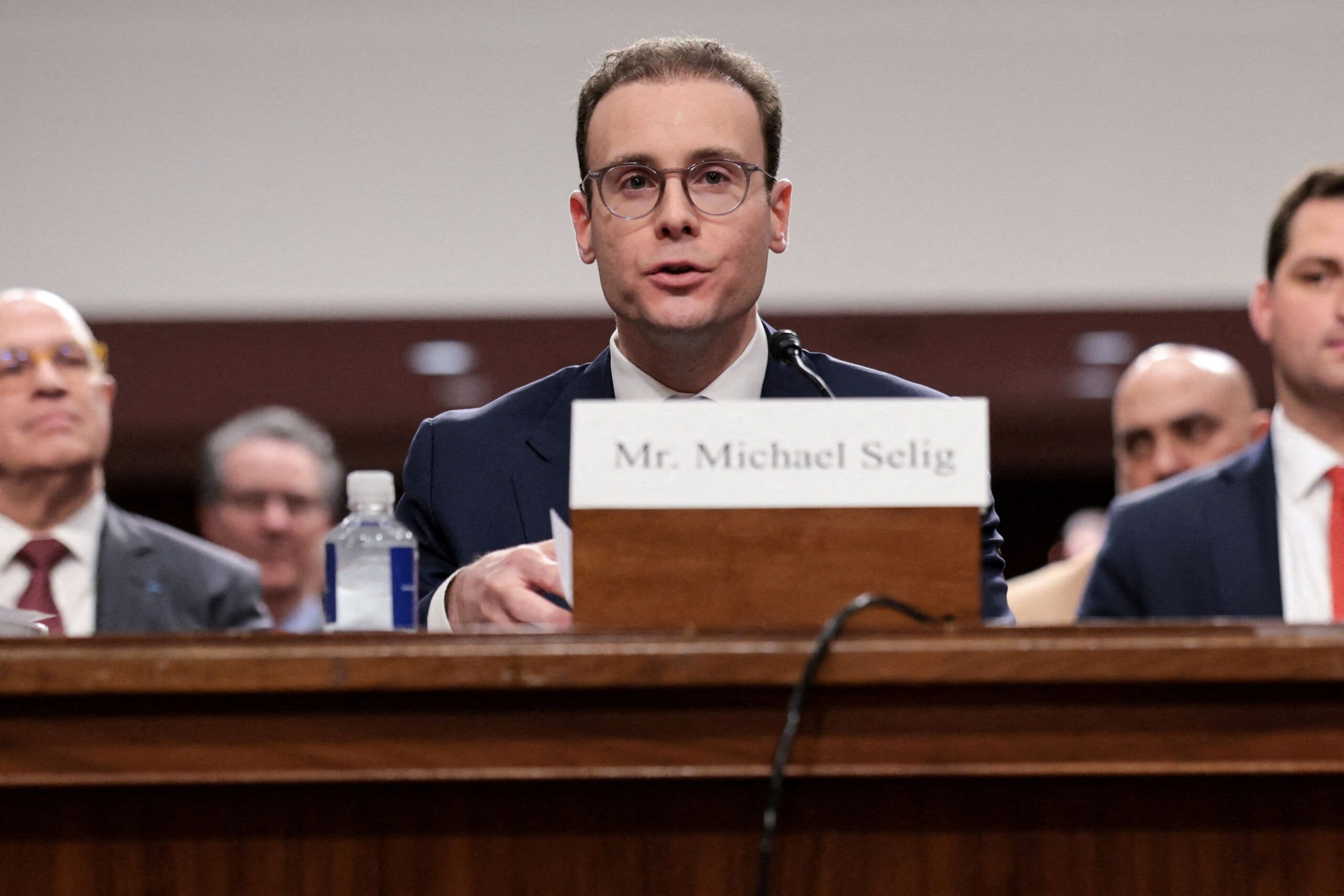
The landscape of American financial regulation is currently witnessing a high-stakes jurisdictional clash as the Commodity Futures Trading Commission (CFTC) moves to aggressively assert its authority over the burgeoning prediction market industry. In a definitive legal maneuver, the agency filed an amicus brief in federal court this week, signaling a sharp departure from previous regulatory ambiguity and a direct challenge to state governments attempting to classify these platforms as illegal gambling operations. Led by the newly appointed Chairman Michael Selig, the CFTC is positioning itself as the sole arbiter of "event contracts," arguing that these instruments are sophisticated financial derivatives rather than mere wagers.
This regulatory offensive crystallized on Tuesday when the CFTC intervened in a dispute before the Ninth U.S. Circuit Court of Appeals involving Crypto.com and the Nevada Gaming Control Board. The intervention serves as a shot across the bow for state regulators who have historically enjoyed broad leeway in governing betting and games of chance within their borders. By filing in support of the platform, the CFTC is testing the limits of the Commodity Exchange Act’s "exclusive jurisdiction" clause, a move that could permanently reshape the legal architecture of decentralized finance and information-based markets in the United States.
Chairman Selig, who recently assumed his role under the administration of President Donald Trump, has been vocal about his vision for the agency. In a series of public statements, including a high-profile op-ed and social media communications, Selig framed the intervention as a necessary defense of federal supremacy. He argued that the proliferation of state-level lawsuits—currently numbering nearly 50—threatens to create a fragmented, unworkable regulatory "patchwork" that stifles innovation. "The CFTC will no longer sit idly by while overzealous state governments undermine the agency’s exclusive jurisdiction over these markets," Selig asserted, emphasizing that the commission possesses the unique expertise required to oversee complex commodity derivatives.
The rise of prediction markets, such as Kalshi and Polymarket, represents one of the most significant shifts in retail finance over the last decade. These platforms allow participants to trade on the outcome of real-world events ranging from Federal Reserve interest rate hikes and Oscar winners to geopolitical conflicts and election results. Unlike traditional sportsbooks, these markets function through the issuance of binary options or event contracts, where the price reflects the aggregate probability of an occurrence. Proponents argue that these markets provide invaluable "price discovery" for information, often proving more accurate than traditional polling or expert forecasting due to the "wisdom of the crowds" and the financial incentives of participants.
However, the rapid growth of these platforms has drawn the ire of state regulators and consumer advocacy groups. Critics contend that because many of these contracts involve events with no inherent underlying commercial value—such as award shows or political outcomes—they are indistinguishable from gambling. In many states, gambling is strictly regulated or prohibited unless specifically licensed, and state attorneys general have begun to view prediction markets as a mechanism to bypass these long-standing protections. The Nevada Gaming Control Board’s challenge to Crypto.com is a primary example of this friction, as the state seeks to maintain its traditional role as the gatekeeper of betting activities.
The CFTC’s counter-argument hinges on the technical classification of these products as "swaps" or "options" under federal law. Selig contends that event contracts serve legitimate economic functions, such as allowing businesses to hedge against specific risks. For instance, a logistics company might use a prediction market to hedge against the risk of a port strike, or a media conglomerate might use one to offset the financial impact of a specific legislative change. By categorizing these trades as derivatives, the CFTC brings them under the umbrella of federal financial regulation, which includes rigorous oversight regarding market integrity, anti-manipulation protocols, and capital requirements.
This shift in posture marks a significant pivot from the previous administration’s more cautious approach. Under former leadership, the CFTC had expressed skepticism regarding election-based contracts, citing concerns over the sanctity of the democratic process and the potential for market manipulation to influence public perception. However, the 2024 election cycle proved to be a watershed moment for the industry. Platforms like Polymarket saw billions of dollars in trading volume, providing a real-time, high-stakes alternative to traditional political analysis. The resilience and perceived accuracy of these markets during the election cycle have bolstered the argument that they are mature financial ecosystems rather than fringe betting sites.
Chairman Selig’s proactive stance suggests that the agency is moving toward a formalized "safe harbor" or a comprehensive new rulebook for prediction markets. In his first public comments as chairman in late January, Selig indicated that he intends to draft clear, transparent regulations that would provide a path to legality for platforms that adhere to federal standards. This would likely include requirements for "self-regulatory organization" (SRO) status, where exchanges are responsible for monitoring their own participants under the watchful eye of CFTC examiners. This model is already used for major commodities exchanges like the CME Group, and Selig believes applying it to prediction markets will ensure they are not the "Wild West" that critics fear.
The economic implications of this jurisdictional battle are profound. If the CFTC successfully defends its exclusive jurisdiction, it could trigger a wave of institutional investment into prediction markets. Currently, many large-scale financial institutions remain on the sidelines due to the legal uncertainty and the risk of state-level prosecution. A unified federal framework would provide the "regulatory certainty" that Wall Street craves, potentially transforming prediction markets from a niche interest into a foundational component of the global financial system. Analysts suggest that the total addressable market for event-based derivatives could eventually rival traditional commodities markets as more "real-world" risks are tokenized and traded.
Furthermore, the global context cannot be ignored. The United States is currently in a race with other financial hubs, such as London and Singapore, to become the primary center for the digital asset and decentralized finance (DeFi) industries. In the United Kingdom, the Financial Conduct Authority (FCA) has taken a nuanced approach to "contracts for difference," and many international jurisdictions are watching the U.S. legal battle as a bellwether for their own policies. By asserting federal control, the CFTC aims to ensure that the U.S. remains the premier destination for these "exciting products," preventing a flight of capital and talent to offshore jurisdictions with more permissive regimes.
Despite the CFTC’s confidence, the legal road ahead remains fraught with challenges. The Ninth Circuit case will be a critical test of the "preemption" doctrine—the principle that federal law takes precedence over state law when the two conflict. State regulators are expected to lean heavily on the McCarran-Ferguson Act and other historical precedents that protect state authority over gambling and insurance. They argue that the CFTC’s expansion into event contracts is an overreach that encroaches on the traditional "police powers" of the states to protect their citizens from the social ills associated with gambling.
The outcome of this struggle will determine the future of how information is valued in the digital age. If the CFTC prevails, prediction markets will be cemented as legitimate financial tools, governed by the same principles of transparency and efficiency that define the American capital markets. If the states succeed, the industry may be forced underground or restricted to a few permissive jurisdictions, limiting the "wisdom of crowds" to a fragmented and less liquid pool of participants. For now, Chairman Selig’s message remains unwavering: the federal government is ready to fight for its right to lead the next evolution of the derivatives market. As the brief makes its way through the appellate process, the financial world will be watching closely to see if the "Wild West" of prediction markets will finally be tamed by a federal badge.