

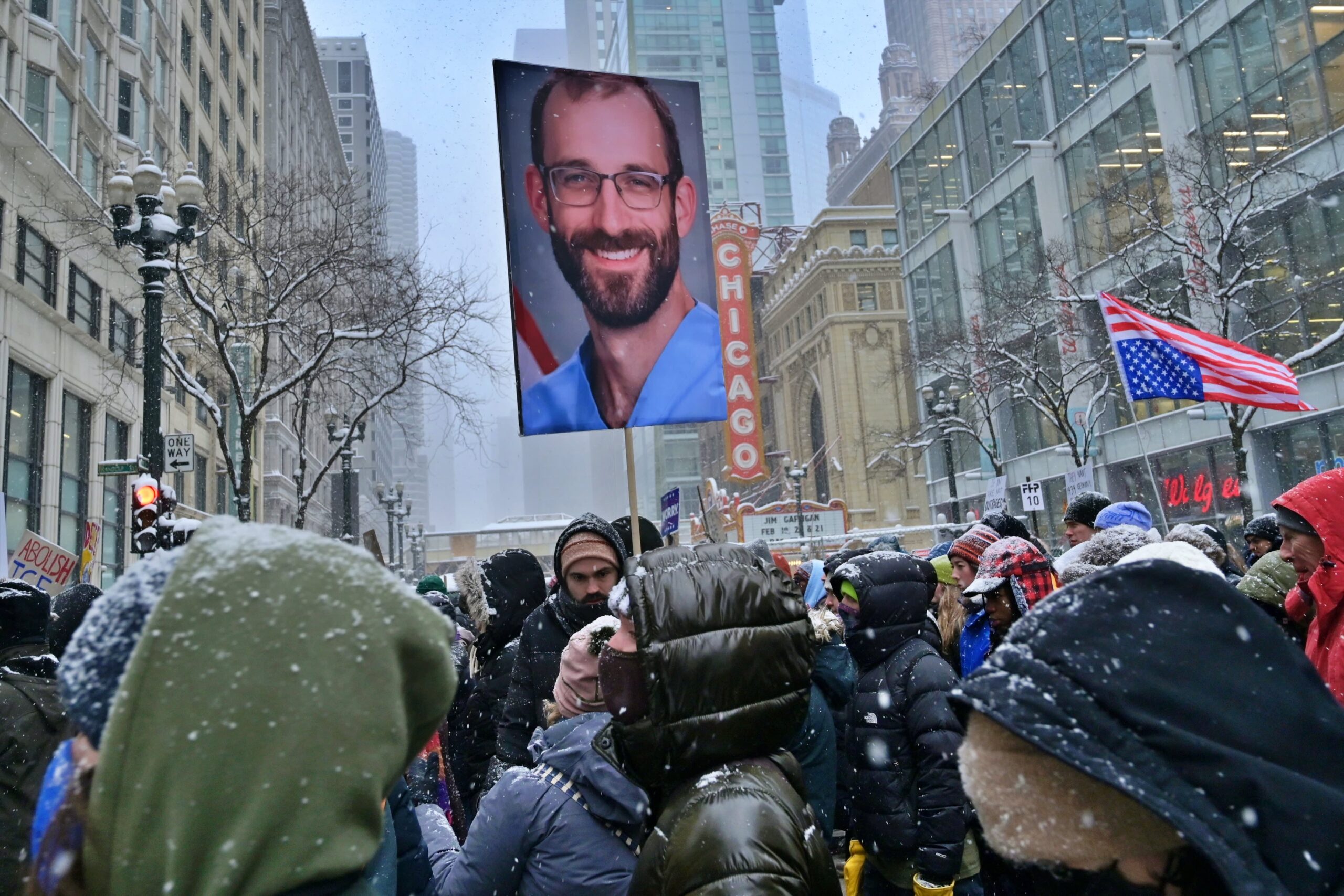
The fatal shooting of Alex Pretti, a 34-year-old intensive care unit nurse and American citizen, at the hands of federal immigration agents in Minnesota has sent a seismic shock through the American corporate landscape. For months, the C-suites of the nation’s largest firms have maintained a disciplined, if uncomfortable, silence as the White House expanded "Operation Metro Surge," a sprawling immigration crackdown that has seen thousands of U.S. Immigration and Customs Enforcement (ICE) and Border Patrol agents deployed into major metropolitan hubs. However, the death of Pretti—the second American citizen killed by federal agents in the state within a month—has forced a reluctant confrontation between the titans of industry and an administration that has shown an unprecedented willingness to use the levers of state power against its critics.
In the immediate aftermath of the Jan. 24 killing, a coalition of more than 60 Minnesota-based executives, representing global powerhouses such as Target, UnitedHealth Group, and 3M, issued a joint letter. The missive called for an "immediate de-escalation" of federal activity in the Twin Cities. Yet, the document was as notable for what it omitted as for what it contained. It avoided naming the victims, it did not mention the President by name, and it steered clear of criticizing the underlying immigration policies. This collective, sanitized approach underscores a new reality in American business: the era of the "activist CEO" has been replaced by a climate of strategic caution and fear of direct executive retribution.
The reluctance to speak out individually is not a matter of personal apathy but of calculated risk management. Since returning to office, the current administration has demonstrated a penchant for "retributive governance," weaponizing regulatory agencies, government contracts, and the judicial system to penalize perceived corporate enemies. The most jarring example occurred recently in Davos, Switzerland. After JPMorgan Chase CEO Jamie Dimon suggested at the World Economic Forum that the administration should "calm down" regarding internal immigration tensions, the White House responded by filing a $5 billion lawsuit against the bank, citing its 2021 decision to close certain accounts. Though the administration claimed the suit was unrelated to Dimon’s comments, the timing sent a clear message to the broader business community: dissent carries a quantifiable price tag.
This environment has created what Jeffrey Sonnenfeld, a professor at the Yale School of Management, describes as a "shakedown" culture. "They don’t want to speak out alone because they are afraid," Sonnenfeld noted. "Retaliatory gestures are quite severe." For a CEO, the stakes involve more than just personal reputation; they involve the fiduciary duty to protect shareholder value. In an era where a single presidential post on social media can erase billions in market capitalization or trigger a Department of Justice investigation, the "safe" play is often to hide in the crowd.

Despite the prevailing atmosphere of intimidation, cracks are beginning to appear in the corporate wall of silence. Following the Pretti shooting, tech leaders including OpenAI’s Sam Altman and Apple’s Tim Cook have utilized internal channels to signal their unease. Altman, in a message to employees, characterized the federal overreach as a violation of "American duty," while Cook described himself as "heartbroken" by the events in Minneapolis. Cook further noted that he had privately conveyed his concerns to the White House—a move that reflects a preference for "backchannel diplomacy" over public confrontation.
The economic implications of this federal-corporate friction are profound. Minneapolis, a city that serves as the headquarters for 15 Fortune 500 companies, has become a laboratory for the intersection of civil unrest and economic stability. Operation Metro Surge has not only led to violent clashes and the use of chemical irritants in downtown corridors but has also disrupted the local labor market. A recent CNBC survey of 34 major corporations found that 15% of respondents were aware of employees who had been personally impacted by ICE enforcement actions over the last year. When federal agents detain or injure the workforce of a major employer, the issue ceases to be purely political and becomes a matter of operational continuity.
Furthermore, the threat of a partial government shutdown looms as Democrats in Congress vow to block funding for the Department of Homeland Security unless the Minneapolis operation is curtailed. For businesses, a shutdown introduces a new layer of volatility, affecting everything from travel and logistics to the processing of federal permits. The administration’s recent shift toward "de-escalation" language may be a tactical response to this legislative pressure, yet the physical presence of ICE agents remains unchanged, leaving businesses in a state of perpetual uncertainty.
The shift in corporate behavior is most visible when comparing the current crisis to the social justice movement of 2020. Following the murder of George Floyd, Target CEO Brian Cornell issued a visceral, public condemnation of systemic racism, pledging the company’s resources to social change. Today, Target’s response to the deaths of Renee Good and Alex Pretti has been markedly different. The company has largely stuck to internal memos authored by human resources executives, emphasizing safety and clarifying that it does not have "cooperative agreements" with ICE. This pivot reflects the "post-woke" backlash that has seen consumer-facing brands targeted by boycotts from both the left and the right. In a hyper-polarized market, neutrality is often the only perceived path to survival, even when the violence is occurring blocks from a corporate headquarters.
Market data suggests that the public is as divided as the boardrooms. According to a Morning Consult poll, only 28% of Americans believe CEOs should speak out publicly when they disagree with the President’s policies, while 40% believe that criticizing the administration is a responsible act. This statistical split leaves executives in a "no-win" scenario. If they speak, they risk White House retaliation and alienating a segment of their customer base; if they remain silent, they risk alienating their employees and the local communities that provide their "social license" to operate.

From an international perspective, the current climate in the United States is drawing comparisons to emerging markets where political loyalty is a prerequisite for business success. Global investors, who traditionally view the U.S. as a bastion of the rule of law and institutional stability, are now forced to account for "political risk" in their American portfolios. The weaponization of government contracts—a lever the administration has threatened to use against firms that do not align with its immigration agenda—is a tactic more commonly associated with autocracies than with the world’s largest economy.
The death of Alex Pretti has, however, signaled a potential limit to corporate obedience. The viral spread of footage showing federal agents in sub-zero temperatures engaging in "Operation Metro Surge" has created a humanitarian narrative that is difficult for even the most cautious CEO to ignore. As religious leaders and community activists in the Twin Cities ramp up pressure on local giants like 3M and UnitedHealth, the "safety in numbers" approach of the joint letter may no longer suffice.
Ultimately, the conflict in Minnesota is a microcosm of a broader struggle for the soul of American capitalism. Is the role of a corporation merely to maximize quarterly returns while avoiding the ire of the state, or does it have a fundamental obligation to defend the civil liberties of its employees and neighbors? For now, the answer remains buried under layers of legal counsel and strategic ambiguity. But as the federal presence in American cities continues to expand, and as the human cost continues to rise, the "climate of fear" may eventually be eclipsed by the necessity of action. The choice for CEOs is no longer just about politics; it is about the long-term viability of a business environment where the rule of law is not subject to the whims of the executive branch.