
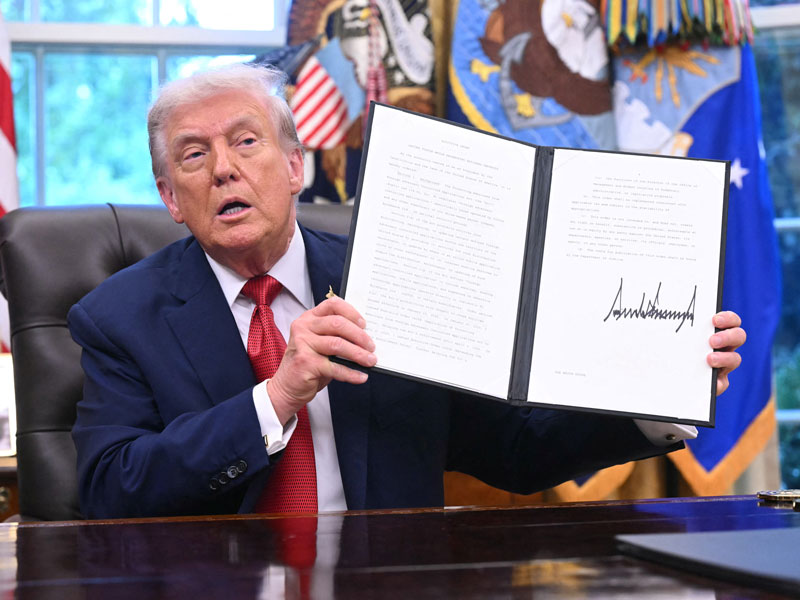
After a protracted period of intense scrutiny, legal battles, and multiple deadline extensions, the future of TikTok in the United States has seemingly reached a pivotal moment with the signing of an executive order mandating its transfer to American ownership. This development, emerging from years of geopolitical friction and regulatory challenges, initially appeared to signal a decisive victory for US national security interests. However, a closer examination of the intricate terms of the agreement reveals a more nuanced reality, one where China, through its continued control over the platform’s core algorithmic technology, may have strategically positioned itself to retain significant leverage. What has been presented as a definitive resolution to concerns over data privacy and foreign influence could, in fact, represent a considerable strategic accomplishment for Beijing.
The announced framework, ostensibly designed to allay fears of data exploitation and foreign espionage, paints a picture of American custodianship. Under the proposed arrangement, Oracle, alongside a consortium of American investors, would assume an 80% stake in a newly established US-based entity responsible for TikTok’s operations within the United States. Crucially, all data pertaining to American users would be housed on Oracle’s servers located in Texas. Furthermore, the new entity would license TikTok’s proprietary recommendation algorithms, with plans to retrain them using American user data. The governance structure is also weighted towards US control, with six out of seven board seats allocated to American representatives. The transaction is further sweetened by a substantial payment from investors to the outgoing administration, framed as a fee for facilitating the resolution. This multifaceted approach seemingly addresses the primary anxieties surrounding the app’s foreign ownership.
However, a more granular analysis of the deal’s architecture reveals a more complex interplay of ownership and control. Global investors already hold approximately 60% of ByteDance, TikTok’s parent company, with founders and employees accounting for the remaining shares. The new arrangement elevates US ownership of the American operational arm to 80%, leaving ByteDance with a minority stake of just under 20%. While this significantly reduces direct Chinese corporate control over the US platform, it does not fundamentally alter the ownership structure of the parent entity, where foreign investors remain the dominant group.
The most critical element, and the one that provides Beijing with enduring influence, lies in the ownership of the intellectual property underpinning TikTok’s highly effective recommendation algorithms. The agreement does not entail an outright transfer of this core technology. Instead, Oracle and its US partners are acquiring a license to use the algorithms. This distinction is profoundly significant. Algorithms are not static, immutable digital assets. They are dynamic, data-intensive systems that require continuous refinement, adaptation, and substantial engineering oversight to maintain their efficacy and competitive edge. While Oracle may gain the ability to examine, copy, and retrain the licensed algorithms on US-generated data, the fundamental dependency on China for ongoing updates and critical engineering support remains. This raises pertinent questions regarding the transparency and security of future algorithm enhancements. Will the US entity receive timely and comprehensive updates? More importantly, can it effectively monitor and audit these crucial technological inputs to ensure they are free from manipulation or embedded backdoors?
Furthermore, the power of an algorithm is inextricably linked to the breadth and diversity of the data it is trained upon. By restricting the US version of TikTok to solely American user data for its retraining, Oracle’s algorithms will lack access to the vast, global dataset that has been instrumental in the development of ByteDance’s cutting-edge predictive models. This could lead to a divergence in performance, potentially rendering the US version less sophisticated and engaging than its global counterparts, thereby diminishing its competitive standing.
From a geopolitical standpoint, China’s classification of personalized recommendation algorithms as sensitive technology under its export-control regime since 2020 grants Beijing significant leverage. This designation means that any export of updates, improvements, or even modifications to TikTok’s algorithms is subject to explicit approval from the Chinese government. This regulatory framework transforms TikTok into a potent diplomatic tool, susceptible to being wielded as a bargaining chip in broader bilateral relations. In scenarios involving trade disputes, international crises, or technological sanctions, China could leverage its authority over algorithm approvals to exert pressure on the United States, thereby complicating the operational autonomy of the US-based TikTok entity. This situation effectively reconfigures the platform into an instrument of Chinese statecraft, with implications extending far beyond its commercial operations.
For American investors involved in the new TikTok entity, this licensing arrangement, governed as much by geopolitical currents as by contractual terms, heralds a period of heightened uncertainty. The deal, rather than definitively shifting control from Chinese to American hands, substitutes one form of dependence with another. While daily content moderation and recommendation oversight would transfer to Oracle, thereby alleviating immediate US government security concerns, China’s residual control over the algorithmic core remains a critical vulnerability. Beijing retains the prerogative to define the scope of the licensing agreement, dictate the frequency of critical updates, and determine whether the US version can maintain parity with its globally deployed counterpart. This outcome risks not diminishing China’s influence but, paradoxically, entrenching it in a more subtle, technologically mediated fashion.
The immediate anxieties surrounding potential Chinese access to American user data or direct algorithmic manipulation may be assuaged. However, these concerns are replaced by a more enduring and technologically embedded risk: a profound dependence on China for the very engine that drives TikTok’s global success. The US administration, in navigating this complex negotiation, appears to have traded one perceived vulnerability for another, arguably more insidious, form of technological entanglement. While the long-term economic and cultural ramifications of a potentially less competitive US version of TikTok remain to be seen, some analysts suggest that a diminished capacity for addictive engagement might, from a societal perspective, represent an unintended but beneficial outcome for American youth. The ultimate impact of this intricate deal on the digital landscape, geopolitical power dynamics, and the future of social media remains a subject of ongoing observation and analysis.