

The global financial narrative is currently gripped by a profound paradox: while retail investors and venture capitalists pine for the blockbuster public debuts of "decacorns" like SpaceX, OpenAI, and Anthropic, the true engine of the artificial intelligence revolution is being fueled not by equity, but by an unprecedented deluge of corporate debt. For decades, the Silicon Valley ethos was defined by "asset-light" scaling and the pursuit of initial public offerings (IPOs) as the ultimate validation of success. However, the generative AI era has fundamentally inverted this model, demanding a capital-intensive infrastructure buildout of such staggering proportions that even the world’s most cash-rich balance sheets are beginning to lean heavily on the credit markets.
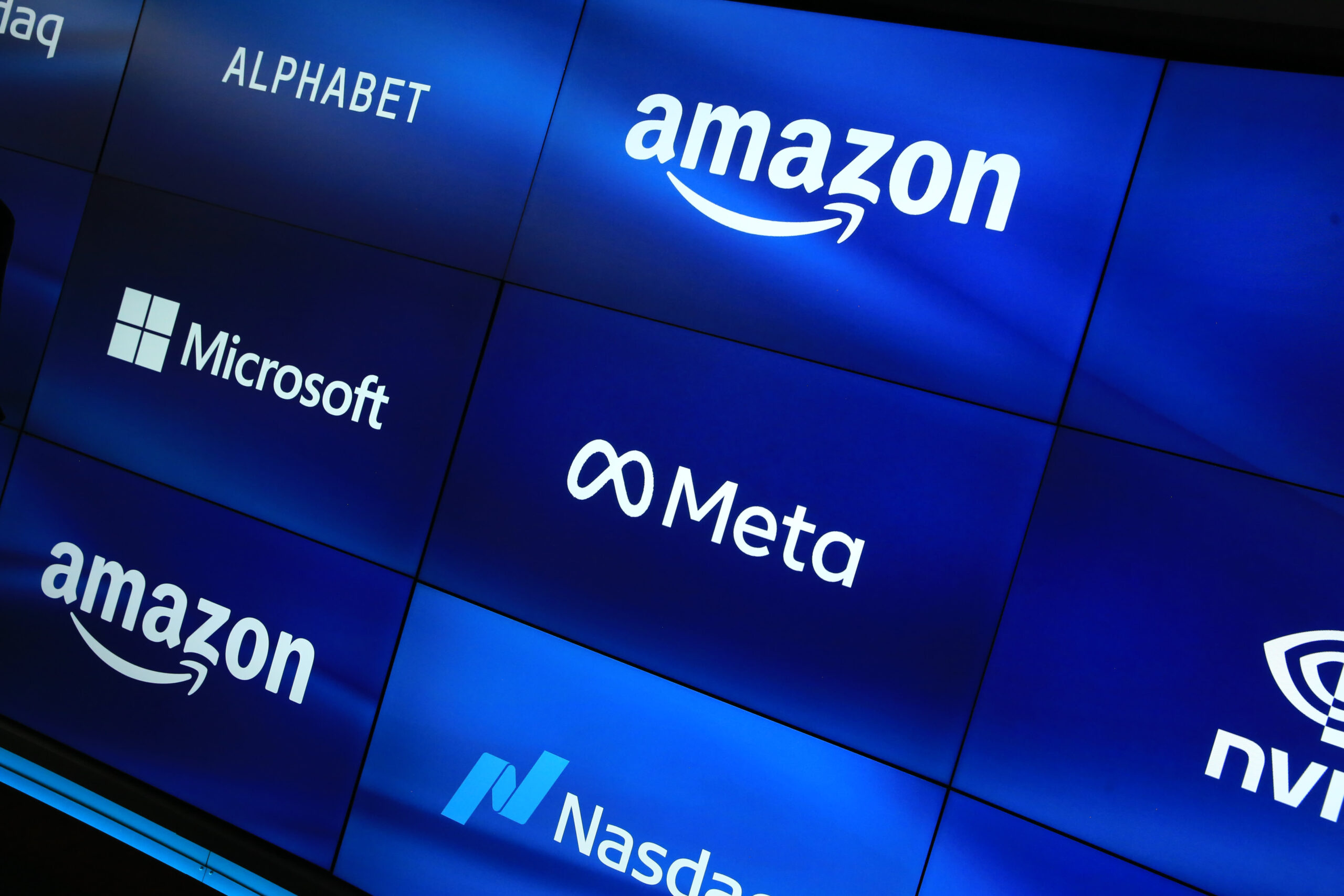
The scale of this shift is underscored by the projected spending habits of the industry’s "hyperscalers." Alphabet, Amazon, Meta, and Microsoft are collectively anticipated to deploy nearly $700 billion this year alone toward capital expenditures and finance leases. This capital is being funneled into a massive physical expansion of data centers, the acquisition of high-end semiconductor hardware—most notably from Nvidia—and the development of proprietary large language models. To put this in perspective, this annual spend exceeds the entire GDP of many mid-sized sovereign nations, reflecting what tech executives describe as a generational race to secure the computing resources necessary for the AI age.
While these tech titans have spent the last decade hoarding cash reserves that total hundreds of billions of dollars, the sheer velocity of the AI arms race is forcing a strategic pivot toward the bond market. According to recent projections from UBS, global debt issuance related to tech and AI more than doubled to $710 billion last year. The firm expects this trajectory to steepen, potentially reaching a towering $990 billion by 2026. Morgan Stanley analysts take an even more aggressive view, identifying a $1.5 trillion "financing gap" for the global AI buildout—a chasm that they believe will be filled largely by credit as companies realize they can no longer self-fund their massive infrastructure requirements without compromising their operational flexibility or shareholder return programs.
This surge in borrowing represents a "monumental" shift in the corporate debt landscape. As the size of the debt market swells to accommodate these tech behemoths, the traditional dynamics of corporate credit are being rewritten. Historically, tech companies were infrequent visitors to the bond market, often carrying "net cash" positions. Today, that paradigm is shifting toward a "net debt" reality. Meta’s Chief Financial Officer, Susan Li, recently signaled this transition, noting that the company will look to supplement its cash flow with "prudent amounts of cost-efficient external financing," a move that could eventually lead the social media giant to maintain a positive net debt balance for the first time in its history.
The velocity of this debt accumulation is best illustrated by recent activity from Oracle and Alphabet. In early February, Oracle announced plans to raise between $45 billion and $50 billion this year to aggressively expand its AI capacity. The market’s appetite was so voracious that the company successfully offloaded $25 billion in high-grade debt almost immediately. Alphabet followed suit with even greater scale, increasing a global bond offering to over $30 billion following a prior $25 billion sale in late 2024. These are not merely routine refinancings; they are strategic war chests built to ensure that no competitor gains a permanent advantage in compute power.

Even Tesla, which has historically prioritized a lean balance sheet, is signaling a need for outside capital. CFO Vaibhav Taneja has suggested that as the company bolsters its AI and autonomous driving infrastructure, it may look to the debt markets to sustain its momentum. Meanwhile, Amazon’s recent filing of a "mixed shelf" registration indicates that the e-commerce and cloud giant is keeping its options open, ready to tap into both debt and equity markets as the competitive landscape dictates.
This frenzy of activity in the credit markets stands in stark contrast to the relative hibernation of the tech IPO sector. Despite the immense valuations assigned to companies like SpaceX—recently valued at $1.25 trillion following its merger with xAI—the path to the public markets remains fraught with obstacles. While Goldman Sachs analysts remain optimistic, predicting 120 IPOs this year to raise roughly $160 billion, the actual filing activity from notable U.S. tech firms has been remarkably sparse.
The hesitation to go public is driven by a complex cocktail of macroeconomic and geopolitical anxieties. Market volatility, particularly surrounding software companies perceived as vulnerable to AI disruption, has dampened the appetite for new listings. Furthermore, soft employment data and the looming specter of sustained high interest rates have made venture-backed startups cautious. For many "pre-IPO" companies, the current environment is simply "not that appetizing," as the risk of a "broken IPO"—where shares trade below their offering price—outweighs the benefits of liquidity.
This stagnation in the IPO market is creating a bottleneck for venture capital firms, which rely on public exits to return capital to their limited partners. While some firms have found liquidity through "acquihires"—where a larger company hires a startup’s team and licenses its technology rather than buying the firm outright—these deals are increasingly attracting the scrutiny of regulators. Without a healthy, functioning IPO market, the venture ecosystem faces a potential crisis of confidence, even as the underlying AI technology continues to advance at breakneck speed.
The heavy reliance on debt by a small cluster of dominant firms also introduces significant "concentration risk" to the broader financial system. Just as the S&P 500 has become increasingly top-heavy, with roughly one-third of its value derived from a handful of tech giants, corporate bond indexes are undergoing a similar transformation. Tech currently accounts for approximately 9% of investment-grade corporate debt indexes, but analysts expect that figure to climb toward 15% or higher in the coming years.
While these companies are currently among the most profitable and cash-generative businesses in history, the "eye-popping" level of capital investment required for AI raises questions about long-term sustainability. If the promised returns on AI investments—increased productivity, new revenue streams, and cost efficiencies—fail to materialize at the expected scale, the debt loads being assumed today could become a significant burden. This creates a potential "AI bubble" concern; if cash-burning startups like OpenAI or Anthropic hit a growth wall and reduce their infrastructure spending, the ripple effects could cause a contagion across the credit markets.

Furthermore, the sheer volume of "tech paper" being issued is beginning to impact the cost of capital for the rest of the economy. When giants like Alphabet and Oracle flood the market with tens of billions of dollars in bonds, they soak up a massive amount of investor liquidity. Basic economic principles suggest that this increased supply, if it eventually outstrips demand, will lead to lower bond prices and higher yields. For smaller borrowers, such as regional banks or automotive manufacturers, this means they must offer even higher yields to attract investors, effectively raising their cost of debt servicing.
Alphabet’s recent bond pricing offers a glimpse into this dynamic. Its 2029 notes were priced at a 3.7% yield, while the 2031 notes came in at 4.1%. These yields are only marginally higher than comparable U.S. Treasuries, meaning investors are currently accepting very little "risk premium" to hold tech debt. While this reflects the market’s immense confidence in Big Tech’s fundamentals, it also leaves little room for error. If interest rates remain elevated or if corporate earnings begin to miss expectations, the "tight spreads" currently enjoyed by tech issuers could widen rapidly, leading to a sharp repricing of risk across the board.
The success of Alphabet’s recent $11 billion European debt sale also highlights the global nature of this financing trend. By tapping into overseas markets, tech giants are diversifying their investor bases and finding pockets of demand that extend far beyond Wall Street. This suggests that the AI debt wave is not a localized phenomenon but a global realignment of capital toward the next frontier of computing.
As the financial world watches for the next big tech IPO, the real story of the AI era is being written in the quiet, high-stakes world of investment-grade credit. The transition from "asset-light" to "infrastructure-heavy" is forcing a fundamental rebranding of the tech sector. No longer just providers of code and services, these companies are becoming the primary builders and owners of the world’s digital industrial base. Whether the $1 trillion in debt currently being amassed will be remembered as the foundation of a new global economy or the fuel for a historic financial imbalance remains the most critical question facing investors today. For now, the bond market is the arena where the future of AI is being decided, one multi-billion-dollar tranche at a time.