

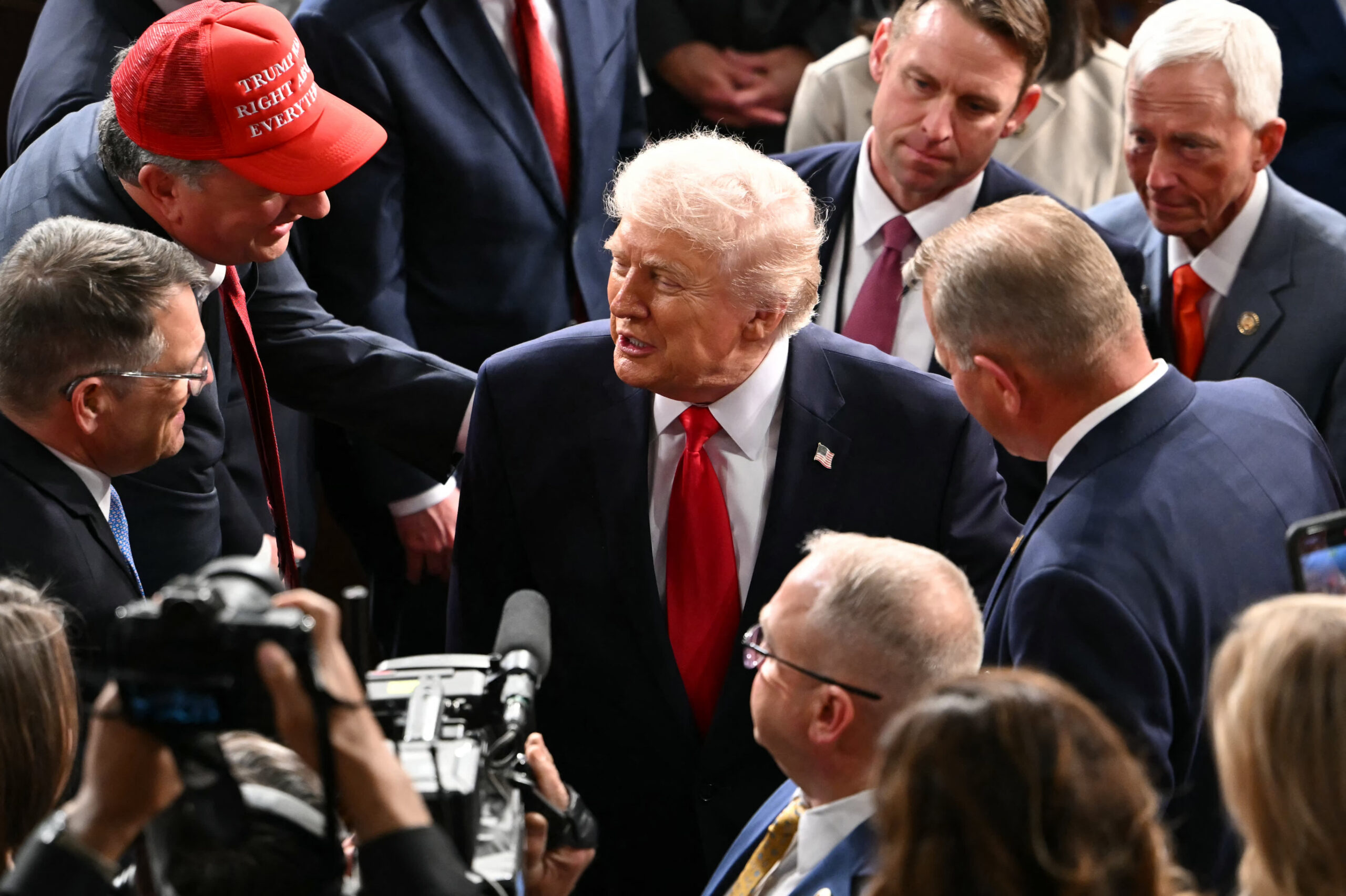
In a marathon legislative address that set a record for the longest State of the Union in American history, President Donald Trump delivered a speech on February 24, 2026, that was as notable for what it omitted as for what it included. For over two hours, the President traversed a landscape of domestic economic triumphs, record-breaking stock market indices, and a hardline stance on global tariffs. Yet, in a departure from the combative rhetoric that defined his first term and the early years of his return to the White House, the world’s second-largest economy was conspicuously absent from the narrative. This strategic silence regarding China comes at a critical juncture in bilateral relations, signaling a calculated recalibration of U.S. foreign policy ahead of a high-stakes presidential visit to Beijing scheduled for late March.
Throughout the 2017-2021 period, Donald Trump’s State of the Union addresses were characterized by a consistent and direct naming of China as a primary strategic and economic adversary. In those earlier iterations, the "China threat" served as a central pillar of his "America First" agenda, used to justify sweeping trade actions and a fundamental shift in the global supply chain. However, in the 2026 address, the only substantive reference to Beijing was buried within a triumphant recounting of a military operation in Venezuela. The President noted that "Russian and Chinese military technology" had protected the regime of Nicolas Maduro prior to his capture, but he stopped short of pivoting from that tactical observation to a broader critique of Chinese global influence or trade practices.
Analysts and political strategists suggest this omission is far from accidental. With the 2026 midterm elections looming in November, the administration appears to be prioritizing stability over confrontation. The "China hawk" persona, while popular with a specific segment of the base, carries significant economic risks that could jeopardize the current domestic expansion. Gabriel Wildau, managing director at Teneo, observed that the President is likely avoiding a public "slugfest" with Beijing during an election cycle. For the White House, maintaining a veneer of stability in U.S.-China relations is viewed as a prerequisite for ensuring that market volatility does not undermine the economic narrative the President is building for voters.
The backdrop to this rhetorical shift is an upcoming diplomatic mission to Beijing, slated for March 31 to April 2. This would mark the first visit by a U.S. sitting president to the Chinese capital since 2017. However, the diplomatic optics remain precarious. While the White House has publicized these dates, China’s foreign ministry has notably withheld official confirmation. George Chen, a partner at The Asia Group, pointed out that this discrepancy creates a narrative of asymmetrical desire, making the Trump administration appear more eager for the meeting than the leadership under President Xi Jinping. By softening his tone in the State of the Union, Trump may be attempting to clear the diplomatic runway, avoiding the kind of pre-summit friction that has derailed high-level talks in the past.

The economic stakes of this silence are monumental, particularly following the trade volatility of the past year. In the spring of 2025, the two nations engaged in a tit-for-tat escalation that saw tariffs on a wide array of goods surge past the 100% mark. Although a "truce" reached in October 2025 managed to pull those rates back down to below 50% for the upcoming fiscal year, the American economy remains sensitive to any further shocks. Furthermore, China has demonstrated its willingness to weaponize its dominance in the rare earths market, tightening export restrictions on critical minerals that are essential for everything from electric vehicle batteries to advanced defense systems.
The administration’s shift also reflects a change in the political marketing of "strength." In previous years, strength was defined by challenging a peer competitor like China. In 2026, however, the White House seems to have calculated that military successes over smaller states—such as the intervention in Venezuela—provide more "election-year oxygen" with fewer economic downsides. Fighting a trade war over rare earths is a complex, long-term struggle that often results in higher costs for American consumers; capturing a foreign adversary in the Western Hemisphere offers a clear, televised victory that resonates more immediately with a domestic audience.
This strategic ambiguity contrasts sharply with the approach of the previous administration. Under President Joe Biden, China was consistently identified as a "pacing challenge," with policy focused on "de-risking" and "small yard, high fence" technological restrictions. While hawkish, the Biden approach offered a degree of institutional predictability. In contrast, Trump’s sudden move from 100% tariffs to a total rhetorical blackout in the State of the Union highlights the mercurial nature of his administration’s foreign policy. Yue Su, principal economist at the Economist Intelligence Unit (EIU), noted that this unpredictability is a double-edged sword. While it keeps Beijing off-balance, it also leaves global markets guessing as to the true floor of the relationship.
The Democratic response to the speech was swift in its condemnation of this perceived softness. Virginia Governor Abigail Spanberger, delivering the rebuttal, accused the President of ceding technological and economic ground. Her remarks suggested that by focusing on military theater in Venezuela while ignoring the systemic challenge posed by China, the administration was "bowing down" to a rival that continues to expand its reach in the Indo-Pacific and beyond. This partisan divide suggests that even if the President seeks a "Grand Bargain" in March, he will face a skeptical Congress that is increasingly unified in its distrust of Beijing’s long-term intentions.
Despite the political noise, the business community and market strategists are looking for signs of a "Big Deal." The potential for a significant breakthrough during the Beijing trip remains high. Steven Okun, founder and CEO of APAC Advisors, noted that if the President’s primary concern is consumer affordability and domestic inflation, the most effective lever at his disposal is the reduction of tariffs on Chinese imports. Lowering the current 50% rates would have a nearly instantaneous impact on the cost of living for American households—a potent talking point for the November midterms.

Furthermore, the President is expected to be accompanied to Beijing by a massive delegation of U.S. corporate executives. These business leaders are eager to secure purchase agreements, particularly in the agricultural and energy sectors, which have suffered under the weight of sustained trade tensions. A deal that includes massive Chinese orders for American soy, corn, and liquefied natural gas (LNG) would allow Trump to claim a "win" for his base in the American heartland while simultaneously easing the inflationary pressures that have dogged his second term.
Marko Papic, chief strategist at BCA Research, summed up the sentiment of many market observers by stating simply: "A big deal is coming!" The logic is that the State of the Union silence was the "quiet before the storm"—a deliberate attempt to lower the temperature before a major diplomatic and economic theater begins. If a deal is struck, Trump can frame it as the ultimate success of his "maximum pressure" tactics. If the negotiations fail, he can pivot back to a hardline stance, portraying himself as a leader who stood his ground against a recalcitrant adversary.
Ultimately, the 2026 State of the Union suggests a President who has learned the value of timing in international diplomacy. By keeping China out of his longest-ever speech, he has reserved his leverage for the negotiating table in Beijing rather than the podium in the House Chamber. Whether this strategic silence leads to a sustainable economic peace or merely serves as a temporary lull in an ongoing global rivalry remains the central question for the global economy in the coming months. For now, the world watches to see if the absence of words in Washington will translate into a signature on a document in Beijing.