

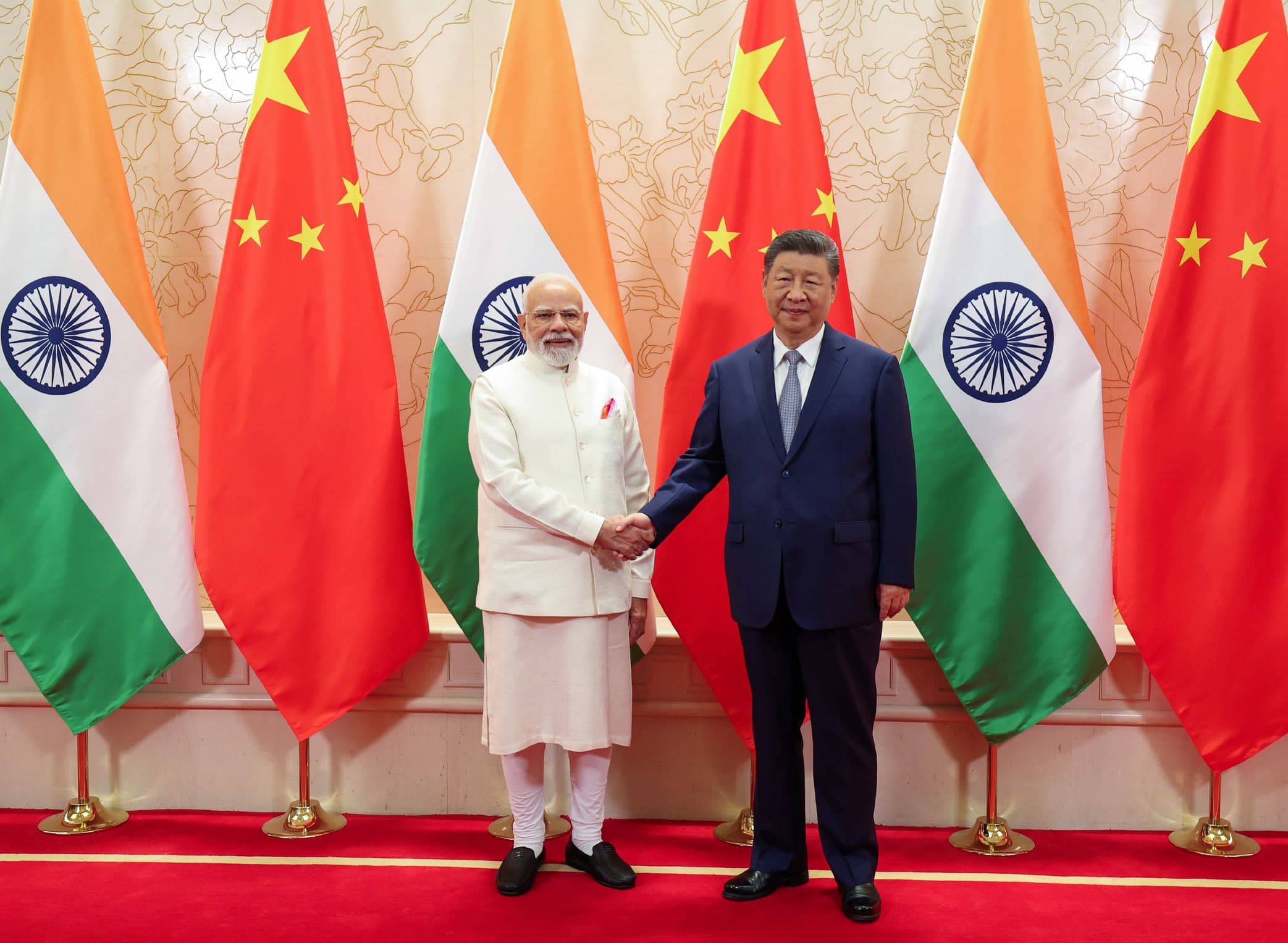
The geopolitical landscape of Asia is witnessing a significant recalibration as China prepares to send a high-level official delegation to India’s upcoming artificial intelligence forum, signaling a potential cooling of tensions between the world’s two most populous nations. In a move that underscores the growing importance of "tech-plomacy," a vice minister from China’s Ministry of Science and Technology is slated to lead the group at the AI Impact Summit in New Delhi, scheduled for February 16 to 20. This participation, confirmed by diplomatic channels and policy consultants, represents the most substantive engagement between the two nuclear-armed neighbors in the technology sector since the onset of a frozen diplomatic period four years ago.
The decision to attend follows a series of quiet diplomatic overtures and high-level meetings on the sidelines of international summits. While the Indian embassy in Beijing and China’s Ministry of Science and Technology have remained officially silent, the logistical preparations—including the coordination of visas for a broad range of Chinese officials and business leaders—suggest a coordinated effort to move beyond the strategic stalemate that has defined the relationship since 2020. This re-engagement occurs at a critical juncture, as both nations vie for leadership in the global AI race, an industry projected to contribute nearly $16 trillion to the global economy by 2030.
A Pivot Toward Pragmatic Engagement
The thawing of relations can be traced back to the late summer of 2025, specifically the 25th Heads of State Council meeting of the Shanghai Cooperation Organization (SCO) in Tianjin. It was there that Indian Prime Minister Narendra Modi and Chinese President Xi Jinping shared a rare and widely publicized moment of levity alongside Russian President Vladimir Putin. That encounter, characterized by smiles and informal dialogue, served as a precursor to the resumption of direct commercial flights and the restoration of tourist visa processing, which had been suspended following the deadly border skirmish in the Galwan Valley in June 2020.
Following that conflict, New Delhi adopted a "digital sovereignty" posture, banning over 200 Chinese-linked applications, including global sensations like TikTok and WeChat, citing national security concerns and data privacy risks. The upcoming AI summit indicates that while border disputes remain unresolved, both capitals are increasingly willing to compartmentalize territorial friction in favor of technological cooperation and economic stability. For India, engaging with China on AI is a pragmatic necessity; for China, it is a strategic move to ensure it is not sidelined as India becomes a primary hub for Global South technology standards.
The AI Impact Summit: A New Neutral Ground
The AI Impact Summit is positioning itself as a premier global stage, drawing a diverse array of stakeholders from both the East and the West. The presence of Chinese officials alongside American luminaries—including Microsoft co-founder Bill Gates and Anthropic CEO Dario Amodei—creates a unique environment where the world’s two technological superpowers must navigate a shared space hosted by an emerging third power.
For India, the summit is a showcase of its "AI for All" initiative, which focuses on leveraging artificial intelligence to solve large-scale socio-economic challenges in healthcare, agriculture, and education. India’s AI market is currently growing at a compound annual growth rate (CAGR) of 25-35%, with expectations to reach $17 billion by 2027. By inviting China, New Delhi is asserting its role as a bridge between the divergent regulatory philosophies of the United States and the European Union, and the state-led, infrastructure-heavy model championed by Beijing.
Economic Interdependence Amidst Strategic Rivalry
The economic backdrop of this summit is one of complex interdependence. Despite the political chill of the last four years, bilateral trade between India and China has remained remarkably resilient, hitting record highs even as New Delhi promoted its "Make in India" and "Atmanirbhar Bharat" (Self-Reliant India) campaigns. India remains heavily reliant on Chinese imports for critical components in the electronics, pharmaceutical, and renewable energy sectors.
In the realm of AI, the two nations offer complementary strengths that are difficult to ignore. China possesses a massive lead in AI patents, hardware manufacturing, and surveillance technology, backed by an estimated $150 billion in government-led investment through its "New Generation Artificial Intelligence Development Plan." India, conversely, boasts the world’s largest pool of English-speaking STEM talent and a burgeoning startup ecosystem that excels in software development and service-oriented AI applications.

Market analysts suggest that the participation of Chinese businesses in the New Delhi summit could open the door for joint ventures in non-sensitive sectors. However, the shadow of "de-risking" remains long. India’s scrutiny of Chinese foreign direct investment (FDI) remains stringent, and any formal technological partnership will likely be subject to intense vetting by India’s security establishment.
Global Governance and the Race for Standards
Beyond bilateral trade, the New Delhi summit is a battleground for global AI governance. As the world moves toward establishing international norms for AI ethics, safety, and regulation, India and China share a common interest in ensuring that these standards are not dictated solely by Western powers. Both nations have expressed concerns that overly restrictive regulations favored by the EU or the US could stifle the development of AI in emerging economies.
China has used platforms like the SCO and the BRICS bloc to advocate for a more inclusive global AI governance framework that respects national sovereignty. India, as a leading voice for the Global South, seeks to ensure that AI remains an open-source, democratized tool rather than a monopoly of a few Silicon Valley or Beijing-based tech giants. The presence of a Chinese vice minister in New Delhi suggests a mutual recognition that the two Asian giants must find common ground if they are to influence the global regulatory trajectory.
Challenges to a Lasting Rapprochement
While the mood in New Delhi and Beijing appears to be shifting toward cooperation, significant hurdles remain. The timing of the summit coincides with the Lunar New Year, China’s most important traditional holiday. The decision to send a high-level delegation during this period is a pointed diplomatic gesture, emphasizing the importance Beijing places on the visit. Yet, the deep-seated mistrust stemming from the 2020 border standoff cannot be erased by a single summit.
Security experts warn that "technological espionage" and data security remain the primary friction points. India’s Ministry of Electronics and Information Technology (MeitY) continues to maintain a cautious stance toward Chinese hardware in its 5G infrastructure and critical data centers. Furthermore, the United States, a key strategic partner for India in the "iCET" (Initiative on Critical and Emerging Technology) framework, will be watching the New Delhi-Beijing engagement closely. Washington has been actively encouraging India to decouple its supply chains from China, and any perceived pivot toward Beijing could complicate India’s burgeoning tech partnership with the West.
The Road Ahead for Asian Tech Hegemony
As the AI Impact Summit approaches, the international community is watching to see if this "AI diplomacy" can translate into a broader "grand bargain" between the two nations. If India and China can establish a working relationship in the digital sphere, it could stabilize the regional economy and provide a counterweight to the technological bipolarity of the US-China rivalry.
The economic stakes are unparalleled. With India’s digital economy expected to reach $1 trillion by the end of the decade and China continuing its transition toward a high-tech manufacturing economy, the synergy between the two could redefine the global supply chain for intelligence. For now, the arrival of a Chinese vice minister in New Delhi is a signal that the era of total isolation is ending, replaced by a complex, cautious, and highly competitive era of engagement.
The success of the summit will not be measured just by the deals signed or the speeches delivered, but by whether it creates a sustainable channel for dialogue. In the high-stakes world of artificial intelligence, where the first-mover advantage is everything, both India and China have realized that while they may be rivals, they cannot afford to be strangers. As the delegation from Beijing prepares to land in New Delhi, the world waits to see if the language of algorithms and innovation can succeed where traditional diplomacy has so often faltered.