

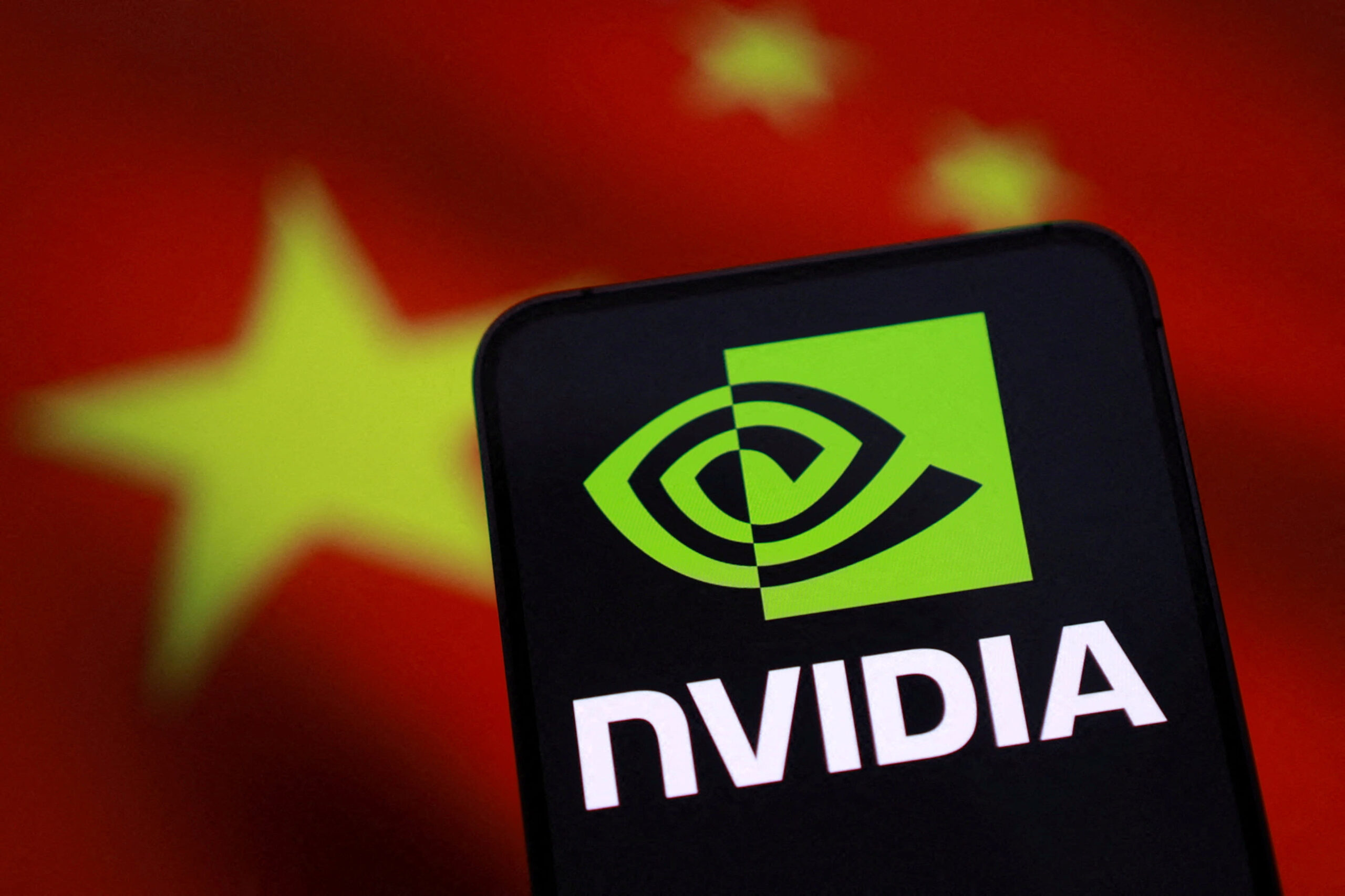
The meteoric rise of Nvidia Corporation has defined the current era of generative artificial intelligence, yet the Silicon Valley giant is navigating an increasingly perilous path in the world’s second-largest economy. Despite recent efforts by the United States government to provide narrow pathways for semiconductor exports, Nvidia has signaled to investors that it has yet to see a meaningful recovery in its Chinese business. This stagnation comes at a critical juncture, as domestic Chinese competitors, bolstered by state support and a flurry of initial public offerings, begin to offer viable alternatives to American silicon, threatening to decouple the global AI ecosystem.
During a recent financial disclosure, Nvidia Chief Financial Officer Colette M. Kress delivered a sobering update on the company’s operations in China. While the U.S. government has approved the sale of specific, lower-performance versions of its advanced semiconductors—notably the H200 series modified to meet export control thresholds—Nvidia has yet to record any revenue from these products within the Chinese market. The situation is compounded by a persistent fog of regulatory uncertainty. Kress noted that the company remains in the dark regarding whether future imports will be permitted, or if the window of opportunity for these "compliance-focused" chips will be shuttered by further policy shifts in Washington.
The financial stakes for Nvidia are monumental. Historically, China has represented a cornerstone of the company’s growth strategy, accounting for approximately 20% to 25% of its total data center revenue. In a market where Nvidia’s valuation has soared past $3 trillion, the loss of a fifth of its primary revenue engine creates a structural void that even explosive growth in other regions may struggle to permanently offset. The core of the issue lies in the tension between national security and commercial dominance; as the U.S. restricts the flow of high-end compute power to prevent military parity, it simultaneously risks "designing out" American technology from the Chinese commercial landscape.

The vacuum left by Nvidia is being rapidly filled by a new generation of Chinese semiconductor firms. Kress warned that these domestic rivals are making significant strides in narrow-purpose AI hardware and are leveraging the public markets to fund their expansion. Recent IPOs in Hong Kong and Shanghai have provided a capital infusion for companies like Moore Threads and MiniMax, which are positioning themselves as the "sovereign" alternative to Western technology. While these companies were once viewed as years behind Nvidia’s state-of-the-art Hopper and Blackwell architectures, the gap is narrowing in terms of practical application, particularly for large language model (LLM) inference and mid-tier training.
The momentum within China’s tech sector has not gone unnoticed by global industry leaders. Sam Altman, CEO of OpenAI, recently characterized the progress made by Chinese technology firms across the entire AI "stack"—from hardware to software—as "remarkable." Altman’s assessment reflects a growing consensus that while the U.S. maintains a lead in absolute peak performance, Chinese firms are nearing the frontier in specialized domains and software-hardware integration. This "remarkable" progress is often subsidized by Beijing’s "Big Fund" and other state-led initiatives designed to achieve self-sufficiency in the face of Western sanctions.
One of the most significant advantages Chinese rivals possess is price. While Nvidia’s top-tier chips command premium prices—often exceeding $30,000 per unit—Chinese alternatives are frequently marketed at a fraction of the cost. In an economic environment where efficiency and return on investment are becoming paramount for cloud service providers, the "good enough" performance of domestic chips at a lower price point is an attractive proposition. This pricing strategy doesn’t just threaten Nvidia’s market share within China; it creates a blueprint for a global shift.
Economic analysts are increasingly warning of a "splinternet" in the semiconductor industry, where the world is divided into two distinct technological spheres. Rory Green, Chief China Economist at TS Lombard, suggests that within the next decade, a significant portion of the global population could be operating on a Chinese technological stack. This is particularly relevant in the "Global South," where developing nations may find the cost-effective and less politically restricted hardware from China more appealing than expensive, regulated American exports. If Nvidia is unable to compete in China, it risks losing the scale necessary to maintain its current R&D lead over the long term.

The strategic dilemma for Nvidia is further complicated by the technical limitations of the chips it is allowed to sell. To comply with U.S. Department of Commerce rules, Nvidia must significantly "throttle" the interconnect speeds and compute capabilities of its products. This has led to a paradoxical situation where the domestic Chinese chips, such as Huawei’s Ascend 910B, sometimes outperform Nvidia’s "lite" export versions in specific AI workloads. For Chinese tech giants like Alibaba, Tencent, and Baidu, the incentive to switch to domestic silicon is no longer just a matter of patriotic duty or regulatory pressure; it is increasingly a matter of performance-per-dollar.
Nvidia’s leadership has been vocal in urging the U.S. government to reconsider the breadth of its restrictions. The company’s argument is rooted in the "flywheel effect" of technology: by encouraging Chinese developers and businesses to use American technology, the U.S. ensures that its software ecosystems—such as Nvidia’s proprietary CUDA platform—remain the global standard. If Chinese developers are forced to migrate to domestic platforms, they will build software, libraries, and tools optimized for Chinese hardware, creating a self-sustaining ecosystem that is entirely independent of, and eventually competitive with, American standards.
The rise of Chinese AI agents and new model releases from companies like Zhipu AI and MiniMax further illustrates the vitality of this local ecosystem. These firms are not just building hardware; they are creating the applications that drive hardware demand. As these models gain traction, the demand for the underlying silicon shifts. If Nvidia cannot provide the silicon, the entire software layer above it will eventually adapt to the hardware that is available. This shift could permanently alter the structure of the global AI industry, moving it away from a monoculture centered on Silicon Valley.
Market data reflects this shifting sentiment. While Nvidia’s stock has remained resilient due to insatiable demand from U.S.-based hyperscalers like Microsoft and Meta, the long-term outlook for its China-exposed segments remains a point of contention among Wall Street analysts. The risk is that Nvidia becomes a "Western-only" champion, while a parallel ecosystem thrives in the East. This fragmentation would likely lead to higher costs for global consumers and a slower pace of cross-border scientific collaboration in AI research.

As the race for AI supremacy intensifies, the semiconductor industry has become the primary theater of geopolitical competition. The challenges Nvidia faces in China are a microcosm of the broader struggle to balance economic integration with national security. For Nvidia, the goal is to remain the "engine" of the world’s AI, but as domestic Chinese rivals gain ground and the regulatory landscape hardens, the company finds itself fighting a defensive battle in what was once its most promising growth market. The outcome of this struggle will not only determine Nvidia’s future earnings but will also define the technological architecture of the 21st century.
The potential for Chinese firms to disrupt the global industry structure is no longer a distant theoretical risk; it is an active market transformation. With every quarter that passes without significant revenue from China-approved products, Nvidia’s grip on the Chinese market weakens, and the window for domestic rivals to achieve critical mass opens wider. The message from Nvidia’s executive suite is clear: the company is ready to compete, but the current regulatory and competitive environment is creating a vacuum that American technology may never be able to fill again. In the high-stakes world of AI, being the fastest is only half the battle; being available is the other.