

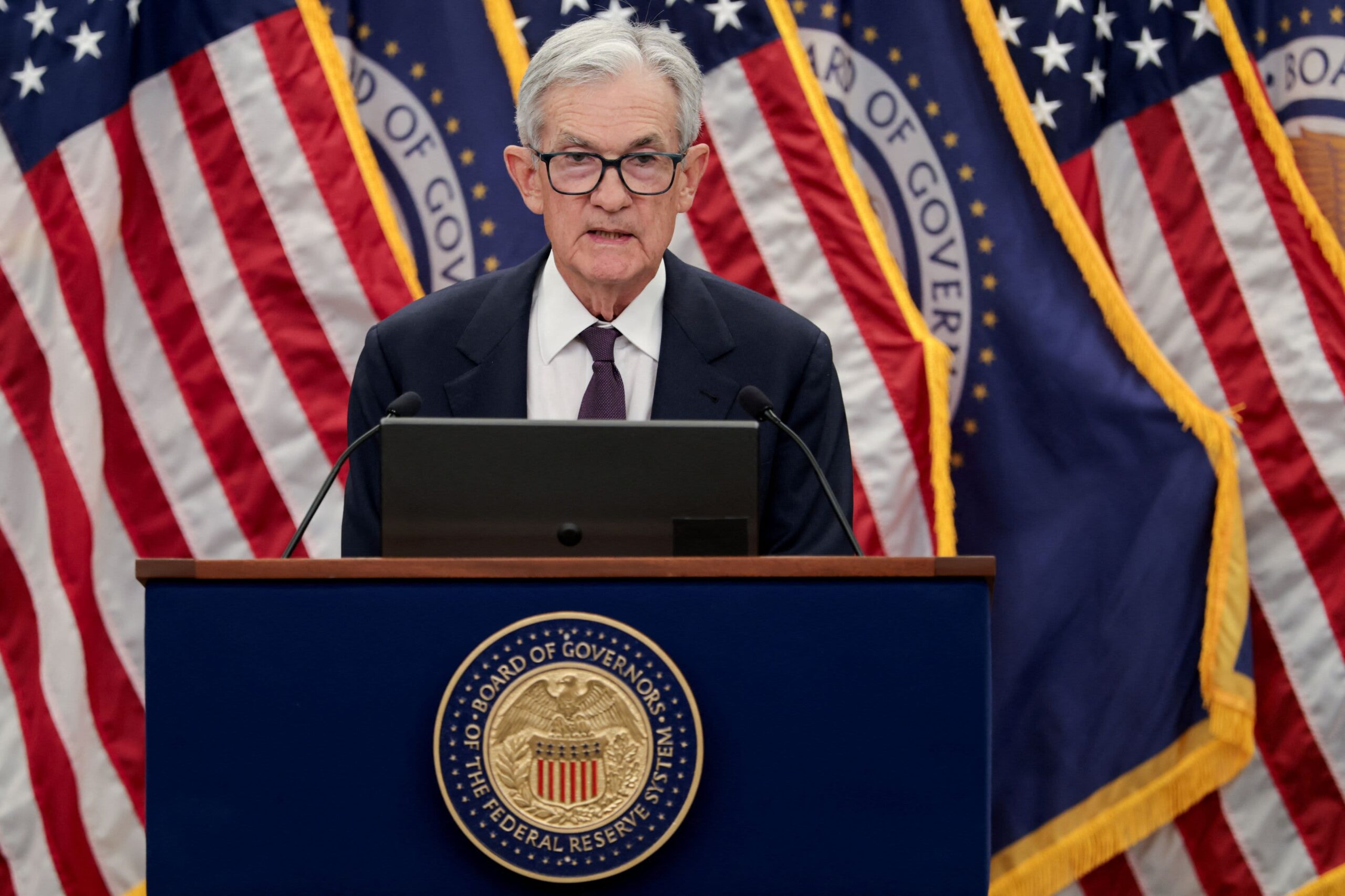
The Federal Reserve’s latest internal deliberations have revealed a central bank deeply divided over the future of the American economy, as officials grapple with conflicting signals from a stubborn inflation rate and a cooling labor market. According to the minutes of the Federal Open Market Committee’s (FOMC) January 27-28 meeting, the consensus that drove three consecutive interest rate cuts in late 2024 has evaporated, replaced by a cautious "wait-and-see" approach. While the committee ultimately decided to hold the federal funds rate in its current range of 3.5% to 3.75%, the detailed summary of the proceedings paints a picture of a policy-making body at an ideological and tactical impasse.
The pause in January followed a period of relatively aggressive easing, with the Fed having slashed rates by a total of 75 basis points across September, October, and December. Those moves were intended to provide a "soft landing" for an economy that many feared was beginning to buckle under the weight of the highest interest rates in two decades. However, the latest minutes suggest that the era of easy consensus has ended. The central bank is now split into factions: those who fear that cutting rates too soon will reignite inflation, and those who believe that maintaining high rates for too long will unnecessarily trigger a recession.
At the heart of the debate is the Fed’s "dual mandate" of maintaining price stability and achieving maximum sustainable employment. For much of the past two years, the focus was singularly on inflation. Now, the risks have become more balanced, but that balance is precarious. Several participants at the January meeting argued that further downward adjustments to interest rates would only be appropriate if inflation showed a clearer path toward the 2% target. Conversely, a vocal minority expressed concern that the labor market, while ostensibly resilient, is showing signs of structural weakness that could accelerate if borrowing costs remain elevated.
The internal rift is further complicated by a significant shift in the FOMC’s voting membership. The January meeting marked the first for a new rotation of regional Fed presidents, bringing fresh and often more "hawkish" perspectives to the table. Lorie Logan of the Dallas Fed and Beth Hammack of the Cleveland Fed have emerged as prominent voices for caution. Both have suggested that the Fed should remain on hold indefinitely, citing inflation as a persistent threat that has not yet been fully vanquished. Their presence has shifted the gravitational center of the committee toward a more conservative stance, contrasting sharply with the "dovish" leanings of current Governors Christopher Waller and Stephen Miran, both of whom voted against the January pause in favor of another quarter-point cut.
The economic data fueling this division is equally contradictory. On one hand, the personal consumption expenditures (PCE) price index—the Fed’s preferred gauge for inflation—has remained stubbornly anchored around the 3% mark, well above the 2% objective. On the other hand, the consumer price index (CPI), when stripped of volatile food and energy costs, recently hit its lowest level in nearly five years. This "core" disinflation suggests that the underlying price pressures in the economy are indeed fading, yet the "headline" numbers remain inflated by service-sector costs and the burgeoning impact of new trade tariffs.
Tariffs, in particular, have become a focal point for the committee’s inflation outlook. Fed officials noted that recent shifts in trade policy have placed upward pressure on goods prices. While many participants expect the inflationary impact of these tariffs to wane as supply chains adjust, the immediate effect has been to complicate the disinflationary trajectory. This uncertainty has led some officials to suggest that the Fed should keep the door open not just for further pauses, but for potential rate hikes—a "two-sided" policy approach that would have been unthinkable just six months ago.
The labor market presents its own set of riddles. On the surface, the January unemployment rate of 4.3% and stronger-than-expected nonfarm payroll growth suggest a robust economy. However, a deeper dive into the statistics reveals a more fragile reality. Private sector job creation is slowing, and a disproportionate amount of recent employment growth has been concentrated in the healthcare sector, which is less sensitive to interest rate changes than more cyclical industries like construction or manufacturing. This "healthcare-led" growth can mask a broader slowdown in the productive economy, a nuance that several Fed officials highlighted as a reason for continued vigilance.
Adding a layer of political and institutional complexity is the looming leadership transition at the central bank. Chair Jerome Powell’s term is set to expire in May, and the prospect of a new chair has already begun to influence market expectations and internal dynamics. Kevin Warsh, a former Fed governor who is widely considered a frontrunner for the nomination, is viewed by many as a proponent of lower rates. If Warsh is confirmed, the Fed’s ideological balance could swing back toward a more accommodative stance. This potential "regime change" creates a lame-duck period for the current leadership, making it harder for the committee to commit to a long-term policy path.
The global context also looms large over the FOMC’s decisions. While the U.S. struggles with its internal divisions, other major central banks are facing similar dilemmas. The European Central Bank (ECB) and the Bank of England are also navigating the narrow corridor between stagflation and recession. If the Fed remains "higher for longer" while its international peers begin to cut rates more aggressively, the resulting strength of the U.S. dollar could further dampen American exports and complicate the global trade landscape. Conversely, if the Fed cuts too early and inflation rebounds, it could undermine the dollar’s status as a stable global reserve currency.
Financial markets, meanwhile, are attempting to price in this uncertainty. According to the CME Group’s FedWatch tool, futures traders are currently betting on a rate cut in June, with another potential reduction in the autumn. However, these expectations are highly sensitive to every new data release. The "data-dependent" mantra that Powell has championed is now the market’s primary source of volatility. Every monthly jobs report and every inflation reading is being scrutinized not just for what it says about the economy, but for how it might shift the balance of power within the divided FOMC.
The January minutes also highlighted a rare moment of near-unanimity: the belief that the risks of inflation remaining persistently above the 2% target are "meaningful." This shared concern explains why the "vast majority" of participants supported the decision to hold rates steady, even as they disagreed on the next move. It suggests that while the committee is split on the solution, they are united in their fear of repeating the mistakes of the 1970s, when the Fed cut rates prematurely only to see inflation return with a vengeance.
As the Fed moves toward its spring meetings, the focus will remain on whether the "uneven" progress toward price stability can be sustained without triggering a sharper downturn in the labor market. The committee’s shift in language—noting that risks to its goals have come "more closely into balance"—is a subtle admission that the era of aggressive tightening is over, but it is far from a guarantee that a new era of easing has begun.
In the final analysis, the Federal Reserve is currently operating in a fog of conflicting indicators. With a leadership transition on the horizon, a divided committee, and an economy that refuses to follow a predictable script, the path for interest rates remains shrouded in uncertainty. For businesses and consumers, this means that the era of high borrowing costs may persist longer than previously anticipated, as the central bank prioritizes its fight against inflation over the growing pleas for economic relief. The "pause" of January was not just a temporary halt; it was a reflection of a central bank that is fundamentally unsure of which way the wind is blowing.