

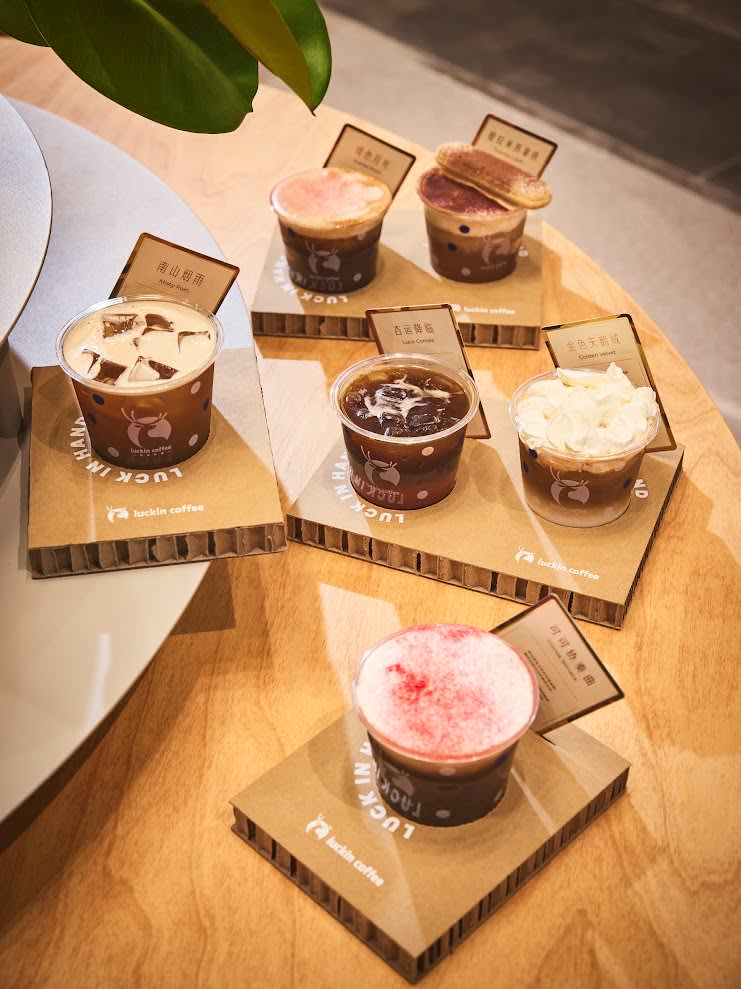
The opening of the Luckin Coffee Origin Flagship in Shenzhen marks a decisive transformation in the landscape of the Chinese beverage market, signaling a shift from aggressive price-based competition to a sophisticated battle for brand equity. Situated in the heart of China’s technological hub and adjacent to the border of Hong Kong, this 420-square-meter, two-story "megastore" represents the company’s first significant foray into the premium "experience" retail segment. For years, Luckin was defined by its lean, tech-driven kiosks and heavy discounting; however, this new flagship indicates an ambition to capture the high-margin, lifestyle-oriented demographic that has historically been the exclusive domain of the Starbucks Reserve concept.
The Shenzhen flagship is not merely a larger storefront; it is a curated environment designed to compete with the "third place" philosophy popularized by Western coffee chains. While a standard Luckin outlet focuses on rapid throughput and app-based pickups, the Origin Flagship offers a slower, more deliberate consumer experience. The menu features a sophisticated range of pour-over and cold brew options, utilizing beans sourced from renowned global regions such as Ethiopia and Brazil, as well as China’s own burgeoning coffee heartland in the Yunnan province. By leaning into the "origin" narrative, Luckin is tapping into a growing segment of Chinese consumers who are increasingly literate in coffee culture and willing to pay a premium for artisanal quality and transparency in the supply chain.
This strategic pivot comes at a time when the pricing dynamics of the Chinese coffee market are undergoing a radical realignment. Traditionally, Luckin’s success was built on the back of $1 to $2 lattes, a strategy that allowed it to rapidly gain market share against Starbucks’ $5 offerings. However, the new flagship nudges prices higher, testing the ceiling of consumer loyalty. The introduction of specialty items—such as the "tiramisu latte" topped with a fresh pastry—has already generated significant cultural capital. During the store’s soft launch phase, social media platforms like Xiaohongshu were flooded with reports of wait times stretching between one and three hours, suggesting that Luckin has successfully transitioned from being a utility-based brand to a destination-based one.

The broader economic context of this move is rooted in Luckin’s extraordinary recovery from its 2020 accounting scandal. After being delisted from the Nasdaq following the discovery of fabricated sales figures, many analysts predicted the brand’s total collapse. Instead, Luckin underwent a rigorous internal restructuring, purged its founding leadership, and focused on operational efficiency. The opening of the Shenzhen flagship coincides with the milestone of Luckin reaching its 30,000th store—a staggering figure when compared to Starbucks’ approximately 8,000 locations in China. While Starbucks remains the largest player in terms of revenue per store, Luckin’s sheer volume and localized agility have fundamentally altered the industry’s power balance.
Financially, Luckin’s momentum appears robust. In the third quarter of 2025, the company reported revenue of $1.55 billion for its self-operated stores, representing a year-on-year increase of nearly 48%. This growth trajectory stands in stark contrast to the challenges faced by international players in the region. Starbucks, which recently announced plans to sell a 60% stake in its Chinese operations to Boyu Capital, is pivoting toward a more localized partnership model to navigate the complexities of the Chinese market. The $13 billion valuation placed on Starbucks China reflects the massive potential of the market, yet the Seattle-based giant is increasingly feeling the pressure from domestic rivals like Luckin, Cotti Coffee, and Manner, which offer high-quality products at significantly lower price points.
The competition in China is no longer just about who can open the most stores, but who can best integrate into the digital and social lives of the consumer. Luckin’s competitive advantage lies in its "private traffic" model. Unlike traditional retailers that rely on foot traffic and counter service, Luckin’s ecosystem is entirely app-centric. This allows the company to collect granular data on consumer preferences, enabling hyper-targeted marketing and rapid product iteration. This data-driven approach has birthed some of the most successful beverage collaborations in history, such as the Moutai-infused "sauce-flavored latte," which bridged the gap between traditional Chinese spirits and modern youth culture. Similar successes with the "Black Myth: Wukong" video game and the Minions franchise demonstrate Luckin’s ability to remain at the center of the cultural conversation.
Market analysts suggest that China’s transition from a tea-dominant society to a coffee-drinking one is still in its early stages. Per capita coffee consumption in China remains low compared to Japan or the United States, providing a long runway for growth. However, as the market matures, the "value-for-money" segment is becoming overcrowded. By moving upscale, Luckin is attempting to protect its margins and insulate itself from the brutal price wars that have characterized the last two years of the industry. The Shenzhen flagship serves as a proof-of-concept for a tiered branding strategy: budget kiosks for the daily commute, and flagship "Origin" stores for the weekend social experience.

The global implications of Luckin’s resurgence are also becoming clearer. The company is no longer content with domestic dominance; it is aggressively exporting its model to international markets. In the summer of 2024, Luckin made its highly anticipated debut in New York City, recently opening its tenth location in the city. This expansion into the U.S. market is as much a branding exercise as it is a commercial one, signaling to investors that the company is ready for a potential re-listing on a major American exchange. Furthermore, with nearly 70 stores in Singapore and dozens more in Malaysia, Luckin is positioning itself as a regional powerhouse in Southeast Asia, challenging both local incumbents and established global brands.
The strategic shift toward premiumization also reflects a broader trend in Chinese consumer behavior known as "Guochao," or the "national tide." There is a growing preference among Gen Z and Millennial consumers for homegrown brands that can compete with Western counterparts on quality and aesthetics. Luckin’s Shenzhen flagship, with its focus on Chinese-grown Yunnan beans and sleek, localized design, perfectly aligns with this sentiment. By elevating the brand experience, Luckin is essentially neutralizing the "prestige" advantage that Starbucks has enjoyed for decades.
Looking ahead, the road for Luckin is not without its hurdles. Maintaining the operational standards required for a premium flagship across a 30,000-store network is a massive logistical challenge. Furthermore, as the company eyes a return to the Nasdaq, it will face intense scrutiny from international regulators and investors who still remember the 2020 fraud. CEO Jinyi Guo has remained tight-lipped regarding a specific timeline for a re-listing, but the company’s current market valuation—estimated at over $10 billion—suggests that investor confidence has largely returned.
In the final analysis, the Luckin Coffee Origin Flagship is a symbol of a more mature, confident Chinese corporate sector. It represents the end of the "copycat" era and the beginning of an era where domestic firms set the pace for innovation and luxury. As Starbucks retreats into a joint-venture model to mitigate risk, Luckin is doubling down on its home turf, betting that it can own every part of the coffee experience—from the $1 quick-fix to the $8 artisanal pour-over. The battle for China’s caffeine market has moved beyond the price tag; it is now a battle for the soul of the consumer, and Luckin is playing to win.