

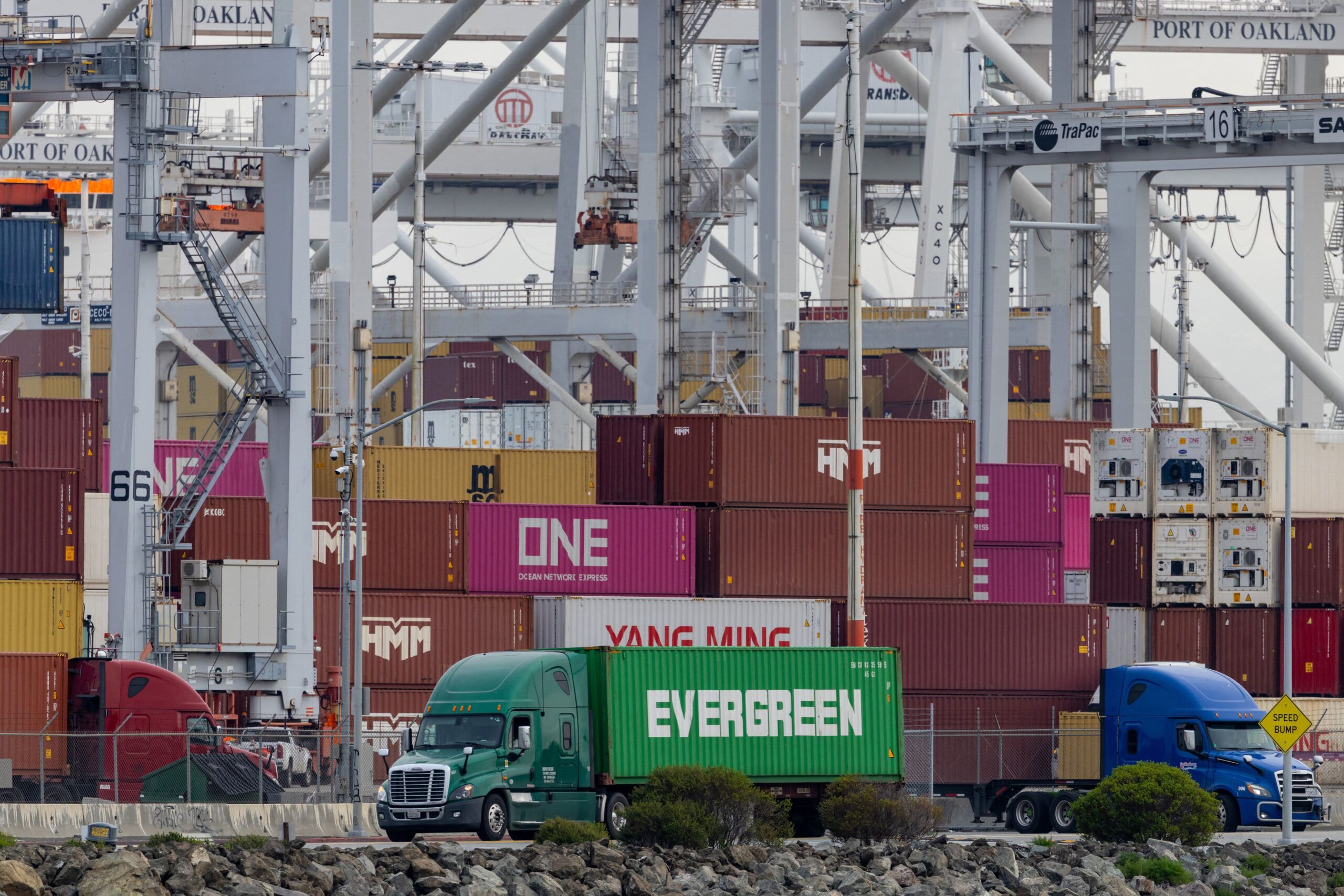
The constitutional architecture of American trade policy underwent a seismic shift this week as the United States Supreme Court issued a definitive 6-3 ruling that curtailed the executive branch’s ability to levy sweeping tariffs under the guise of national emergencies. While the decision was initially hailed by proponents of free trade and legislative oversight, the relief was short-lived. In a swift and defiant response, the Trump administration leveraged alternative statutory frameworks to reimpose a 15% tariff on a broad spectrum of global trading partners, effectively signaling that the era of aggressive protectionism will continue, albeit under a different legal banner. This rapid-fire sequence of judicial restriction and executive recalibration has plunged the international business community into a state of profound uncertainty, threatening to reshape the U.S. economy and its standing in the global marketplace for decades to come.
The Supreme Court’s intervention centered on the International Emergency Economic Powers Act (IEEPA), a 1977 statute that has increasingly been used by the executive branch to bypass Congress in matters of international commerce. The majority opinion argued that the administration had exceeded its delegated authority by applying broad-based "emergency" tariffs last April without a specific, demonstrated threat that met the high bar of the IEEPA’s original intent. By striking down these measures, the Court attempted to reassert the Article I powers of Congress, which holds the constitutional mandate to regulate commerce with foreign nations and lay and collect duties. However, the victory for legislative primacy was met with an immediate tactical pivot from the White House. Within hours of the ruling, the administration invoked Section 122 of the Tariff Act of 1974, a rarely used provision that allows for the imposition of temporary surcharges to deal with large and serious United States balance-of-payments deficits.
This new 15% tariff, effective immediately, targets an array of goods from key allies and adversaries alike. Unlike the previous IEEPA-based measures, Section 122 carries a built-in expiration date: it is limited to 150 days of effectiveness unless specifically extended or approved by an act of Congress. This creates a mid-July deadline that looms over the American economy like a fiscal cliff. Analysts suggest that the administration is using this five-month window as a bridge, planning to eventually transition toward more permanent protectionist measures under Section 232 (national security) and Section 301 (unfair trade practices) of the same 1974 Act. This strategy of "tariff hopping" suggests that while the legal justification may change, the underlying policy of high-barrier trade remains the administration’s primary economic lever.
The geopolitical repercussions of this ongoing trade volatility have been immediate and severe. In Brussels and London, the reaction from European Union and United Kingdom officials has been a mixture of exhaustion and outrage. European leaders, who had spent much of the previous year negotiating delicate trade agreements with the U.S., now see those deals as functionally obsolete. The EU has already signaled a hardening of its stance, indefinitely postponing a critical vote on a transatlantic trade deal that was seen as a cornerstone of post-pandemic recovery. The sentiment among European diplomats is that the United States has become an unreliable partner, prone to "erratic" shifts in policy that make long-term industrial planning impossible.
Economic data from Asia further complicates the American position. While the U.S. grapples with internal legal battles over trade authority, China continues to solidify its role as a global trade hegemon. Recent customs data reveals that China’s exports grew by 6.6% in December, driving the nation’s annual trade surplus to a record high. As the U.S. imposes barriers, global trade flows are naturally diverting toward more predictable, if not more open, markets. This "trade diversion" effect means that American consumers may soon find themselves paying more for imported goods while American manufacturers find themselves increasingly isolated from global supply chains.
The domestic economic impact of this persistent uncertainty cannot be overstated. Mark Zandi, chief economist at Moody’s Analytics, has characterized the current situation as a "downside-only" scenario for the U.S. economy. According to Zandi, the primary casualty of the administration’s tariff strategy is business confidence. In an environment where trade rules can be rewritten overnight by executive fiat or judicial decree, corporations are likely to freeze capital expenditures and put hiring plans on hold. The risk is not merely the cost of the tariffs themselves—which act as a tax on domestic importers—but the opportunity cost of stalled expansion. When businesses cannot forecast their costs six months into the future, they tend to retrench, a behavior that historically precedes economic stagnation or recession.
Furthermore, the perception of the United States as a "poorly managed economy" is gaining traction among international investors. For nearly a century, the U.S. dollar and the American market served as the world’s primary anchors of stability. However, the current "messiness" of trade policy, characterized by legal whiplash and unilateralism, is prompting a global re-evaluation. If the U.S. continues to pull away from established international norms, the rest of the world may have no choice but to pull away from the U.S. This process of "deglobalization" or "fragmentation" could result in a world divided into competing trade blocs, a configuration that historically leads to lower global growth and higher inflationary pressures.
On the inflationary front, some economists offer a more nuanced view. Veronica Clark, an economist at Citigroup, noted in a recent client briefing that the immediate shift to a 15% tariff under Section 122 might not drastically alter the effective tariff rate in the very near term, as it essentially replaces the previous IEEPA-based taxes. However, the long-term outlook remains clouded. If the administration successfully transitions to Section 301 or Section 232 tariffs later this year, the cumulative effect on consumer prices for everything from electronics to automobiles could be significant. The "effective tariff rate"—the actual percentage of tax paid on all imports—remains a volatile metric that keeps the Federal Reserve’s inflation-fighting mission in a state of constant flux.
The agricultural and automotive sectors are particularly vulnerable to this instability. Farmers in the American Midwest, who rely heavily on export markets, face the threat of retaliatory tariffs from the EU and China. Meanwhile, the automotive industry, which operates on a "just-in-time" supply chain model that crosses borders multiple times during the production of a single vehicle, faces soaring costs. A 15% tariff on specialized components can turn a profitable vehicle line into a loss-leader overnight. For these industries, the Supreme Court’s ruling offered a moment of hope that was quickly extinguished by the administration’s tactical shift, leaving them in a legal and financial limbo.
As the July deadline for the Section 122 tariffs approaches, the focus will shift to the halls of Congress. Legislators will be forced to decide whether to codify the President’s protectionist agenda or allow the tariffs to expire, potentially triggering another round of executive maneuvers. This looming confrontation highlights a broader struggle within the American government over who truly controls the nation’s economic destiny. For the global market, the message is clear: the era of predictable, rules-based trade with the United States has been replaced by a period of transactional, high-stakes brinkmanship.
In the final analysis, the Supreme Court’s ruling may have clarified the limits of one specific law, but it has done little to settle the broader conflict over American trade philosophy. The U.S. economy now finds itself at a crossroads, caught between a judicial branch seeking to restore constitutional order and an executive branch determined to use every available tool to protect domestic industries. As these two forces collide, the fallout is being felt from the ports of California to the boardrooms of London and the factories of Shanghai. The ultimate cost of this friction may not be measured in percentage points of a tariff, but in the long-term erosion of the United States’ position as the indispensable leader of the global economic system. In a world that is increasingly "pulling away," the U.S. faces the daunting prospect of a future where its economic walls are high, but its global influence is diminished.