

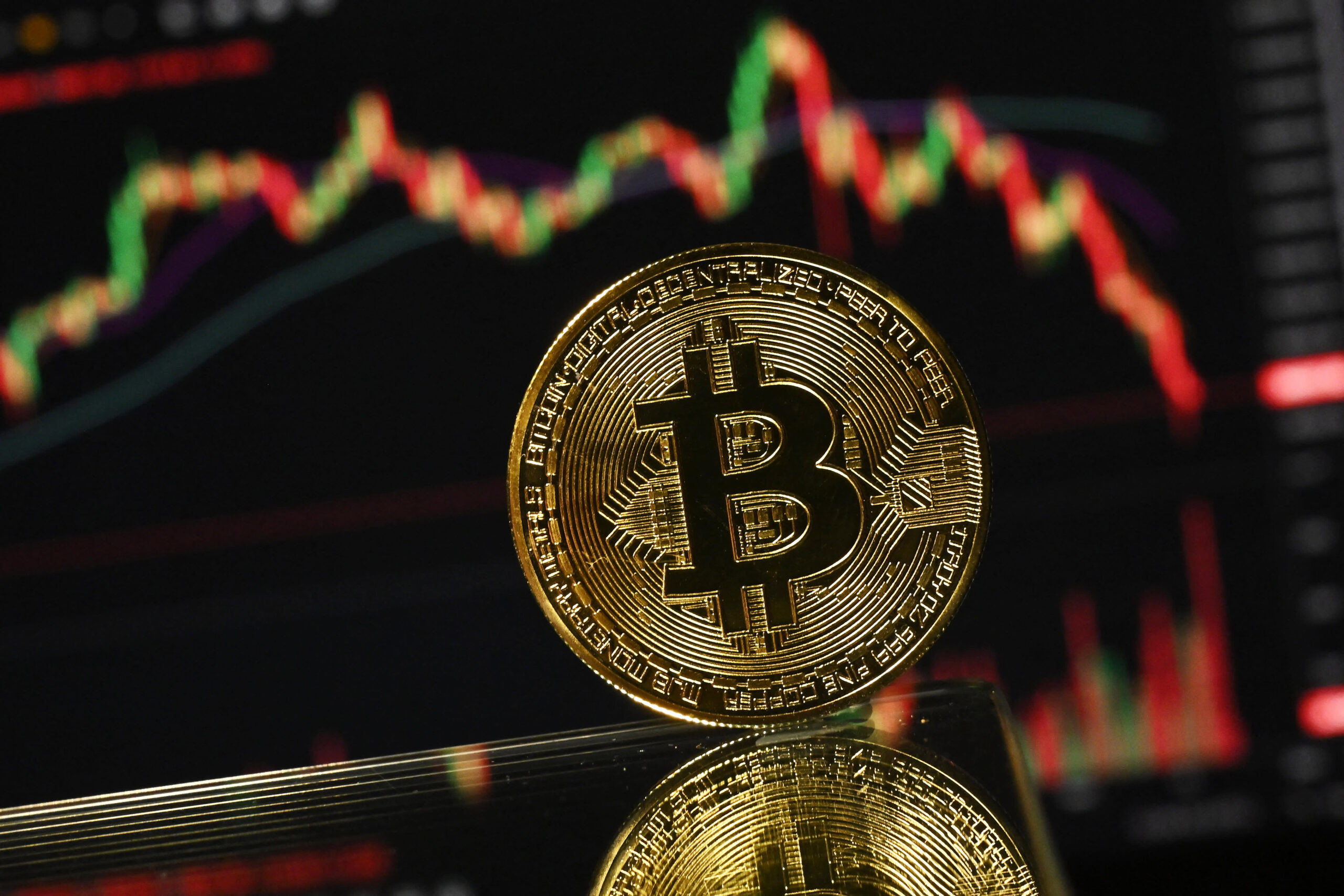
The digital asset ecosystem faced a significant stress test on Tuesday as Bitcoin, the world’s largest cryptocurrency by market capitalization, experienced a sharp sell-off that drove prices to their lowest levels in nearly 16 months. In a volatile trading session characterized by heavy liquidation and a broad retreat from risk-sensitive assets, Bitcoin briefly plummeted below the $73,000 threshold, reaching a session low of $72,884.38. This move represented a single-day decline of more than 6%, marking the token’s most depressed valuation since early November 2024, when it was consolidating around the $68,898 mark following a period of intense political and economic shifts in the United States.
While the flagship cryptocurrency managed a modest intraday recovery to trade near $75,658.95 by late afternoon in New York, the underlying sentiment remained fragile. The 16% year-to-date decline in Bitcoin highlights a stark reversal from the exuberant "bull run" narratives that dominated much of the previous year. This retrenchment is not occurring in a vacuum; rather, it is the result of a complex confluence of macroeconomic headwinds, domestic fiscal instability in the United States, and a shifting regulatory landscape that has left investors searching for a definitive bottom.
A primary catalyst for the week’s heightened volatility is the paralysis within the U.S. federal government. A partial government shutdown has effectively blinded market participants by delaying the release of critical economic indicators, including inflation data and employment figures. In the absence of reliable data from the Bureau of Labor Statistics and other federal agencies, institutional investors have defaulted to a "risk-off" posture. This vacuum of information has made it increasingly difficult for the Federal Reserve to signal its next moves regarding interest rate policy, leading to a spike in the equity risk premium and a corresponding exodus from speculative assets like cryptocurrencies.
The impact of this downturn has been felt acutely across the broader blockchain-adjacent financial sector. MicroStrategy, the enterprise software firm that has effectively transformed itself into a Bitcoin treasury proxy, saw its shares tumble by more than 4% during the Tuesday session. As one of the largest corporate holders of Bitcoin, MicroStrategy’s stock often acts as a leveraged play on the token’s price action, and its decline underscores the tightening correlation between digital assets and the traditional equity markets. The broader "crypto-stock" universe, including mining firms and exchange operators, similarly faced selling pressure as the $73,000 support level—a psychological and technical line in the sand—was breached.
Market analysts suggest that the current pullback is driven by more than just temporary fiscal gridlock. Rob Hadick, a general partner at the crypto-focused venture firm Dragonfly Capital, noted that the market is currently grappling with a "liquidation overhang." This phenomenon occurs when large, leveraged positions are forced into closure as prices drop, creating a cascading effect that exacerbates downward momentum. Hadick emphasized that the decline is likely the result of multiple overlapping factors rather than a single "black swan" event. Among these factors is the ongoing uncertainty surrounding the legislative framework for digital assets in the United States. Despite years of debate, lawmakers have yet to establish a comprehensive set of "guardrails" to govern stablecoin issuance, exchange operations, and the classification of various tokens as either securities or commodities. This lack of clarity continues to act as a deterrent for conservative institutional capital that might otherwise provide a floor during periods of volatility.
Furthermore, geopolitical tensions have played a dual role in shaping Bitcoin’s recent trajectory. While proponents have long argued that Bitcoin serves as "digital gold"—a hedge against global instability—recent price action suggests it continues to behave more like a high-beta technology asset. As conflicts in key regions persist and global trade routes face disruption, investors have frequently favored traditional safe havens such as bullion and U.S. Treasuries over the perceived volatility of the crypto market. The year-to-date performance of Bitcoin, down double digits, contrasts sharply with the resilience seen in certain commodity markets, prompting a re-evaluation of the "store of value" thesis among some portfolio managers.

Despite the prevailing gloom, many industry veterans maintain a constructive outlook on the medium-to-long-term fundamentals of the sector. The infrastructure of the digital asset market has matured significantly since the last major downturn. The rise of stablecoins as a primary medium for cross-border settlement and the increasing "tokenization" of real-world assets (RWAs)—such as private equity, real estate, and government bonds—provide a utility-based foundation that was largely absent in previous cycles. These developments suggest that while the speculative "froth" is being purged, the underlying technological integration into the global financial system is continuing unabated.
The current market "restructuring," as described by some experts, is also a reflection of a transition in the investor base. The era of retail-driven "meme coin" rallies is increasingly being eclipsed by an institutional era defined by spot Bitcoin exchange-traded funds (ETFs) and sophisticated derivative strategies. While these institutional vehicles provide greater liquidity, they also bring Bitcoin into the orbit of global macro-flows. When large-scale asset managers need to de-risk their portfolios in response to a government shutdown or a shift in Treasury yields, Bitcoin is now frequently among the assets sold to raise cash, regardless of its individual merits.
From a technical perspective, the breach of $73,000 is significant because it represents a "flip" of a previous resistance level into a new zone of uncertainty. Technical analysts monitor these levels closely to gauge the "conviction" of buyers. The fact that Bitcoin spent a portion of the day below this level suggests that the "buy the dip" mentality that characterized the 2023 rally may be cooling. However, if the currency can stabilize above $75,000 in the coming days, it may signal that the worst of the current liquidation phase has passed.
The global context also adds layers to the narrative. While the U.S. remains a focal point due to the government shutdown and regulatory debates, other jurisdictions are moving forward with their own crypto agendas. The European Union’s Markets in Crypto-Assets (MiCA) regulation is providing a level of clarity that the U.S. currently lacks, while various Asian financial hubs continue to compete for "crypto-hub" status. This global fragmentation means that while U.S. macro factors are currently dragging down prices, the global demand for decentralized financial rails remains a potent counterweight.
As the week progresses, the eyes of the financial world will remain fixed on Washington. Any resolution to the government shutdown would likely lead to a relief rally across all risk assets, Bitcoin included. Conversely, a prolonged stalemate could further delay the release of the Consumer Price Index (CPI) and other vital data, extending the period of market blindness and potentially inviting further tests of the $70,000 support level.
In summary, the recent dive below $73,000 is a reminder of the inherent volatility that remains the hallmark of the cryptocurrency market. While the 16% year-to-date loss is substantial, it must be viewed through the lens of a market that is simultaneously maturing and being integrated into a chaotic global economic environment. For the institutional players who have entered the space over the last 24 months, this period of retrenchment is a rigorous trial of their long-term conviction. As the market continues to "restructure" itself, the focus is shifting away from pure price speculation toward the tangible adoption of blockchain technology in the plumbing of global finance. Whether Bitcoin can reclaim its former highs will depend not just on the internal dynamics of the crypto world, but on the restoration of stability in the broader macroeconomic and political spheres.