

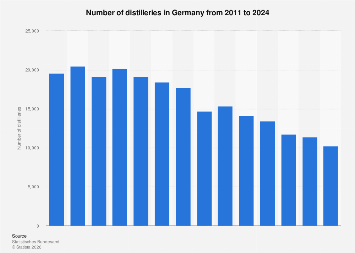
The German spirits industry is demonstrating robust resilience and continued expansion, with the number of distilleries operating within the country projected to remain a significant figure in 2024. This trend underscores a dynamic and evolving market, largely propelled by the surging popularity of craft spirits and a renewed consumer appreciation for artisanal products. While specific year-on-year percentage changes require access to premium data sets, available insights point towards a stable, if not incrementally growing, landscape for German distillers, from established large-scale producers to the burgeoning ranks of micro-distilleries.
This sustained presence of numerous distilleries is a testament to the enduring appeal of traditional German beverages, such as schnapps, fruit brandies, and liqueurs, alongside an increasing diversification into global spirits categories like gin, whisky, and rum. The German market, with its strong consumer base and sophisticated palate, provides fertile ground for both heritage brands and innovative newcomers. The intricate tapestry of this sector is woven from a diverse array of players, each contributing to the nation’s reputation as a significant producer of high-quality alcoholic beverages.
The economic significance of this sector extends beyond mere production figures. The approximately 1,500 to 2,000 distilleries, a range commonly cited for Germany, represent a substantial ecosystem. This includes not only direct employment in production, sales, and marketing but also indirect contributions through agriculture (for raw materials like grains, fruits, and potatoes), packaging, logistics, and hospitality. Small and medium-sized enterprises (SMEs) form the backbone of this industry, many of which are family-run operations with deep historical roots. These businesses often serve as vital anchors in rural communities, preserving local traditions and contributing to regional economies.
The rise of the craft movement, a global phenomenon that has significantly impacted the beverage industry, is particularly pronounced in Germany. Consumers are increasingly seeking out unique flavor profiles, locally sourced ingredients, and transparent production methods. This demand has fueled the establishment of smaller, independent distilleries that focus on artisanal craftsmanship and innovative recipes. These craft producers often distinguish themselves through the use of regional specialties, such as specific fruit varieties or unique botanical blends, creating a distinct sense of place and origin in their products. This trend is not merely a niche market; it is actively shaping consumer preferences and influencing larger producers to adapt and innovate.
Statistics on the global spirits market highlight Germany’s position as a key player. While China and the United States represent the largest markets by volume, European countries, including Germany, are often at the forefront of premiumization and value-driven growth. The German market, characterized by a high per capita consumption of spirits and a discerning consumer base, offers a lucrative environment for producers. Data from market research firms typically indicate steady growth in the premium and super-premium spirits segments within Germany, aligning perfectly with the craft distillery boom.
Comparatively, Germany’s distillery landscape can be viewed in the context of other major spirits-producing nations. Countries like the United States have seen an even more explosive growth in craft distilleries in recent decades, driven by a similarly consumer-led demand for artisanal products. Scotland, of course, remains the global benchmark for whisky production, with a long-established and highly regulated industry. France, with its rich history in Cognac and Armagnac, also boasts a significant number of high-end producers. Germany’s strength lies in its diverse range of spirits, its strong tradition of fruit brandies and schnapps, and its growing prowess in contemporary categories like gin.
The economic impact of the German spirits sector is multifaceted. It contributes significantly to the national GDP through direct sales, exports, and taxation. The German Federal Statistical Office (Destatis) periodically releases data on the food and beverage industry, which includes spirits, providing insights into turnover, employment, and value added. While the exact figures for 2024 distilleries are proprietary, the consistent presence of a large number of operators suggests continued economic activity and job creation. Furthermore, the export potential of German spirits is considerable, with high-quality products finding markets across Europe and beyond.
Challenges do exist within the sector. Increasing raw material costs, energy price volatility, and evolving regulatory landscapes can pose significant hurdles, particularly for smaller distilleries with tighter margins. The ongoing debate surrounding alcohol taxation and public health initiatives also presents a dynamic environment that producers must navigate. However, the inherent adaptability of the German distilling community, coupled with a strong domestic market and a growing international reputation for quality, suggests that these challenges are being met with innovation and strategic planning.
The future trajectory of Germany’s distillery numbers in 2024 and beyond will likely be shaped by several key factors. Continued consumer demand for artisanal and locally produced spirits will undoubtedly support the craft segment. Investment in sustainable production methods and the exploration of new flavor profiles will be crucial for long-term success. Furthermore, the ability of German distillers to leverage digital platforms for marketing and sales, reaching a wider audience both domestically and internationally, will play an increasingly important role. The sector’s ability to maintain its commitment to quality and tradition while embracing innovation will be paramount in securing its continued prominence on the global spirits stage. The German spirits industry, therefore, stands not just as a collection of production facilities, but as a vibrant economic engine, a custodian of culinary heritage, and a dynamic force in the global beverage market.