

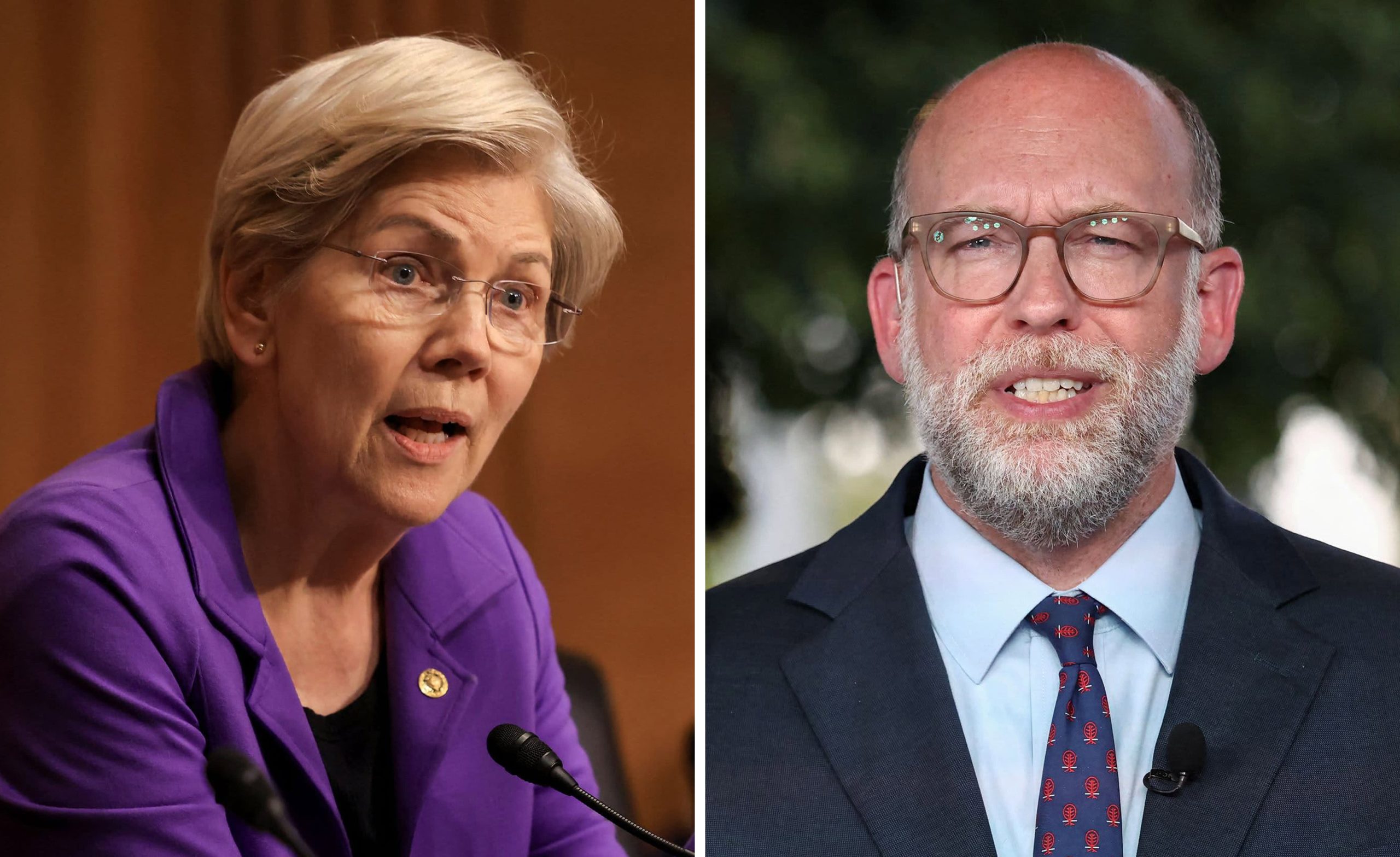
In a move that highlights the deepening ideological and procedural fissures within the American financial regulatory landscape, Senator Elizabeth Warren (D-MA) has formally accused the acting leadership of the Consumer Financial Protection Bureau (CFPB) of actively working against a populist push to reduce credit card costs. In a scathing letter addressed to Russell Vought, the acting director of the CFPB and the current head of the Office of Management and Budget, Warren alleged that the agency is currently being managed in a manner that contradicts President Donald Trump’s public demands for more affordable consumer credit. This development marks a rare moment where a prominent progressive lawmaker is leveraging the president’s own rhetoric to challenge his administration’s deregulatory agenda.
The friction centers on a series of recent policy reversals and enforcement pauses at the CFPB, an agency Warren was instrumental in conceptualizing following the 2008 financial crisis. According to the letter, which was obtained through exclusive channels, Warren contends that Vought has overseen the dismantling of critical consumer protections at the very moment the executive branch is calling for a crackdown on high interest rates. The senator specifically pointed to the agency’s decision to drop a rule that would have capped credit card late fees at $8—a measure estimated to save American households upwards of $10 billion annually. Under the current trajectory, Warren argues, the CFPB is siding with major financial institutions at the expense of the average consumer.
This political confrontation comes on the heels of President Trump’s recent and highly publicized demand that U.S. banks voluntarily cap credit card interest rates at 10% for a one-year period. The proposal, initially floated on social media, met with immediate silence and eventual resistance from the banking sector, where average annual percentage rates (APRs) frequently hover between 21% and 28%. Following the industry’s refusal to comply voluntarily, the president transitioned his strategy, calling on Congress to draft and pass legislation that would mandate such a cap. Warren noted in her correspondence that she had spoken directly with the president regarding this issue, suggesting that legislative action is possible only if the White House is willing to exert significant political capital.
The economic context of this dispute is underscored by record-high levels of consumer debt. According to recent data from the Federal Reserve Bank of New York, total U.S. credit card debt has surged past $1.1 trillion, a reflection of both inflationary pressures and a heightened reliance on revolving credit for essential expenses. As interest rates remain elevated in a "higher-for-longer" monetary environment, the cost of carrying this debt has become a primary concern for middle- and lower-income households. Proponents of a rate cap argue that current APRs are disconnected from the cost of capital, representing a "poverty tax" that extracts wealth from the most vulnerable segments of the population.
However, the CFPB’s internal operations appear to be moving in the opposite direction of these populist goals. Since Vought took the helm, reports have emerged from within the agency suggesting it is essentially on "life support." Vought, a staunch proponent of administrative downsizing, has been a vocal critic of the CFPB’s independent funding structure and has previously advocated for its complete dissolution. His dual role as OMB Director and acting head of the CFPB has allowed him to implement a "starve the beast" strategy, which includes fighting for mass layoffs and attempting to halt the agency’s funding from the Federal Reserve.
The legal defense provided by the CFPB highlights a significant hurdle in the quest for interest rate caps. An agency spokesperson clarified that the Dodd-Frank Wall Street Reform and Consumer Protection Act—the very law that created the agency—explicitly prohibits the CFPB from establishing a usury limit or capping interest rates directly. This statutory limitation places the burden of rate regulation squarely on the shoulders of Congress or individual states, many of which have their own usury laws that are often bypassed by nationally chartered banks through "exportation" rules.

Despite these legal constraints, Warren argues that the CFPB possesses a wide array of other tools that Vought is intentionally neglecting. Beyond the late fee cap, the senator’s letter demands the reinstatement of rigorous monitoring for interest rate increases and a crackdown on "deferred interest" promotions. These promotions, common in retail credit cards, often charge consumers retroactive interest on the full purchase balance if a debt is not paid off entirely within a promotional window. Consumer advocates have long labeled these practices as "bait-and-switch" tactics that generate billions in "gotcha" revenue for lenders.
The debate also extends to the transparency of rewards programs and the handling of consumer complaints. Warren’s letter highlights a mounting backlog of grievances filed by consumers who claim they have been misled by credit card marketing or unfairly penalized by technical glitches. Under the current leadership, the senator alleges that enforcement actions have slowed to a crawl, creating a permissive environment for "bad actors" in the financial services industry.
From a global perspective, the United States remains an outlier in its lack of a federal interest rate cap for credit cards. In the United Kingdom, the Financial Conduct Authority (FCA) has implemented various interventions to protect consumers in persistent debt, including requirements for firms to help customers lower their balances. Similarly, many European Union member states have established maximum allowable interest rates that prevent the extreme APRs commonly seen in the American market. The absence of such a ceiling in the U.S. has allowed the credit card industry to become one of the most profitable sectors of retail banking, even as delinquency rates begin to tick upward.
Market analysts and economists are divided on the potential impact of the proposed 10% cap. While such a move would provide immediate relief to indebted consumers, banking industry trade groups warn of unintended consequences. The American Bankers Association and other industry advocates argue that a hard cap would lead to a significant "credit crunch," forcing lenders to tighten their standards and deny credit to millions of subprime borrowers. They contend that the high interest rates are a necessary reflection of the risk associated with unsecured lending. If the ability to price for risk is removed, they argue, the availability of credit will evaporate, potentially pushing consumers toward even more predatory options like payday loans or unregulated online lenders.
Warren’s strategy appears designed to create a "pincer maneuver" on the administration. By framing the CFPB’s current deregulation as an act of "insubordination" against the president’s stated goals, she is forcing a public accounting of the administration’s priorities. "Either President Trump is not serious about making credit cards more affordable or you are insubordinately disregarding his direction," Warren wrote, addressing Vought. This framing places the White House in a difficult position: it must either defend a deregulatory agenda that benefits big banks or take the side of a progressive senator in empowering a regulatory agency it has spent years trying to weaken.
As the legislative battle over a potential 10% cap looms, the internal state of the CFPB will likely remain a focal point of contention. The agency’s ability to protect consumers is inextricably linked to its funding and its leadership’s willingness to utilize its enforcement powers. For now, the stalemate continues, with the nation’s primary consumer watchdog caught between a director who wants to see it closed and a political climate that is increasingly demanding the very protections the agency was designed to provide. The outcome of this struggle will not only determine the future of the CFPB but will also signal the true direction of U.S. economic policy regarding the $1.1 trillion burden of credit card debt.