
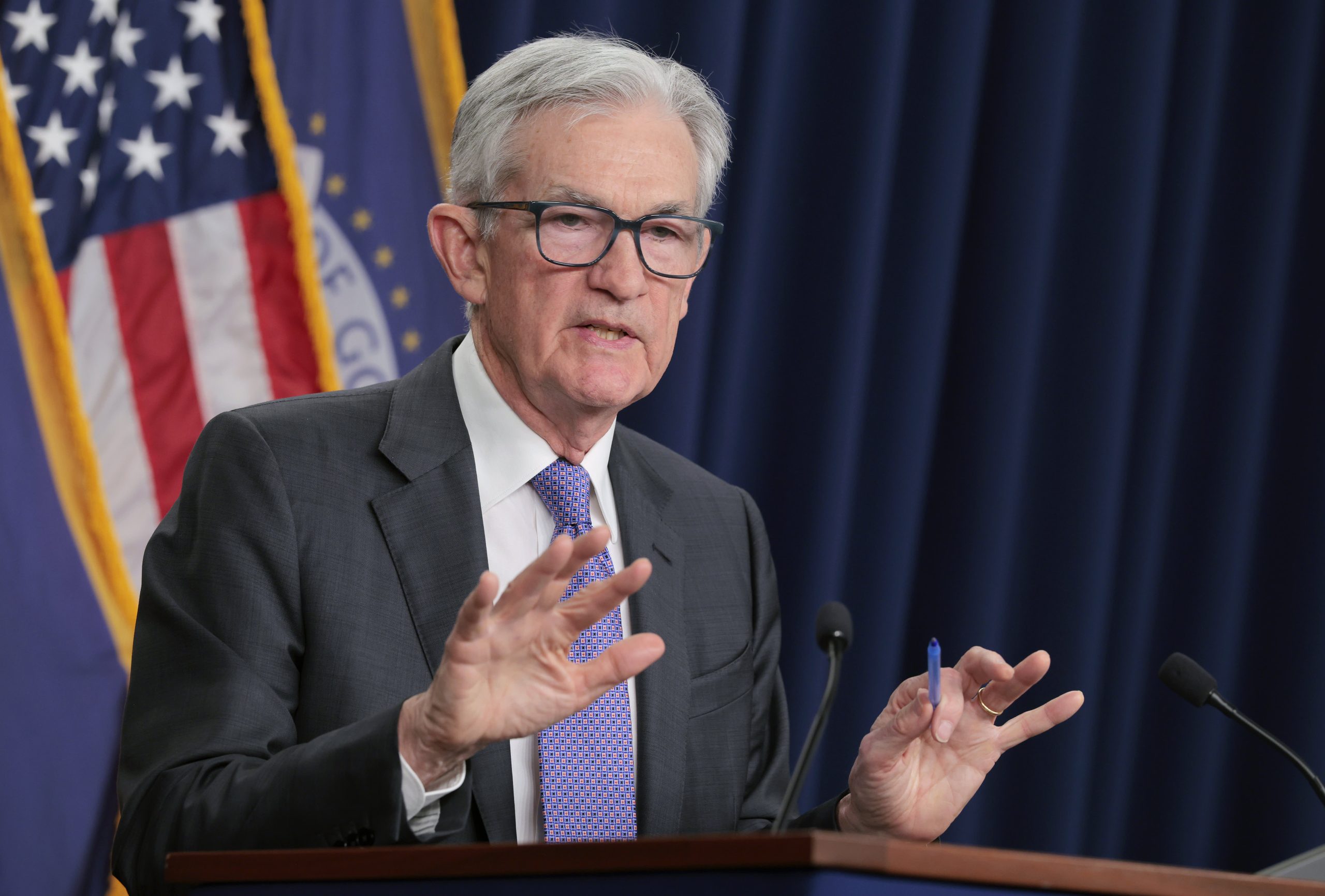
As the United States approaches a pivotal transition in economic leadership, a complex legal and institutional drama is unfolding within the corridors of the Marriner S. Eccles Building. Jerome Powell, the 16th Chair of the Federal Reserve, faces a looming expiration of his leadership term on May 15, 2026. While the conventional expectation is that a departing chair vacates their seat on the Board of Governors entirely, a unique convergence of political pressure, legal investigations, and institutional defense suggests that Powell may choose a different, more disruptive path: staying on as a regular governor until his full term expires in 2028.
This potential maneuver represents more than a personal career decision; it is a burgeoning constitutional and economic standoff that could redefine the boundaries of central bank independence for decades. With President Donald Trump signaling a desire for more direct influence over monetary policy, the prospect of an "ex-chair" remaining on the board creates a structural hurdle for the incoming administration’s economic agenda. The implications for global markets, which rely on the predictability of the Fed’s "data-dependent" approach, are profound.
The technicality at the heart of this conflict lies in the bifurcated nature of Federal Reserve appointments. A Chair is appointed to a four-year term to lead the central bank, but that individual also holds a separate 14-year term as a member of the Board of Governors. Powell’s tenure as a governor does not officially conclude until January 31, 2028. Historically, outgoing chairs—from Alan Greenspan to Janet Yellen—have resigned their governor seats upon the conclusion of their chairmanship to allow the sitting president to appoint a successor of their choosing, ensuring a cohesive leadership team. However, the current atmosphere of hostility between the executive branch and the central bank has upended these norms.
The friction reached a fever pitch following revelations that the Department of Justice has launched an investigation into Powell for potential criminal prosecution, a move Powell has publicly characterized as a "pretext" for the administration to seize control of the Fed. This legal escalation, combined with a recent subpoena that Powell has labeled politically motivated, has shifted the calculus for institutionalists within the bank. If Powell views his removal or the pressure to resign as an existential threat to the Fed’s non-partisan mandate, his retention of a governor seat becomes a strategic act of resistance.

Economists and policy analysts are increasingly convinced that this "Eccles Strategy"—named after Marriner Eccles, who remained on the board after being demoted by President Harry Truman in 1948—is becoming the most likely outcome. Krishna Guha, Vice Chairman at Evercore ISI, noted that the current sequence of events makes it significantly more probable that Powell, along with Vice Chair for Supervision Michael Barr, will remain in their posts to safeguard the institution. Barr, whose term as governor extends until 2032, recently stepped down from his supervisory role to avoid a direct confrontation with the White House but retained his seat on the board, signaling a collective front among the current leadership.
The stakes of this standoff are measured in trillions of dollars. Central bank independence is a cornerstone of modern macroeconomics, predicated on the idea that interest rate decisions should be insulated from short-term political cycles. When politicians control the cost of borrowing, there is a historical tendency to keep rates artificially low to stimulate growth ahead of elections, which invariably leads to runaway inflation. Academic research, most notably by economists Alberto Alesina and Lawrence Summers, has consistently demonstrated a strong inverse correlation between central bank independence and average inflation rates.
If Powell remains on the board, he would continue to hold a vote on the Federal Open Market Committee (FOMC), the body responsible for setting the federal funds rate. Even without the title of Chair, Powell’s influence as a veteran policymaker would be immense. He could lead a "voting bloc" of governors that might contradict the new Chair’s directives, especially if those directives are perceived as bowing to political pressure for lower rates. This creates a scenario of a "fractured Fed," where the consensus-driven model of the past is replaced by internal ideological warfare.
The reaction from the financial markets has been one of cautious observation, though prediction markets are beginning to price in the volatility. Data from Kalshi indicates that traders still believe there is a 70% chance Powell will leave the board by August 2026, suggesting that many expect a negotiated exit or a settlement of the DOJ issues. However, the bond market tells a more nuanced story. Yields on long-term Treasury notes have shown sensitivity to rhetoric regarding Fed independence, as investors demand a "term premium" to compensate for the risk of future inflation if the Fed’s credibility is compromised.
The political dimension is further complicated by the legislative branch. Senator Thom Tillis has already signaled a willingness to block any new Federal Reserve appointments until the DOJ’s investigation into Powell is resolved. This creates a potential vacancy crisis. If Powell stays and the Senate refuses to confirm a new Chair, the Fed could be forced into a period of interim leadership, further clouding the outlook for monetary policy.

Global comparisons highlight the uniqueness of the American situation. The European Central Bank (ECB) enjoys a high degree of treaty-protected independence, and the Bank of England’s operational independence is codified in law. In contrast, the Federal Reserve’s independence relies heavily on established norms and the "for cause" protection of its governors, a legal standard that has rarely been tested in the Supreme Court. Should the executive branch attempt to remove Powell "for cause" before May, it would trigger a landmark legal battle over the separation of powers.
The economic impact of this uncertainty cannot be overstated. Business investment thrives on stability. If the Fed becomes a political football, the "Fed put"—the market’s belief that the central bank will act as a rational backstop—could vanish. Market veteran Ed Yardeni suggests that the administration’s aggressive tactics might ironically result in a more fiercely independent Fed. He posits that a new, politically appointed Chair might find it impossible to build a consensus among the remaining veteran governors, leaving the new Chair isolated and ineffective.
Furthermore, the "dual mandate" of the Federal Reserve—maintaining price stability and maximum sustainable employment—requires a delicate balancing act. Under Powell, the Fed has navigated a post-pandemic landscape of 40-year high inflation and a remarkably resilient labor market. His supporters argue that his "higher for longer" interest rate strategy was the essential medicine needed to cool the economy without triggering a recession. Critics, including many in the current administration, argue that the Fed moved too slowly to raise rates in 2021 and was too hesitant to cut them in 2024, causing unnecessary economic friction.
As May 15, 2026, approaches, the financial world will be watching for signals from the Treasury Department and the Fed’s public relations arm. While Powell has remained tight-lipped, stating only that he is "focused on his remaining time as chair," his actions speak to a man who views himself as a steward of an essential democratic institution. Whether he chooses a quiet retirement or a defiant stay as a governor, the decision will serve as a litmus test for the resilience of the American financial system.
In the final analysis, the potential for Jerome Powell to remain at the Fed board represents a strategic hedge against the politicization of money. If the central bank is to remain an "institutional fortress," it may require its current commander to stay within the walls long after his primary commission has ended. The result will determine not just the direction of interest rates, but the very nature of economic governance in the 21st century. The path Powell chooses will likely be dictated by the intensity of the pressure he faces; the more the executive branch pushes for control, the more likely the "Eccles Strategy" becomes the Fed’s ultimate line of defense.