


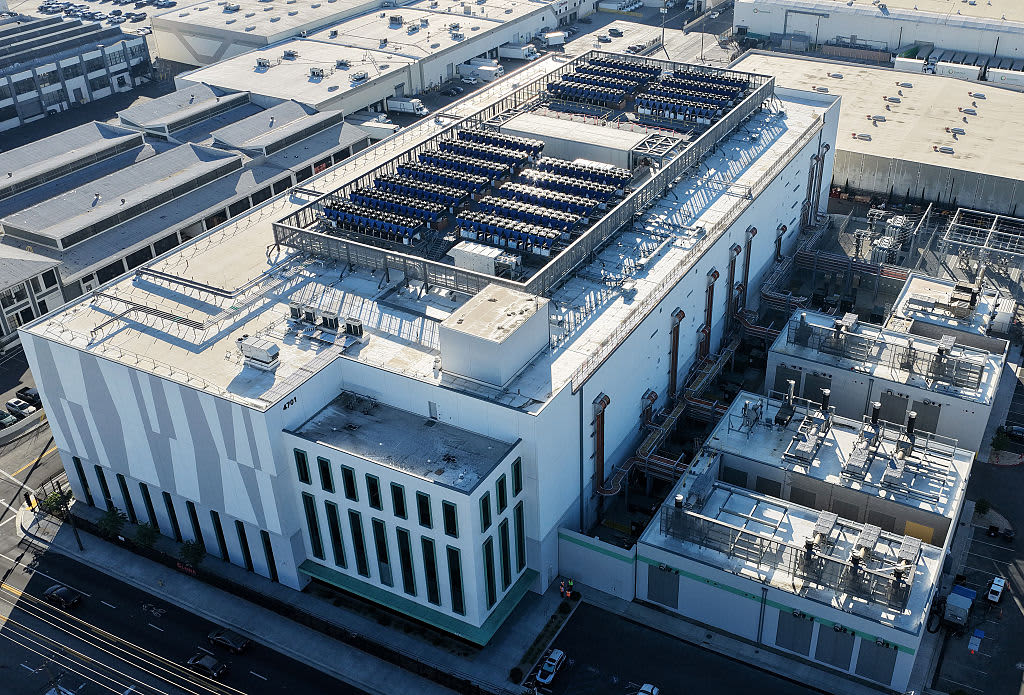
The initial frenzy surrounding artificial intelligence, once characterized by a narrow focus on semiconductor giants and large-language model developers, has entered a transformative second act. As the digital ambitions of Silicon Valley collide with the physical realities of the global power grid, a new class of market leaders is emerging. This shift represents a fundamental decoupling of the AI trade from pure software and silicon, moving instead toward the heavy industrial and specialized engineering firms that provide the backbone for the next generation of computing. Investors who remain tethered exclusively to the "Magnificent Seven" are increasingly finding themselves sidelined as the most explosive growth migrates to small- and mid-cap companies solving the physical bottlenecks of the AI era.
At the heart of this transition is an escalating crisis of resource scarcity. The computational intensity required to train and deploy generative AI models is driving an unprecedented surge in electricity demand. According to recent projections from the International Energy Agency (IEA), data centers’ total electricity consumption could double by 2026, reaching levels comparable to the entire energy footprint of Germany. This surge is not merely a matter of scale but of reliability. Unlike standard commercial loads, AI data centers require 24/7 "baseload" power with zero tolerance for the intermittency associated with traditional renewable sources like wind and solar.
This demand for "always-on" energy has catalyzed a dramatic revaluation of companies specializing in on-site power generation and grid stability. Bloom Energy serves as a primary case study for this phenomenon. After years of trading near its 2018 initial offering price, the company’s fuel cell technology—capable of providing high-density, localized power—became a vital solution for data center operators facing multi-year waits for utility grid connections. The result was a meteoric 500% rise in share price and a market capitalization that vaulted past $30 billion. Bloom’s trajectory reflects a broader trend: companies that once occupied obscure corners of the industrial sector are rapidly moving up the cap table as their specialized solutions become mission-critical.
The limitations of the existing electrical infrastructure have also sparked a global "nuclear renaissance." As hyperscalers like Microsoft, Amazon, and Google scramble to secure carbon-free baseload power, the investment community has pivoted toward the nuclear supply chain. This interest extends beyond the major utilities to the specialized firms involved in reactor servicing, uranium enrichment, and the development of Small Modular Reactors (SMRs). SMRs, in particular, represent a potential paradigm shift, offering the promise of scalable, factory-built nuclear units that can be deployed directly alongside massive data center clusters. This upstream migration of capital is creating a windfall for niche engineering firms that possess the proprietary technical expertise required to navigate the highly regulated and complex nuclear landscape.
However, the challenges of the AI supercycle extend beyond the power plug. Inside the data center, the sheer heat generated by advanced GPUs has rendered traditional air-cooling methods obsolete in many high-performance environments. Thermal management has emerged as the next great chokepoint. This has funneled massive investment into liquid cooling specialists and advanced HVAC providers. In these specialized niches, the competitive landscape is often characterized by high barriers to entry and limited competition—bordering on oligopolistic structures. For investors, these "one or two in their field" companies offer significant operating leverage, as their revenue growth is tethered directly to the capital expenditure cycles of the world’s largest technology firms.
The rapid scaling of these infrastructure players is fundamentally altering portfolio construction strategies. Traditionally, small-cap stocks have been viewed through the lens of domestic economic health or speculative growth. In the current environment, however, many small- and mid-cap firms are operating as global pure-plays on the AI infrastructure theme. Because these companies often focus on a single, critical component—be it a specific cooling manifold or a specialized power inverter—their fundamentals can improve at a rate that far outpaces broader market awareness.

This information asymmetry has led to a resurgence in active management, particularly through actively managed Exchange-Traded Funds (ETFs). While passive indices are designed to capture broad market beta, they often lag in identifying the rapid "cap table" climbs of infrastructure specialists until they have already achieved significant size. Active strategies, by contrast, aim to identify these specialized players during their early scaling phases, holding them through the volatility of their growth cycles.
Yet, the move into the "physical" AI trade is not without substantial risk. The sector is currently grappling with "nosebleed" valuations in certain pockets, where investor enthusiasm has occasionally outstripped near-term earnings potential. Many of the companies leveraged to the AI build-out are smaller, financially thinner entities compared to the cash-rich tech titans they serve. This inherent fragility means that while the upside is significant, the volatility can be punishing. Market analysts warn that some of these stocks are highly sensitive to shifts in interest rates and government energy policies, making a diversified approach essential.
The geopolitical dimension further complicates the landscape. The race for AI supremacy is increasingly viewed as a matter of national security, leading to a wave of protectionist policies and domestic subsidies. In the United States, the Inflation Reduction Act (IRA) has provided a massive tailwind for domestic energy production and hardware manufacturing. Similar initiatives in the European Union and East Asia are creating a fragmented but high-growth global market. For the specialized companies providing the infrastructure, this geopolitical competition ensures a steady stream of government-backed demand, but it also introduces regulatory risks that can shift overnight.
Furthermore, the "efficiency paradox" remains a critical factor for long-term sustainability. As AI chips become more efficient, the cost of computing drops, which historically leads to an even greater increase in total demand—a phenomenon known as Jevons’ Paradox. This suggests that the pressure on power grids and cooling systems will not be solved by better chip design alone; rather, it will necessitate a continuous and massive expansion of the underlying physical infrastructure for the foreseeable future.
As we move deeper into 2026, the distinction between "Tech" and "Utilities" or "Industrials" is blurring. The AI trade is no longer a peripheral sector of the stock market; it is becoming the market itself, influencing everything from copper prices and transformer manufacturing to real estate and municipal water usage (required for cooling). The economic impact of this transition is profound, as it redirects capital from purely digital services back into the physical economy, revitalizing manufacturing sectors that had seen decades of stagnation.
For the modern investor, navigating this shift requires a departure from the "buy-and-hold" simplicity of the last decade’s software-dominated bull market. The current phase demands a more targeted, granular understanding of the supply chain. Success in the next stage of the AI era will likely be defined by the ability to identify the "bottleneck breakers"—those specialized, often smaller companies that hold the keys to the grid, the reactor, and the cooling system. While the "Magnificent Seven" provided the spark for the AI revolution, it is the infrastructure specialists who are building the engine that will sustain it. In this high-stakes environment, active rebalancing and a keen eye for technical moats are the essential tools for staying invested without falling victim to the inevitable cycles of hype and correction.