


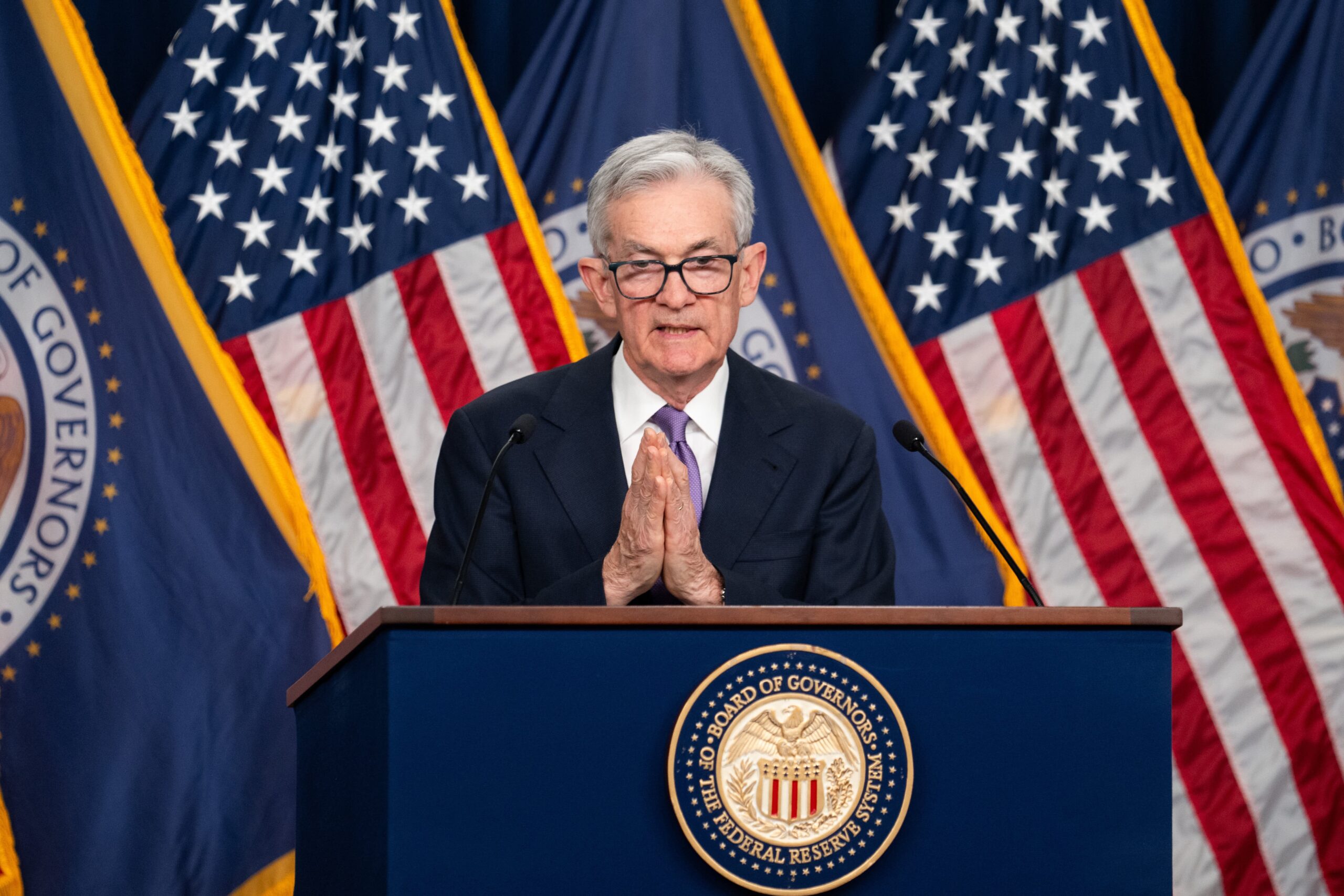
The Federal Open Market Committee (FOMC) has signaled a profound transition in its approach to managing the United States economy, moving away from an era defined by aggressive interest rate hikes toward a more nuanced, data-dependent stance. This evolution in the central bank’s communication strategy, evidenced by the subtle but high-stakes changes in its recent policy statements, marks a pivotal moment for global financial markets. By stripping away long-standing language regarding potential "policy firming" and replacing it with a more cautious assessment of inflation trajectories, the Fed is effectively signaling that while the peak of the tightening cycle has likely been reached, the path toward monetary easing remains fraught with complexity.
The most striking modification in the Fed’s recent communique is the removal of the phrase "additional policy firming." For much of the past two years, this specific wording served as a hawkish signal to investors that the central bank maintained a bias toward raising interest rates to combat rampant inflation. Its deletion suggests that the FOMC now views the current federal funds rate—maintained at a 22-year high—as sufficiently restrictive to bring inflation back to its 2% target. However, this pivot is not a surrender to the market’s demands for immediate rate cuts. Instead, the committee has introduced a new hurdle: the requirement for "greater confidence" that inflation is moving sustainably toward its objective before any downward adjustments are considered.
This shift in rhetoric comes at a time when the U.S. economy continues to defy the gravity of high borrowing costs. Throughout the tightening cycle, which saw the federal funds rate climb from near-zero to a range of 5.25% to 5.50%, many economists predicted a looming recession. Yet, the labor market has remained remarkably resilient, and consumer spending has held firm, bolstered by a robust services sector and a steady, if cooling, job market. The Fed’s updated statement reflects this reality, acknowledging that economic activity has been expanding at a "solid pace." By maintaining this balance, the central bank is attempting to navigate a "soft landing"—a rare economic feat where inflation is tamed without triggering a significant spike in unemployment or a contraction in GDP.
To understand the magnitude of these linguistic shifts, one must look at the underlying economic data that informs the Fed’s decision-making. The Personal Consumption Expenditures (PCE) price index, the Fed’s preferred inflation gauge, has shown significant cooling from its 2022 peaks. However, "core" inflation—which strips out volatile food and energy prices—remains stickier than policymakers would like, particularly in the housing and services sectors. The transition from "firming" to "greater confidence" reflects a concern that the "last mile" of the inflation fight may be the most difficult. If the Fed cuts rates too early, it risks a resurgence of price pressures; if it waits too long, it risks overtightening and causing unnecessary economic pain.
Global markets have reacted to these changes with a mix of relief and renewed volatility. The era of "easy money" is clearly over, but the timeline for the "new normal" remains opaque. In the bond market, yields on the 10-year Treasury note—a benchmark for everything from mortgages to corporate debt—have fluctuated as investors attempt to price in the timing of the first rate cut. Equity markets, meanwhile, have had to adjust their expectations; the exuberant "pivot party" seen in late 2023 has been replaced by a more sober realization that the Fed is in no rush to lower the cost of capital.
Expert analysis suggests that the Fed’s new stance is designed to provide maximum flexibility. By removing the tightening bias, they have opened the door to cuts, but by adding the "greater confidence" clause, they have kept that door firmly shut for the immediate future. This "wait-and-see" approach is also a response to the geopolitical uncertainties that threaten to disrupt global supply chains. Tensions in the Middle East and the ongoing conflict in Ukraine continue to pose risks to energy prices and shipping costs, which could easily bleed back into domestic inflation figures. The Fed’s statement now carefully notes that the committee is "highly attentive to inflation risks," a phrase that carries more weight now that the directional bias of policy has turned neutral.
When compared to its international peers, the Federal Reserve’s position is unique. The European Central Bank (ECB) and the Bank of England (BoE) are facing similar dilemmas but within much more fragile economic environments. Europe has struggled with stagnant growth and a more direct impact from the energy crisis, yet its central bankers have also remained hesitant to declare victory over inflation. In contrast, the Bank of Japan (BoJ) is only just beginning to move away from its ultra-loose monetary policy, marking a global divergence in central bank behavior that has significant implications for currency exchange rates and international trade flows.
The economic impact of the Fed’s current trajectory is felt most acutely in the domestic housing market and by small businesses. Mortgage rates, while off their recent highs, remain significantly elevated compared to the pre-pandemic era, leading to a "lock-in effect" where homeowners are reluctant to sell and move, thereby constraining inventory. For small businesses, the cost of servicing floating-rate debt and securing new lines of credit has surged, leading to a slowdown in capital expenditure. The Fed is acutely aware that the longer rates remain at these levels, the greater the "lagged effects" of monetary policy will become, potentially hitting the economy all at once.
Furthermore, the Fed’s balance sheet reduction program, known as quantitative tightening (QT), continues in the background. By allowing billions of dollars in Treasuries and mortgage-backed securities to mature without reinvesting them, the Fed is further draining liquidity from the financial system. The updated policy statement, while focused on interest rates, implies that this process will continue until the committee sees a need to adjust the pace to ensure sufficient banking system reserves. This dual-track approach—holding rates high while shrinking the balance sheet—represents one of the most significant monetary contractions in U.S. history.
Looking ahead, the Federal Reserve’s communication will be scrutinized for any signs of the "confidence" they seek. Key indicators will include the monthly non-farm payrolls reports, wage growth data, and the quarterly "Summary of Economic Projections" (the so-called dot plot). The dot plot provides a visual representation of where each FOMC member expects interest rates to be over the next few years. While the statement provides the official consensus, the dot plot often reveals the internal debates between the "hawks," who fear inflation, and the "doves," who worry about the labor market.
In conclusion, the recent changes to the FOMC statement represent far more than a simple edit of a technical document. They signal a strategic pivot toward a neutral policy stance, ending the cycle of aggressive hikes while maintaining a high barrier for future cuts. The Federal Reserve is effectively telling the world that it has reached the summit of its tightening mountain, but it intends to camp there until the weather clears. For businesses, investors, and consumers, this means the era of high interest rates is likely to persist for longer than many had hoped, as the central bank prioritizes long-term price stability over short-term market relief. The "Great Recalibration" is underway, and its success will determine the trajectory of the global economy for the remainder of the decade.