

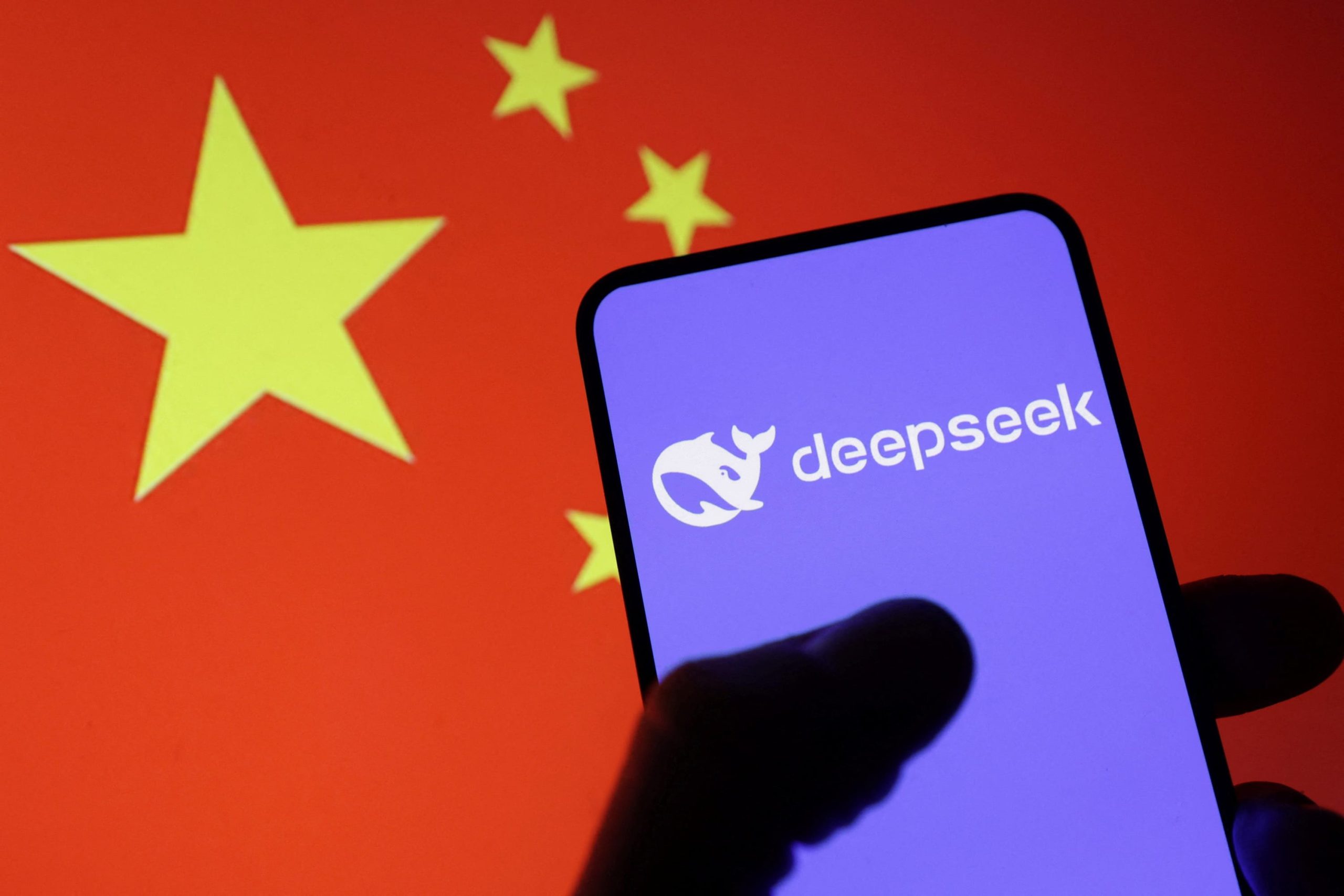
Just over a year after the launch of DeepSeek sent shockwaves through the global technology sector, the landscape of artificial intelligence in China has shifted from cautious imitation to aggressive, high-speed innovation. What began as a scramble to replicate the successes of Western pioneers like OpenAI and Google has evolved into a sophisticated, multi-front arms race. Today, Beijing and Hangzhou have become the epicenters of a new era in generative AI, characterized by a relentless pace of model releases, a strategic pivot toward "agentic" capabilities, and a unique approach to monetization that leverages China’s existing "super-app" ecosystems.
The catalyst for this recent surge was arguably DeepSeek’s emergence. By releasing a model that significantly undercut the usage fees and production costs of its American counterparts, DeepSeek demonstrated that high-performance AI did not necessarily require the infinite compute resources of a Silicon Valley behemoth. This "DeepSeek moment" served as a proof of concept for the Chinese tech industry: efficiency and algorithmic optimization could, to some extent, bypass the bottlenecks created by U.S.-led semiconductor export restrictions. One year later, that lesson has been institutionalized across the Chinese tech sector, from established giants like Alibaba and Baidu to well-funded "unicorns" like Moonshot AI and Z.ai.
The current phase of the competition is defined by the pursuit of "agentic AI"—systems that do not merely generate text or images but can autonomously execute complex tasks with minimal human intervention. In late January, the Beijing-based startup Moonshot AI unveiled its Kimi K2.5 model, a significant leap forward that integrates advanced video generation with sophisticated agentic workflows. By claiming to outperform the three leading U.S. models in specific task-oriented benchmarks, Moonshot is signaling that the gap in high-level reasoning is closing. The K2.5 release came just three months after its predecessor, the K2, highlighting a cycle of iteration that is significantly faster than the annual or biennial release schedules typically seen in the West.

Alibaba, the e-commerce and cloud computing titan, has mirrored this velocity. The company recently introduced Qwen3-Max-Thinking, a model designed specifically to excel at complex reasoning. Alibaba’s internal metrics suggest that this new iteration outperformed major U.S. rivals on "Humanity’s Last Exam," a rigorous benchmark designed to test the limits of AI reasoning and general knowledge. Crucially, the Qwen3-Max-Thinking model is built to be a "tool-user." It can automatically select the most appropriate AI sub-tools for specific tasks—such as mathematical calculation or code execution—and draw on historical conversational context to improve efficiency without a corresponding spike in operational costs. For a company like Alibaba, which operates a massive cloud infrastructure, the ability to deliver high-level reasoning at a low marginal cost is a vital competitive advantage.
However, the rapid expansion of AI capabilities is placing immense pressure on China’s domestic computing infrastructure. The physical limits of the race were briefly exposed when Z.ai, another prominent player in the space, was forced to restrict new subscribers for its AI coding tool. The surge in demand following the release of its free GLM 4.7 model effectively maxed out the company’s available GPU clusters. This incident underscores a critical reality: while algorithmic efficiency can mitigate some hardware shortages, the sheer volume of user traffic in a market of 1.4 billion people requires a scale of infrastructure that few companies can maintain.
Despite these bottlenecks, the market’s appetite remains voracious. Baidu, often considered the elder statesman of the Chinese internet, saw its Hong Kong-listed shares climb to a nearly three-year high following the debut of Ernie 5.0. Baidu’s leadership has positioned Ernie 5.0 as a direct competitor to Google’s Gemini 2.5 Pro, though the company has notably avoided direct comparisons with the even more advanced Gemini 3 Pro. This cautious positioning reflects a broader industry sentiment: while Chinese firms are confident they have reached parity with the previous generation of U.S. models, they are locked in a "Red Queen’s Race" to keep pace with the next generation of American breakthroughs. Demis Hassabis, CEO of Google DeepMind, recently noted that Chinese models might only be "months" behind their U.S. counterparts, a timeframe that has shrunk dramatically from the two-to-three-year gap estimated just eighteen months ago.
The strategic divergence between the U.S. and Chinese AI sectors is most visible in their respective approaches to global market penetration. While U.S. firms largely favor proprietary, closed-source models with high subscription fees, Chinese companies have leaned heavily into the open-source movement. By offering the underlying code of their models for free or at a nominal cost, firms like Alibaba and DeepSeek are encouraging developers in emerging economies to build their ecosystems on Chinese foundations.

This strategy is already yielding results in the "Global South." Recent data indicates that the adoption of DeepSeek in Africa is currently two to four times higher than in other international regions. By providing low-cost, high-performance tools to developers who are priced out of the OpenAI or Anthropic ecosystems, Chinese firms are effectively "standard-setting" in the developing world. This is not merely a commercial play; it is a long-term strategic effort to ensure that the next generation of global AI applications is built on Chinese architecture rather than American.
Domestically, the battle for AI supremacy is being fought through the lens of consumer integration and "Super-Apps." Unlike the U.S. market, where AI is often treated as a standalone productivity tool, Chinese firms are embedding AI directly into the fabric of daily life. Tencent, the operator of the ubiquitous WeChat platform, has leveraged its social dominance to promote its Yuanbao AI chatbot. During the Lunar New Year festival, Tencent announced a massive 1 billion yuan ($140 million) cash incentive program, distributed through the Yuanbao app in the form of digital "red envelopes." This tactic is a direct page from the playbook Tencent used a decade ago to disrupt the mobile payments market, using holiday traditions to drive mass adoption of new technology.
Alibaba has adopted a similar integration strategy by merging its Qwen AI app with its Taobao e-commerce platform. Users can now interact with the chatbot to research products, order food, and process payments without ever leaving the AI interface. With Qwen reporting over 100 million monthly active users, this "agentic commerce" model turns a cost-intensive AI model into a revenue-generating funnel for the company’s core retail business. By driving traffic to Taobao, Alibaba can offset the staggering R&D and electricity costs associated with maintaining a frontier-class AI model.
In the final analysis, the Chinese AI sector is prioritizing user traffic and ecosystem lock-in over the pursuit of "Artificial General Intelligence" (AGI) as a purely scientific milestone. While the U.S. remains the leader in raw research and high-end hardware, China has mastered the art of deployment and cost-effective scaling. The goal for Beijing’s tech giants is no longer just to build a better chatbot; it is to create an autonomous digital layer that sits atop the existing internet, managing commerce, communication, and productivity. As the gap between Silicon Valley and its Chinese rivals continues to narrow to a matter of months, the global AI landscape is becoming a bipolar reality where the winner may not be the one with the most powerful model, but the one who can make that power most accessible to the masses.