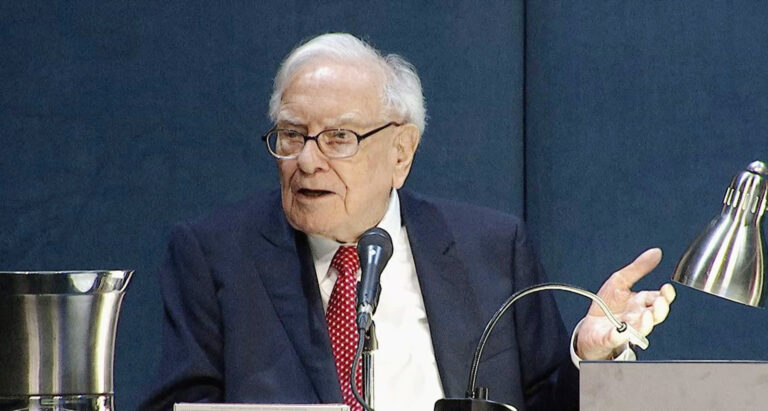
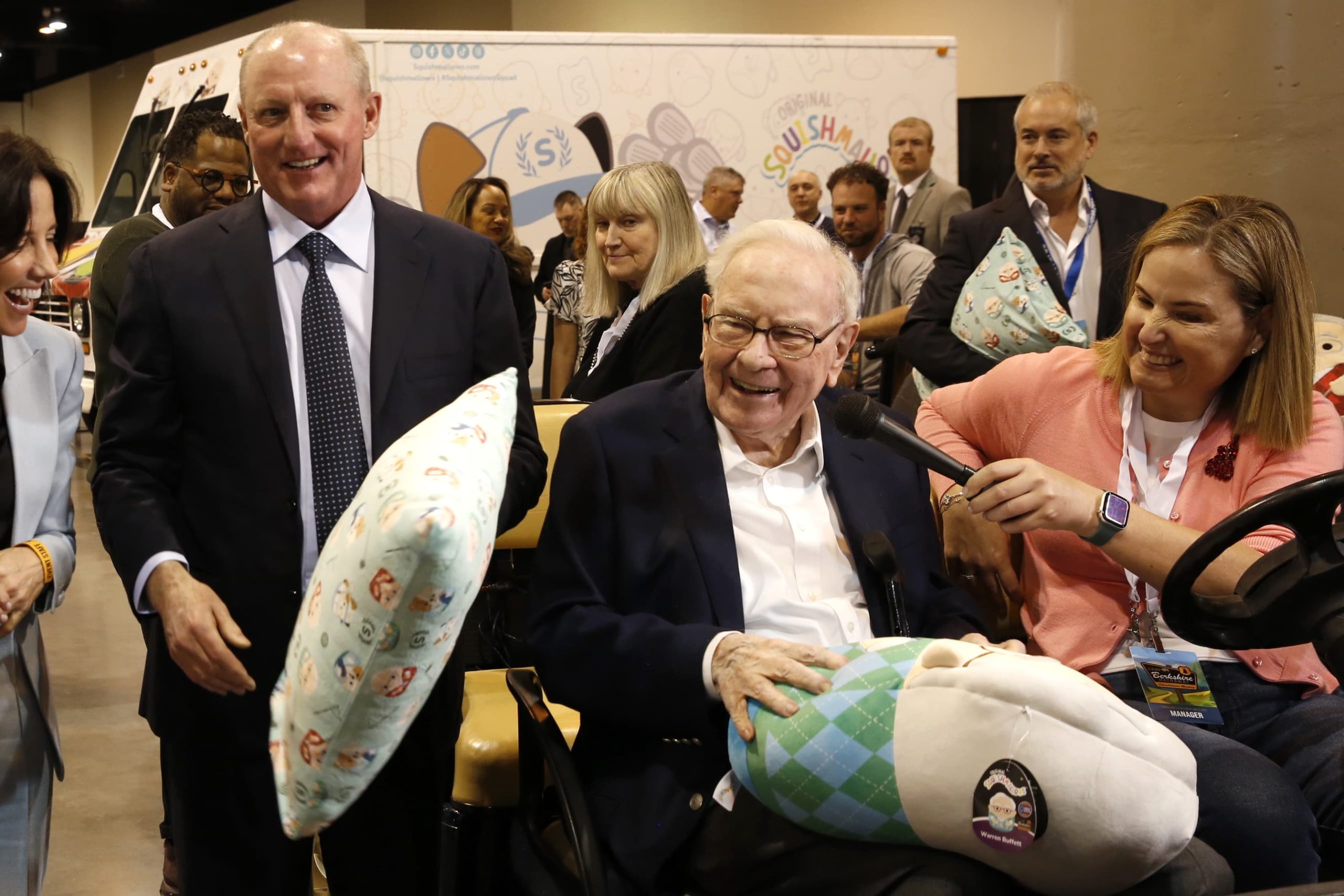
As the sun sets on the most storied career in the history of modern finance, the "Oracle of Omaha" has left the chief executive’s suite at Berkshire Hathaway with one final, unfulfilled ambition: the capture of a massive, needle-moving acquisition. Warren Buffett, who officially transitioned the CEO role to Greg Abel at the dawn of 2026, spent his final months at the helm of the $1 trillion conglomerate in a state of disciplined frustration. Despite possessing a record-breaking cash reserve that would dwarf the sovereign wealth funds of many nations, the 95-year-old investor found himself sidelined by a market where valuations have frequently outpaced the fundamental economic realities he has spent seven decades studying.
The central paradox of Berkshire Hathaway’s current position is one of overwhelming strength coupled with a lack of deployment opportunity. By the end of the third quarter of 2025, Berkshire’s cash pile had swelled to an unprecedented $381.6 billion. This mountain of liquidity was not a strategic choice of preference, but rather a byproduct of Buffett’s rigorous adherence to value investing principles in an era of exuberant equity prices. For Buffett, the "elephant hunt"—his colloquialism for the pursuit of a multi-billion-dollar acquisition that can significantly impact Berkshire’s bottom line—remained active until his final day as CEO. He famously remarked that he remained ready to write a $100 billion check for the right idea, yet the "external circumstances" of the market refused to provide a sensible target.
This massive accumulation of capital was fueled in large part by a dramatic restructuring of Berkshire’s equity portfolio. In a move that signaled a defensive posture, Buffett aggressively trimmed his stakes in two of his most iconic holdings: Apple and Bank of America. These divestments were not merely tactical rebalancings but were viewed by market analysts as a profound commentary on the state of the American economy. By selling off significant portions of the technology giant and the banking stalwart, Buffett signaled a preference for the safety of Treasury bills over the volatility of high-multiple stocks. The result was a balance sheet so liquid it began to draw scrutiny from shareholders who, while trusting Buffett’s wisdom, have grown increasingly concerned about the drag that idle cash exerts on total returns.
Buffett’s philosophy on cash has always been nuanced. He has long maintained that cash is a "poor long-term asset" because it is constantly eroded by inflation and offers no productive growth. However, he views liquidity through the lens of survival, famously likening it to oxygen: "You always want to have enough. You don’t have to pay a lot for it. But you do need oxygen. And cash is that way." This defensive mindset has saved Berkshire during every major market collapse from the 1987 crash to the 2008 financial crisis. Yet, in the post-pandemic era of 2024 and 2025, the challenge shifted. The problem was no longer a lack of oxygen, but an atmosphere so saturated with capital from private equity and institutional investors that the "sensible prices" Buffett demands became nearly impossible to find.
While the "big one" remained elusive, Berkshire was not entirely stagnant in its final months under Buffett’s direct leadership. In October 2025, the company finalized the acquisition of Occidental Petroleum’s chemical division, OxyChem, for $9.7 billion in cash. While a significant transaction by any standard, in the context of Berkshire’s nearly $400 billion reserve, it was, in Buffett’s own words, "peanuts." It followed the 2022 purchase of the insurer Alleghany for $11.6 billion. These deals, though strategically sound and accretive to the company’s massive insurance and energy operations, did not represent the transformative "elephant" that Buffett sought to crown his legacy.

The transition to Greg Abel marks the beginning of a new epoch for Berkshire Hathaway. Abel, a pragmatic executive who rose through the ranks of the company’s energy division, has been the architect of much of the conglomerate’s recent industrial growth. Unlike the philosophical and folksy Buffett, Abel is perceived as an operational specialist. His challenge will be fundamentally different from that of his predecessor. While Buffett earned the "patience of the saints" from his loyal shareholder base—allowing him to sit on cash for years without a revolt—Abel may find the market less forgiving. As Berkshire enters 2026, the pressure to deploy that $381.6 billion will fall squarely on his shoulders.
Economic analysts suggest that the "Abel era" may see a shift in how Berkshire manages its capital. If the market continues to trade at high price-to-earnings multiples, making large-scale acquisitions difficult, the company may be forced to reconsider its long-standing aversion to dividends or significantly ramp up its share buyback program. Historically, Buffett has preferred buybacks only when the stock trades below its intrinsic value, but with the cash hoard reaching such "catastrophic" levels of underutilization, the definition of value may have to evolve.
Furthermore, the global economic landscape presents a complicated map for the new CEO. Buffett’s recent forays into the Japanese "Sogo Shosha" trading houses—Mitsubishi, Mitsui, and others—demonstrated a willingness to look outside the United States for value. This international diversification may become a cornerstone of Abel’s strategy. As domestic U.S. markets face headwinds from shifting interest rate policies and geopolitical tensions, the "elephant" Berkshire seeks might eventually be found in the industrial sectors of Europe or the emerging markets of Asia, provided the regulatory environments align with Berkshire’s preference for stability and transparency.
The legacy Buffett leaves behind is not just one of wealth, but of a specific type of financial temperament. His refusal to overpay for a company, even when under immense pressure to "do something," is the hallmark of his career. He has often said that in the world of investing, there are no "called strikes"—one can stand at the plate and watch hundreds of pitches go by without swinging, waiting for the one that is exactly in the sweet spot. As he moves into his role as Chairman, leaving the daily operations to Abel, the question remains whether the "sweet spot" will ever reappear in a market dominated by algorithmic trading and venture-capital-backed valuations.
The impact of this leadership change extends far beyond the boardroom in Omaha. Berkshire Hathaway is often seen as a proxy for the broader American economy. Its subsidiaries—ranging from BNSF Railway and GEICO to See’s Candies and Dairy Queen—touch almost every aspect of consumer and industrial life. A Berkshire that is "all-in" on an acquisition is a signal of confidence in the future of global commerce. A Berkshire that sits on a record cash pile is a signal of caution.
As Greg Abel takes the reins, he inherits a fortress. But even the strongest fortress can become a prison if it is not used to launch new ventures. The "elephant" is still out there, roaming the global markets, and while Buffett may not have been the one to pull the trigger in his final months, he has provided his successor with the largest arsenal in corporate history. The transition from the era of the visionary founder to the era of the professional manager is always fraught with risk, but for Berkshire Hathaway, the foundation is solid. The world now watches to see if Abel will maintain the same legendary discipline as his mentor, or if the sheer weight of $381 billion will finally force a move that defines the next generation of the world’s most famous investment vehicle.