

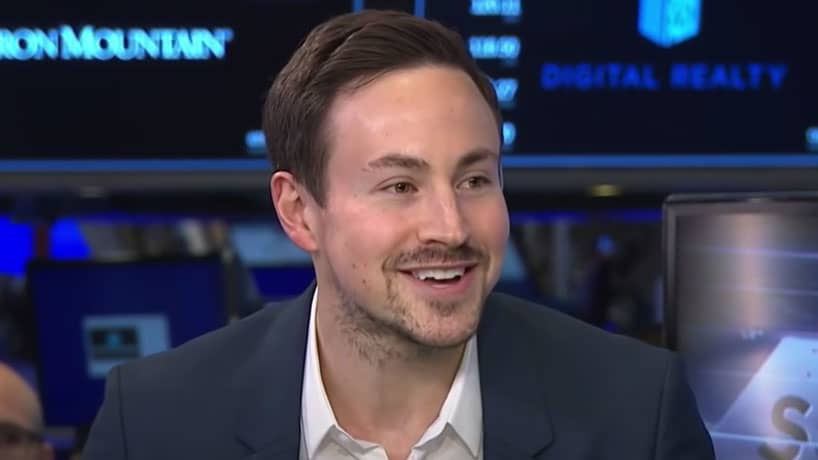
The board of directors at GameStop has officially transitioned the video game retailer from a turnaround story into one of the most aggressive corporate experiments in modern financial history. By approving a massive, all-or-nothing equity incentive package for Chairman and Chief Executive Officer Ryan Cohen, the company has set a performance bar so high that it borders on the astronomical. The plan, disclosed in a recent regulatory filing, outlines a compensation structure that will only reward Cohen if GameStop’s market valuation and profitability reach levels that dwarf its current standing, effectively tethering his personal wealth to a total reinvention of the company’s economic engine.
Under the terms of the newly minted Long-Term Performance Award, Cohen is eligible to receive stock options to purchase over 171 million shares of Class A common stock at a strike price of $20.66 per share. However, the hurdles to unlock this payout are formidable. The agreement mandates that GameStop must achieve a market capitalization of at least $100 billion and generate $10 billion in cumulative earnings before interest, taxes, depreciation, and amortization (EBITDA). Most notably, the plan is binary: if the company misses these targets, Cohen receives nothing. There are no partial vestings for "near misses," and the minimum threshold for any payout begins only after the company crosses a $20 billion market cap and $2 billion in cumulative EBITDA.
To put these figures into perspective, GameStop’s current market capitalization hovers around $9.3 billion. For Cohen to realize the full value of the award, the company’s valuation must increase more than tenfold. This trajectory would place GameStop in the same valuation tier as global powerhouses like Sony or Starbucks—a staggering proposition for a retailer that has spent much of the last decade battling the obsolescence of physical media and the rise of digital distribution platforms.
The "all-or-nothing" nature of this package echoes the famous 2018 compensation plan for Elon Musk at Tesla, which was similarly criticized at the time for being unrealistic. Musk’s plan required Tesla to hit a $650 billion market cap, a feat many analysts deemed impossible before the electric vehicle maker eventually surged past that milestone. GameStop’s board appears to be drawing from a similar playbook, aiming to align the CEO’s interests entirely with "extraordinary growth" and long-term shareholder returns, rather than incremental operational improvements.
The challenge for Cohen, who rose to prominence as the co-founder of Chewy and joined GameStop’s board in early 2021, lies in the fundamental shift of the gaming industry. As Sony, Microsoft, and Nintendo increasingly push consumers toward digital storefronts and subscription models like Xbox Game Pass, the traditional brick-and-mortar retail model has faced structural decline. GameStop’s core business—selling physical game discs and hardware—is a low-margin endeavor in a shrinking market.
To bridge the gap between its current reality and a $100 billion valuation, Cohen has initiated a multi-pronged strategy to diversify the company’s revenue streams. One of the most visible shifts has been into the collectibles and trading card markets. By leveraging its physical footprint to become a hub for high-end hobbyists, GameStop is attempting to capture a share of the burgeoning "alternative assets" market. This includes everything from rare Pokémon cards to graded sports memorabilia, sectors that have seen explosive growth in valuation and trade volume over the last four years.
Perhaps more controversial is the company’s recent pivot into corporate treasury management. GameStop has begun aggressively purchasing Bitcoin with its corporate cash reserves, signaling a move toward a "holding company" model similar to that of MicroStrategy. By converting a portion of its balance sheet into digital assets, the company is betting that the appreciation of Bitcoin will bolster its valuation independently of its retail operations. This strategy introduces a significant layer of volatility, as the company’s book value becomes inextricably linked to the fluctuations of the cryptocurrency market.
Financial analysts remain skeptical about whether these initiatives can generate the $10 billion in cumulative EBITDA required by the incentive plan. In the third quarter of last year, GameStop reported a net income of $77.1 million, a positive sign following years of losses, but still a far cry from the multi-billion-dollar scale required for Cohen’s payout. The company has focused heavily on cost-cutting and operational efficiency, shuttering underperforming stores and streamlining its supply chain, yet the "top-line" growth necessary for a $100 billion valuation remains elusive.
The $100 billion target also raises questions about the competitive landscape. For GameStop to reach such a height, it would likely need to evolve into a platform or a technology service provider, rather than a mere retailer. This could involve a deeper push into digital marketplaces, gaming infrastructure, or even financial services tailored to the gaming community. Without a clear "master plan" for this level of scale, the market is left to speculate on whether Cohen has an unannounced acquisition strategy or a transformative technological play in the works.
From an investor psychology perspective, the incentive plan serves as a powerful signal to the company’s dedicated "retail" investor base. Since the 2021 "meme stock" phenomenon, GameStop has enjoyed a level of brand loyalty and shareholder engagement that is virtually unprecedented in the retail sector. Many individual investors view Cohen as a visionary leader capable of disrupting legacy industries. By setting such high targets, the board is reinforcing this narrative, suggesting that the leadership is not interested in a quiet decline but is instead swinging for the fences.
However, the risks are substantial. If the company fails to hit the $20 billion minimum threshold, Cohen will have served as CEO for years with no equity compensation from this specific plan. This creates an asymmetrical risk profile that is rare in the C-suite of Fortune 500 companies. Critics of such plans argue they can encourage excessive risk-taking, as the executive has every incentive to pursue high-volatility strategies that might offer a slim chance of hitting the "moonshot" targets, even if those strategies jeopardize the long-term stability of the firm.
Market data suggests that the broader retail environment is currently facing headwinds from inflation and shifting consumer spending habits. While the gaming industry as a whole is growing, the value is increasingly concentrated in software publishers and platform holders rather than third-party retailers. Companies like Electronic Arts and Take-Two Interactive command high valuations because they own the intellectual property. GameStop, by contrast, remains a middleman in an era where the internet is rapidly removing the middleman.
To succeed, Cohen must convince the broader institutional investment community—not just the retail enthusiasts—that GameStop can generate sustainable, high-margin cash flow. The $10 billion EBITDA target is the "real-world" anchor to the $100 billion market cap goal. While market valuations can sometimes be driven by sentiment and speculation, sustained earnings are the only way to maintain a valuation of that magnitude in the long run.
As GameStop enters this next chapter, the business world will be watching closely. Is this the blueprint for a historic corporate comeback, or a cautionary tale about the limits of incentive-based leadership? Ryan Cohen has effectively bet his legacy on the idea that GameStop can be more than a store in a shopping mall. He has bet that it can be a hundred-billion-dollar titan. Now, the clock is ticking on whether he can transform that ambition into a financial reality that justifies one of the largest potential paydays in history. For now, the "meme darling" remains a high-stakes laboratory for the future of retail, capital allocation, and the power of the visionary founder.