


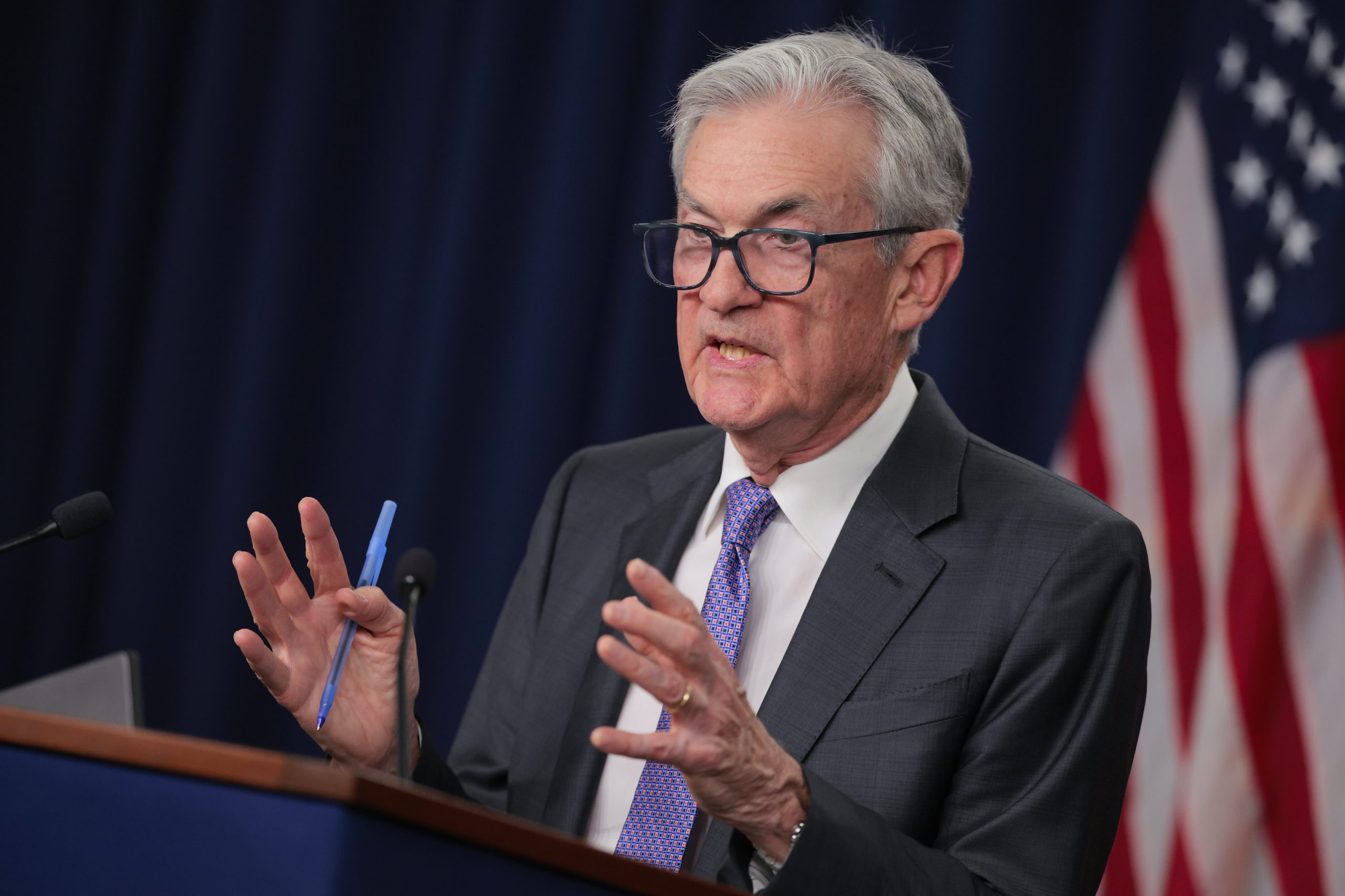
In a move that underscores the delicate balancing act facing American monetary policymakers, the Federal Reserve concluded its December 2025 meeting by authorizing a quarter-percentage-point reduction in the federal funds rate. This decision, while widely anticipated by futures markets, arrived against a backdrop of unprecedented institutional uncertainty, a shifting political landscape, and a significant lack of clarity regarding the very economic indicators that typically guide the central bank’s hand. As Jerome Powell enters the twilight of his tenure as Chair, the Federal Open Market Committee (FOMC) appears to be navigating a dense fog, attempting to stabilize a cooling labor market while simultaneously accounting for a looming leadership transition and a projected surge in domestic growth.
The 25-basis-point cut brings the benchmark interest rate to a new target range, a move designed to provide a "soft landing" for an economy that has shown signs of fatigue in the private sector despite robust headline growth figures. However, the decision was far from unanimous in spirit. Internal deliberations revealed a Committee grappling with a lack of consensus, a rare occurrence for a body that traditionally prizes the appearance of unity. This internal friction suggests that the path forward for 2026 is significantly more contested than previously thought, with various factions of the Fed debating whether the current restrictive stance is still necessary to keep inflation at bay or if it now poses an undue risk to employment.
Central to the complexity of this meeting was the "data deficit" currently plaguing the hallowed halls of the Eccles Building. Due to a recent government shutdown that paralyzed several key federal agencies, the traditional flow of economic statistics—including comprehensive employment reports and consumer price index updates—has been severely disrupted. For a Federal Reserve that has spent the last three years tethered to a "data-dependent" mantra, the absence of fresh, reliable metrics has forced a shift toward more qualitative assessments and anecdotal evidence from the various regional districts. This information gap has led some analysts to question the timing of the cut, wondering if the Fed is moving too fast without the statistical confirmation usually required for such a pivot.
The looming transition in Fed leadership adds another layer of intrigue to the current policy trajectory. With Chair Powell’s term set to expire in May 2026, the White House has already begun the high-stakes process of interviewing successors. Among the reported finalists is Rick Rieder, the head of global fixed income at BlackRock, whose recent commentary suggests a cautious outlook. Rieder noted that given the lack of committee consensus and the slow release of economic data, the Fed might be inclined to remain on hold for a duration. However, he also pointed out that any continued softness in labor indicators could easily force another 25-basis-point cut as early as January 2026. The market is now forced to weigh the current Fed’s guidance against the potential philosophical shifts of a new Chair, creating a "lame duck" period that could see heightened volatility in the bond markets.
Economists have been quick to point out that the Fed’s traditional "Dot Plot"—the visual representation of where officials expect rates to be in the coming years—may currently be less reliable than at any point in recent history. The disconnect stems from two primary factors: the aforementioned data lag and the fact that the December projections do not account for the change in governance scheduled for mid-2026. There is a growing sentiment among market watchers that the Fed may actually be more aggressive in its rate-cutting cycle in late 2026 than the current projections suggest, particularly if the new administration’s appointee favors a more dovish approach to stimulate the manufacturing and housing sectors.
Simultaneously, the Fed has revised its growth expectations for the coming year upward, a move that seems counterintuitive to a rate-cutting cycle. This optimism is largely fueled by a shift in fiscal policy, specifically anticipated tax changes designed to put more liquidity directly into the hands of American households. While increased consumer spending is generally a boon for GDP, it presents a unique challenge for the Fed: how to lower rates to support the labor market without reigniting inflationary pressures fueled by a sudden influx of household cash. This fiscal-monetary tension is expected to "lift the bar" for further rate cuts in the immediate future, as the Committee waits to see how much of a stimulus the tax policy provides.
The global context further complicates the Fed’s decision-making process. While the United States is moving toward a more accommodative stance, other major central banks are dealing with divergent economic realities. The European Central Bank (ECB) remains concerned about stagnant growth across the Eurozone, while the Bank of Japan continues its cautious retreat from decades of ultra-loose policy. The Fed’s 25-basis-point cut helps maintain a relative yield advantage for the U.S. dollar, but any aggressive easing in 2026 could narrow that gap, potentially weakening the greenback and making imports more expensive—a factor that could put upward pressure on the very inflation the Fed has fought so hard to tame.
Market reaction to the Wednesday decision was measured, as investors had largely priced in the move. However, the "intrigue and surprises" mentioned by observers stemmed from the Fed’s admission that its guidance is currently more fluid than usual. For the average American consumer, the rate cut offers a glimmer of relief in the form of lower borrowing costs for mortgages, auto loans, and credit cards. Yet, the broader economic impact may take months to materialize, particularly if banks remain hesitant to pass on the full extent of the cut amidst the prevailing uncertainty. The housing market, which has been effectively frozen by high mortgage rates and low inventory, is perhaps the most sensitive to these shifts, with realtors and prospective buyers closely watching the 10-year Treasury yield for a more significant signal of a thaw.
The labor market remains the Fed’s primary concern and the ultimate justification for this week’s easing. While the unemployment rate remains low by historical standards, "under-the-hood" indicators—such as the quit rate and the length of time it takes for displaced workers to find new roles—suggest a cooling that could turn into a frost if not addressed. By cutting rates now, the Fed is attempting to provide a preemptive cushion for businesses, encouraging them to maintain their payrolls despite the broader slowdown in industrial production seen in the fourth quarter of 2025.
As the financial world looks toward January 2026, the focus will remain squarely on the political appointments in Washington and the resumption of the federal data pipeline. If the government can provide a clear picture of the labor market and inflation trends by early next year, the Fed may find the consensus it currently lacks. Until then, the central bank appears to be operating on a "risk management" basis—cutting rates not because the data demands it, but because the risks of inaction in a period of transition and uncertainty are simply too high to ignore.
In the final analysis, the December rate decision is less a definitive policy shift and more of a strategic pivot. It marks the beginning of the end for the Powell era and the start of a period where fiscal policy and political appointments may carry as much weight as the Consumer Price Index. For investors, the message is clear: the era of predictable, data-driven central banking has entered a period of suspension, replaced by a more nuanced, and perhaps more volatile, era of transition. The path to 2026 is now paved with questions about tax impacts, leadership changes, and the true health of the American consumer—questions that even the Federal Reserve, with all its expertise, cannot yet fully answer.