

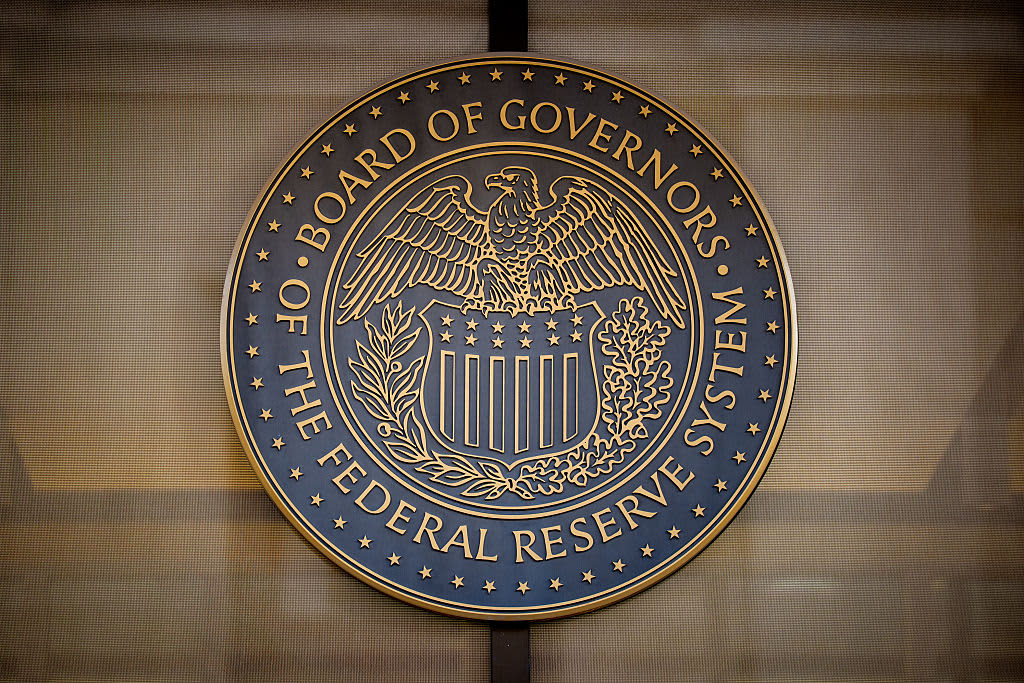
The Federal Reserve has underscored a stance of calculated restraint, signaling to global financial markets that the era of aggressive monetary easing remains a distant prospect despite a recent reduction in borrowing costs. In its final policy meeting of 2025, the U.S. central bank opted for a quarter-percentage-point cut to its benchmark interest rate, bringing the federal funds rate to a range of 3.5% to 3.75%. However, the move was overshadowed by the release of the "dot plot"—the Federal Open Market Committee’s (FOMC) Summary of Economic Projections—which revealed a remarkably conservative path for the coming years. For the second consecutive quarter, the median expectation among policymakers suggests only a single additional rate cut throughout the entirety of 2026, a forecast that highlights a growing consensus within the central bank that the "last mile" of inflation stabilization may be more arduous than previously anticipated.
The persistence of this "one-and-done" outlook for 2026, which targets a median rate of 3.4% by year-end, suggests that the Fed is prioritizing a defensive posture against potential inflationary rebounds. This cautious trajectory comes at a time when the American economy continues to exhibit surprising resilience, characterized by steady consumer spending and a labor market that, while cooling, has not shown signs of the catastrophic deterioration some analysts feared earlier in the year. By maintaining a restrictive policy stance longer than many market participants had hoped, the Fed is effectively signaling that the neutral rate—the theoretical interest rate that neither stimulates nor restrains the economy—may be higher in the post-pandemic era than the historical norms of the previous decade.
Internal dynamics within the FOMC have reached a level of visible friction rarely seen during the tenure of the current leadership. The December decision was marked by three formal dissents, a significant departure from the typical quest for a unified front. The dissenters represented the full spectrum of economic philosophy currently debating the future of American fiscal health. Governor Stephen Miran broke from the majority to advocate for a more aggressive 50-basis-point reduction, arguing that the risk of over-tightening now outweighs the threat of lingering inflation. Conversely, regional presidents Jeffrey Schmid of Kansas City and Austan Goolsbee of Chicago favored holding rates steady, expressing concern that cutting too early could unanchor inflation expectations. This three-way split among voters, supplemented by four non-voting participants who also disagreed with the cut, paints a picture of a central bank at a crossroads, grappling with a deeply bifurcated economic data set.
The skepticism regarding further cuts is not limited to a vocal minority. According to the latest data, seven officials now indicate they prefer no rate cuts at all in 2026. This hawkish contingent remains focused on "sticky" components of the Consumer Price Index, particularly in the services sector and housing, where price pressures have proven resistant to higher borrowing costs. For these officials, the risk of a secondary inflation spike—reminiscent of the 1970s "double peak"—remains the primary threat to long-term economic stability. By signaling a terminal rate of 3.1% in 2027 and suggesting no further movement in 2028, the Fed is preparing the markets for a "higher-for-longer" reality that challenges the traditional investment playbooks of the last twenty years.
The economic implications of this conservative forecast extend far beyond the halls of the William McChesney Martin Jr. Building in Washington, D.C. For the American consumer, the Fed’s slow-walk toward lower rates means that relief for mortgage holders and credit card debtors will be incremental at best. The 30-year fixed mortgage rate, which remains sensitive to the 10-year Treasury yield and Fed projections, is unlikely to return to the 3% or 4% levels seen in the late 2010s. This has profound consequences for the housing market, where "lock-in" effects continue to suppress inventory as homeowners remain reluctant to trade their low-interest debt for current market rates. Similarly, corporate America faces a landscape where the cost of capital will remain significantly higher than the era of near-zero interest rates, potentially dampening capital expenditure and slowing the pace of mergers and acquisitions.
On the global stage, the Federal Reserve’s hawkish tilt creates a widening divergence with other major central banks. The European Central Bank (ECB) and the Bank of England have faced different inflationary pressures and growth trajectories, with some European economies showing greater signs of stagnation that may necessitate more rapid easing. This divergence often results in a "strong dollar" environment. As U.S. yields remain high relative to other developed nations, international capital flows toward the dollar, exerting downward pressure on other currencies and complicating the inflation-fighting efforts of emerging markets. A persistently strong dollar also makes American exports more expensive abroad, potentially widening the trade deficit and creating political friction in a global economy already navigating rising protectionist sentiments.
Market analysts have spent the hours following the announcement recalibrating their expectations for 2026. Prior to the release of the dot plot, many traders in the fed funds futures market had priced in a more aggressive easing cycle, betting that a slowing labor market would force the Fed’s hand. The reality of the median 3.4% forecast for 2026 serves as a "cold shower" for equity markets that had been rallying on the hope of liquidity injections. The disconnect between market expectations and Fed intentions—often referred to as the "Fed-Market Gap"—has widened once again. This gap typically results in increased volatility as investors adjust their portfolios to account for a world where the "Fed Put" is no longer a guaranteed safety net.
The concept of the "Neutral Rate" (R-star) is central to the Fed’s current hesitancy. For years, economists estimated that a federal funds rate of roughly 2.5% would be neutral. However, structural changes in the global economy—including shifting demographics, the massive fiscal spending seen during the pandemic, and the costs associated with the green energy transition—may have pushed this neutral rate higher. If the new neutral rate is closer to 3.5%, then the current policy is only moderately restrictive, rather than severely so. This would explain why the economy has not buckled under the weight of the fastest hiking cycle in forty years. The Fed’s projection of a 3.1% terminal rate in 2027 suggests they are cautiously testing the waters to find where this new equilibrium lies.
Furthermore, the Fed must navigate the complexities of fiscal policy. With government deficits remaining high and debt issuance continuing at a record pace, the central bank finds itself in a delicate position. High fiscal spending can act as a pro-cyclical force, stimulating the economy even as the Fed tries to cool it. This "fiscal-monetary tug-of-war" makes the Fed’s job of reaching the 2% inflation target significantly more difficult. By signaling a slow path for rate cuts, the FOMC is essentially providing a buffer against potential fiscal expansion that could otherwise reignite price pressures.
As 2026 approaches, the focus of the financial world will remain fixed on the labor market. While the Fed’s current mandate is balanced between price stability and maximum employment, the recent projections suggest a slight prioritization of the former. Should the unemployment rate begin to climb significantly above 4.5%, the internal divisions within the Fed could deepen further, potentially forcing a pivot toward more aggressive cuts. However, as it stands, the committee appears resolute in its belief that the greatest long-term risk to the American economy is not a moderate slowdown, but the failure to fully extinguish the embers of inflation.
In conclusion, the Federal Reserve’s latest communications reflect a central bank that is wary of declaring victory too soon. The decision to cut rates in December was a nod to the progress made so far, but the 2026 forecast is a clear warning that the path to "normalcy" will be long, slow, and fraught with internal debate. By maintaining a median target of 3.4% for 2026, the Fed is attempting to engineer a soft landing while simultaneously rebuilding its credibility as a hawk against inflation. For investors, businesses, and consumers, the message is unmistakable: the era of "easy money" is not returning anytime soon, and the economic landscape of the late 2020s will be defined by the high cost of patience.