


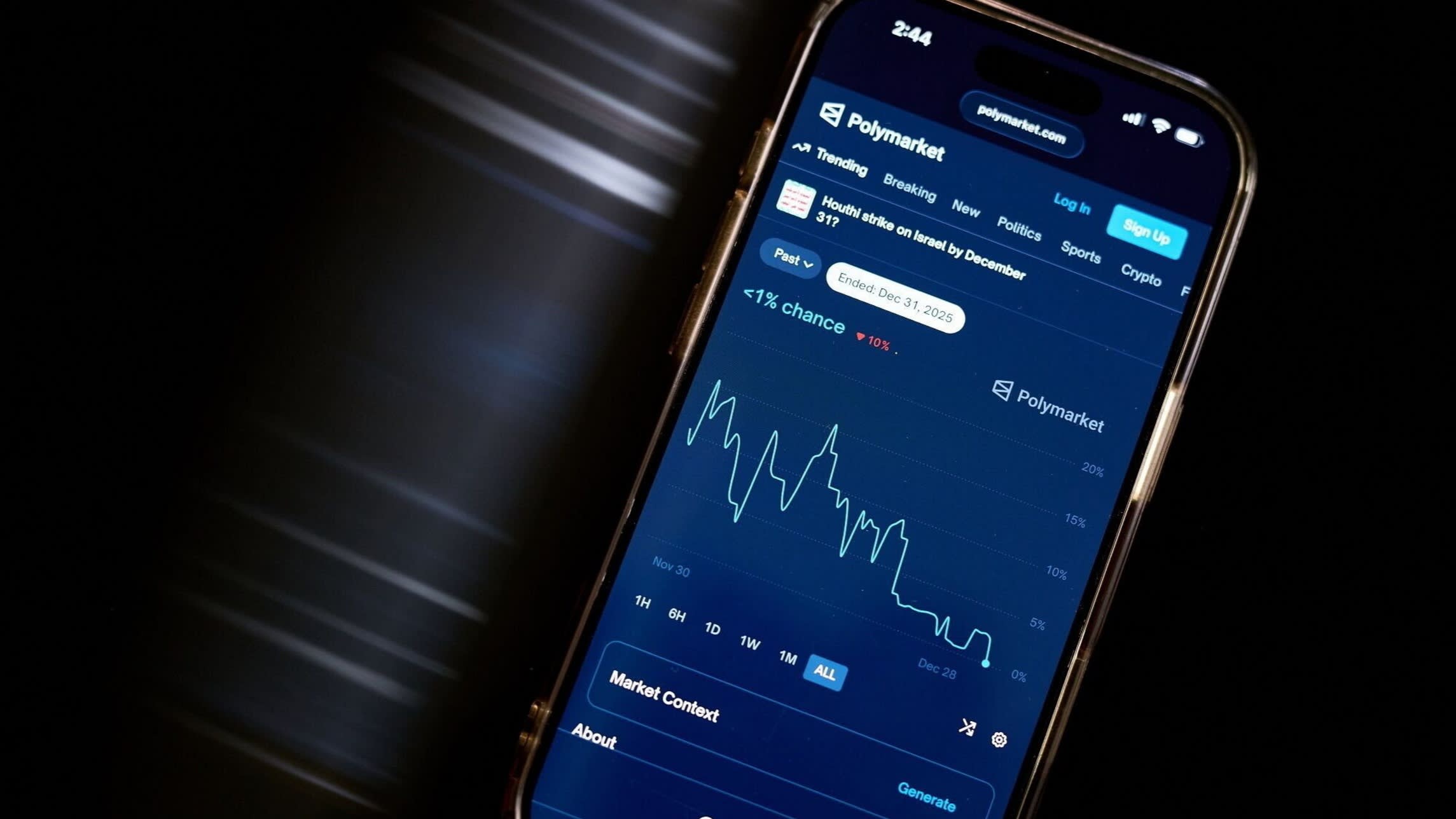
The intersection of decentralized finance and global geopolitics has reached a volatile flashpoint as Polymarket, the world’s largest prediction market, finds itself embroiled in a complex dispute over the definition of an "invasion" regarding the political fate of Venezuelan President Nicolás Maduro. This controversy highlights the growing pains of a burgeoning industry that seeks to use financial incentives to forecast world events, while simultaneously exposing the inherent difficulties of applying binary "yes or no" outcomes to the fluid and often ambiguous nature of international conflict and regime change. At the heart of the matter is not merely a bet on a foreign leader’s survival, but a fundamental debate over who defines political reality in a world where decentralized "oracles" are increasingly competing with traditional news media and diplomatic institutions.
Polymarket, which operates on the Polygon blockchain, has seen a meteoric rise in 2024, driven largely by its high-volume markets on the United States presidential election. However, its international markets, particularly those focused on the long-standing crisis in Caracas, have become a lightning rod for criticism and technical disputes. The current disagreement centers on a specific contract regarding whether Maduro would be removed from power or captured by a foreign-backed force. When reports surfaced of potential clandestine operations or paramilitary incursions, the platform’s participants were forced to grapple with a semantic and legal minefield: does a targeted extraction by a small group of operatives constitute an "invasion," or must a formal declaration of war and a large-scale military deployment occur to satisfy the terms of the contract?
For the investors who have staked millions of dollars on these outcomes, the distinction is far from academic. In the world of prediction markets, the "resolution" of a contract is the moment of truth. If the criteria for an event are not met with absolute precision, the house—or in this case, the decentralized governance protocol—must decide who wins and who loses. The dispute over the Venezuelan situation has triggered a formal review process through UMA (Universal Market Access), a decentralized "optimistic oracle" that Polymarket uses to verify real-world data. UMA relies on a community of token holders to vote on the correct outcome of a market when the result is contested. This process effectively turns crypto-investors into amateur international law judges, tasked with interpreting the nuances of sovereignty and military engagement.
The geopolitical backdrop of this dispute is a nation in a state of perpetual tension. Since the contested election in July, in which Maduro claimed victory despite widespread evidence of fraud presented by the opposition led by Edmundo González and Maria Corina Machado, the threat of external intervention has hovered over the Miraflores Palace. The United States has maintained a "maximum pressure" campaign of economic sanctions, and various private security firms and paramilitary groups have historically expressed interest in the multimillion-dollar bounties placed on Maduro’s head by the U.S. Department of Justice. When a prediction market asks if Maduro will be "deposed by an invasion," it is asking a question that spans the gap between a domestic uprising and an international act of war.
From an economic perspective, the rise of platforms like Polymarket represents a shift in how geopolitical risk is priced. Traditional risk assessment firms, such as Eurasia Group or Control Risks, provide qualitative analysis to corporate clients. Prediction markets, by contrast, provide a real-time, quantitative probability. Proponents argue that because participants have "skin in the game," these markets are more accurate than pundits or polls. However, the Maduro dispute reveals a critical flaw: the "Wisdom of the Crowds" can be easily derailed by "Ambiguity of the Terms." If a contract is poorly drafted, the market ceases to be a forecasting tool and becomes a legalistic battleground over definitions.
The legal definition of an "invasion" is itself a subject of debate in international law. Under the United Nations Charter, an invasion is generally understood as the entry of an armed force of a State into the territory of another State without its consent. However, modern warfare has evolved to include "gray zone" tactics—cyberattacks, proxy militias, and special operations—that do not always fit the 20th-century definition of a military invasion. For Polymarket, the question is whether their "truth-seeking" mechanism can account for these complexities. If a group of mercenaries attempts a sea-borne raid, as seen in the failed "Operation Gideon" in 2020, does that count? To a speculator holding a "Yes" share, it is a clear invasion; to one holding "No," it is a mere skirmish or a failed coup attempt.
This friction has significant implications for the credibility of the prediction market industry. As these platforms attract more institutional capital, the demand for rigorous resolution mechanisms grows. The current dispute has led to calls for more "professionalized" oracles—perhaps involving panels of retired diplomats or legal experts—rather than a decentralized vote by token holders who may be more interested in their own portfolios than in the finer points of the Geneva Conventions. There is also the risk of "market manipulation," where a wealthy participant could theoretically influence a real-world event to ensure their bet pays out, or conversely, use their voting power in the oracle process to force a favorable resolution.
The economic impact of the Venezuelan crisis itself continues to ripple through global energy markets and migration patterns. Venezuela sits on the world’s largest proven oil reserves, yet its production remains a fraction of its potential due to years of mismanagement and sanctions. Market participants on Polymarket are not just betting on a leader’s downfall; they are betting on the future of global oil supply and the stability of the Western Hemisphere. If the prediction markets are seen as unreliable or prone to governance failures, their utility as a hedging tool for energy traders or humanitarian organizations is severely diminished.
Furthermore, the regulatory environment for these platforms remains precarious. In the United States, the Commodity Futures Trading Commission (CFTC) has historically taken a dim view of "event contracts," particularly those involving elections or illegal activities. While Polymarket has restricted U.S. users following a 2022 settlement with the CFTC, the platform remains accessible globally, and its influence on the American political discourse is undeniable. The controversy over the Maduro "invasion" market could provide further ammunition for regulators who argue that these platforms are essentially unregulated gambling dens that trivialize serious international conflicts.
As the UMA oracle process moves toward a final decision on the Venezuelan market, the broader tech and finance sectors are watching closely. The resolution will set a precedent for how decentralized platforms handle "unclear" world events. If the community votes in a way that is perceived as biased or factually incorrect, it could trigger a mass exodus of liquidity from the platform. Conversely, a transparent and well-reasoned resolution could bolster the argument that decentralized systems are capable of handling even the most complex human affairs.
In the final analysis, the dispute over whether Maduro’s potential capture constitutes an invasion is a microcosm of a larger struggle in the digital age: the quest for an objective, verifiable truth in a world of competing narratives. As traditional institutions of media and diplomacy face a crisis of trust, prediction markets offer a seductive alternative based on the cold logic of the market. Yet, as the Venezuelan case proves, even the most sophisticated blockchain protocol cannot escape the messy, subjective reality of global politics. The "truth" of an invasion, it seems, is still in the eye of the beholder—and the stakeholder. The outcome of this dispute will likely dictate whether prediction markets remain a niche curiosity for crypto-speculators or evolve into a foundational component of the global economic and intelligence infrastructure. For now, the eyes of the market remain fixed on Caracas, waiting for a resolution that no algorithm can yet provide with certainty.