
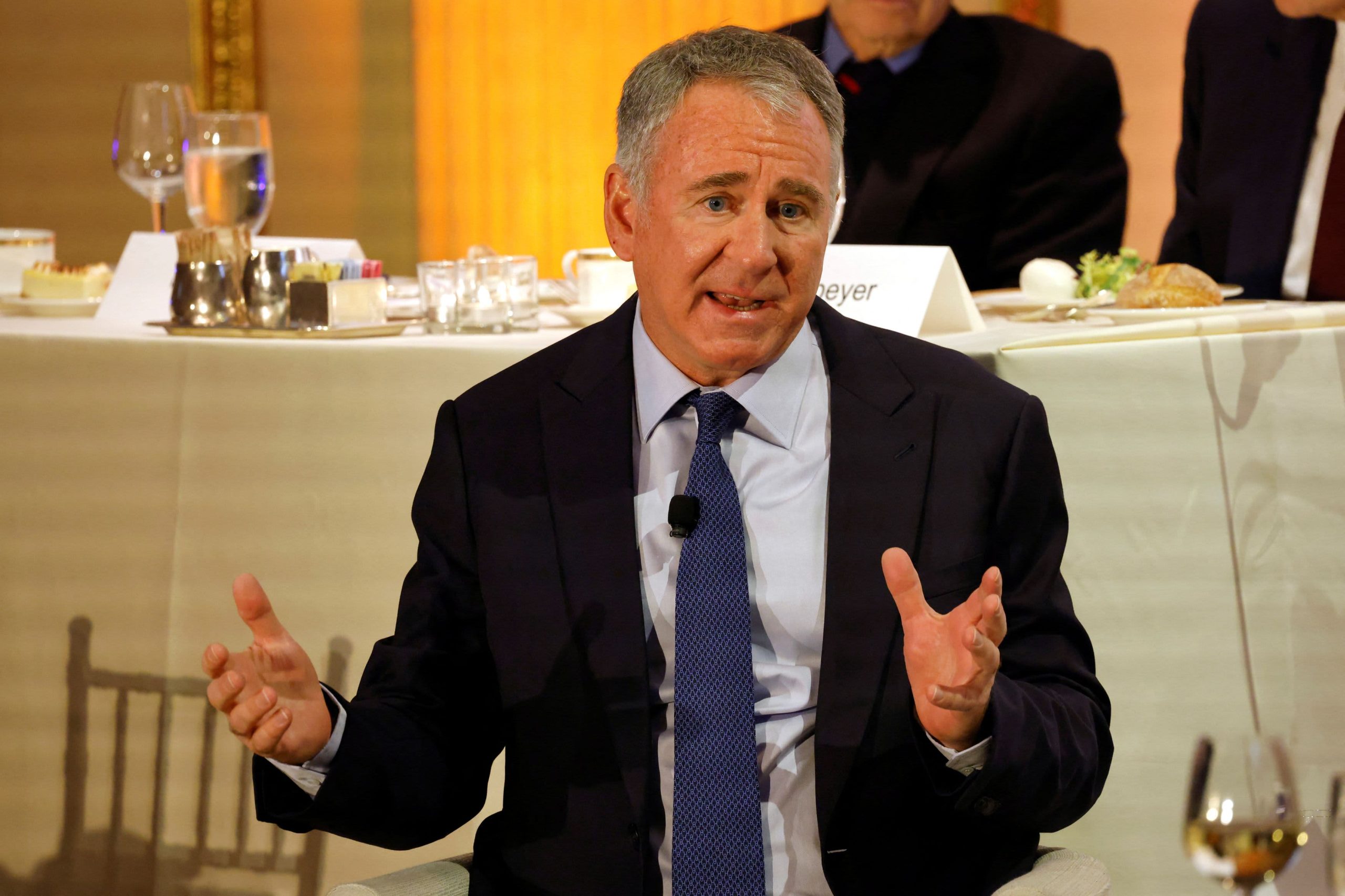
The global financial landscape of 2025 will likely be remembered as a period of profound structural shifts, characterized by the resurgence of protectionist trade policies, sharp swings in equity valuations, and a complex recalibration of interest rate expectations. Amidst this backdrop of heightened uncertainty, Citadel, the Miami-headquartered hedge fund titan led by Ken Griffin, demonstrated the efficacy of its multistrategy model. The firm’s flagship Wellington fund posted a 10.2% return for the year, a performance that underscores the resilience of institutional-grade risk management in an era where traditional market correlations have become increasingly unreliable.
While the 10.2% gain for Wellington trailed the S&P 500’s broader 16.4% advance, the raw numbers tell only a fraction of the story. For institutional investors—ranging from sovereign wealth funds to massive pension schemes—Citadel’s value proposition lies not in capturing the full upside of a bull market, but in providing "absolute returns" that are decoupled from the broader indices. In a year where the S&P 500 flirted with bear market territory following aggressive trade maneuvers from Washington, a double-digit return with significantly lower volatility than the benchmark represents a significant victory for Griffin’s "all-weather" philosophy.
The internal performance metrics across Citadel’s various specialized vehicles reveal a more nuanced picture of where the firm found its edge in 2025. The Tactical Trading fund, which integrates high-frequency quantitative signals with discretionary macro overlays, emerged as the standout performer with an 18.6% return. This suggests that the firm was able to successfully monetize the intra-day and intra-week volatility that plagued markets during the second and third quarters. Meanwhile, the Fundamental Equity strategy, which relies on deep-dive corporate analysis and sector-specific expertise, climbed 14.5%, benefiting from a late-year rotation into quality stocks. Even the Global Fixed Income fund, operating in a challenging environment of fluctuating yields and central bank pivots, managed a respectable 9.4% advance.
The defining moment for the 2025 market cycle arrived in early April, when the announcement of sweeping reciprocal tariffs by the Trump administration sent shockwaves through global supply chains. The immediate reaction was a violent "de-risking" event that saw the S&P 500 plummet, wiping out trillions in market capitalization in a matter of weeks. During this period, many "long-only" funds and retail-heavy portfolios suffered double-digit drawdowns. Citadel’s ability to navigate this "April Rout" without catastrophic losses is a testament to its sophisticated hedging apparatus. By utilizing a "pod" structure—where hundreds of independent teams manage discrete pools of capital with strict stop-loss mandates—Citadel prevents any single market shock from compromising the entire firm’s balance sheet.
This structural agility is a hallmark of the multistrategy hedge fund evolution, a space where Citadel and its primary rivals, such as Millennium Management and Point72, have come to dominate the industry’s talent and capital flows. These firms do not bet on the direction of the market so much as they bet on the persistence of price inefficiencies. In 2025, those inefficiencies were abundant, driven by geopolitical rhetoric and the uneven economic recovery of the post-inflationary era.
Beyond the immediate performance figures, Citadel’s management of its own scale remains a focal point for industry observers. The firm has confirmed plans to return approximately $5 billion in profits to its investors at the start of 2026. This move, which will effectively trim its assets under management (AUM) from roughly $72 billion to $67 billion, is a strategic exercise in capital discipline. In the world of high-finance, bigger is not always better. Excess capital can lead to "style drift" or "market impact," where a fund’s trades become so large that they move the very prices they are trying to exploit. By returning capital, Griffin is signaling a commitment to maintaining the "alpha" or outperformance potential of the fund over sheer size.
This practice of returning capital has become a recurring theme for Citadel, which has distributed billions to its limited partners over the last several years. It serves as a stark contrast to many other asset managers who prioritize AUM growth to maximize management fees. For Citadel, the incentive structure is heavily weighted toward performance fees, meaning the firm’s interests are tightly aligned with those of its clients. This alignment has fostered a level of investor loyalty that is rare in the volatile world of alternative investments.
The historical context of the Wellington fund further illustrates why the 2025 results are viewed favorably by the market. Since its inception in 1990, the fund has maintained an annualized return of approximately 19%. Achieving this over three and a half decades—a period that encompasses the 1997 Asian financial crisis, the dot-com bubble, the 2008 global financial crisis, and the COVID-19 pandemic—places Griffin among the elite tier of capital allocators in history. While 10.2% may seem modest compared to that 19% long-term average, it must be viewed through the lens of a year where risk-free rates remained elevated and the geopolitical "risk premium" reached its highest level in a decade.
The economic impact of Citadel’s operations extends beyond its own P&L. As one of the world’s largest liquidity providers, the firm’s trading activities help stabilize markets during periods of stress. Its sister company, Citadel Securities, though a separate entity from the hedge fund, further cements Griffin’s influence on the plumbing of global finance. Together, these organizations represent a new paradigm of financial power, where data, technology, and human expertise converge to create a nearly institutionalized form of market speculation.
Looking ahead to 2026, the challenges for Citadel and the broader hedge fund industry are likely to evolve rather than diminish. The 2025 rebound in risk assets toward the end of the year was driven largely by expectations of a "soft landing" and the stabilization of trade relations. However, if those expectations prove premature, or if inflationary pressures reignite, the "beta" returns of the S&P 500 could evaporate. In such a scenario, the "market neutral" and "relative value" strategies employed by Citadel will be put to an even more rigorous test.
Furthermore, the "war for talent" remains a critical variable. Citadel’s success is predicated on its ability to recruit the brightest minds in mathematics, physics, and computer science. In 2025, the firm continued to invest heavily in its technological infrastructure, particularly in the integration of generative artificial intelligence and machine learning to refine its predictive models. As the technological arms race in finance accelerates, the barrier to entry for new competitors continues to rise, further consolidating power among a handful of "mega-multistrategy" firms.
The 2025 performance also highlights a broader trend in the wealth management industry: the migration of institutional capital away from traditional 60/40 portfolios and toward sophisticated alternative vehicles. Pension funds, which are facing long-term solvency challenges, are increasingly looking to firms like Citadel to provide consistent returns that are not dependent on the benevolence of the Federal Reserve or the stability of the bond market. For these institutions, a 10.2% return in a year of "trade wars and volatility" is not just a profit—it is a critical hedge against systemic risk.
Ken Griffin’s personal transition to Florida and the subsequent relocation of Citadel’s headquarters have also coincided with a period of significant growth and influence for the firm. By positioning Citadel at the heart of the "Wall Street South" movement, Griffin has not only capitalized on a more favorable regulatory and tax environment but has also tapped into a new geographic pool of talent. This move has mirrored the firm’s broader strategy: staying ahead of the curve, whether in terms of geography, technology, or market trends.
In conclusion, Citadel’s 2025 performance is a microcosm of the modern financial era. It is an era where the traditional boundaries between markets have blurred, where a single tweet or policy announcement can trigger a global sell-off, and where the most successful investors are those who can synthesize vast amounts of data into actionable insights while maintaining the discipline to return capital when opportunities are scarce. As the firm moves into 2026 with a leaner, $67 billion capital base, its focus remains unchanged: the relentless pursuit of alpha in an increasingly unpredictable world. The 10.2% return of the Wellington fund is not just a number; it is a reflection of a sophisticated machine designed to thrive on the very volatility that unnerves the rest of the market.