

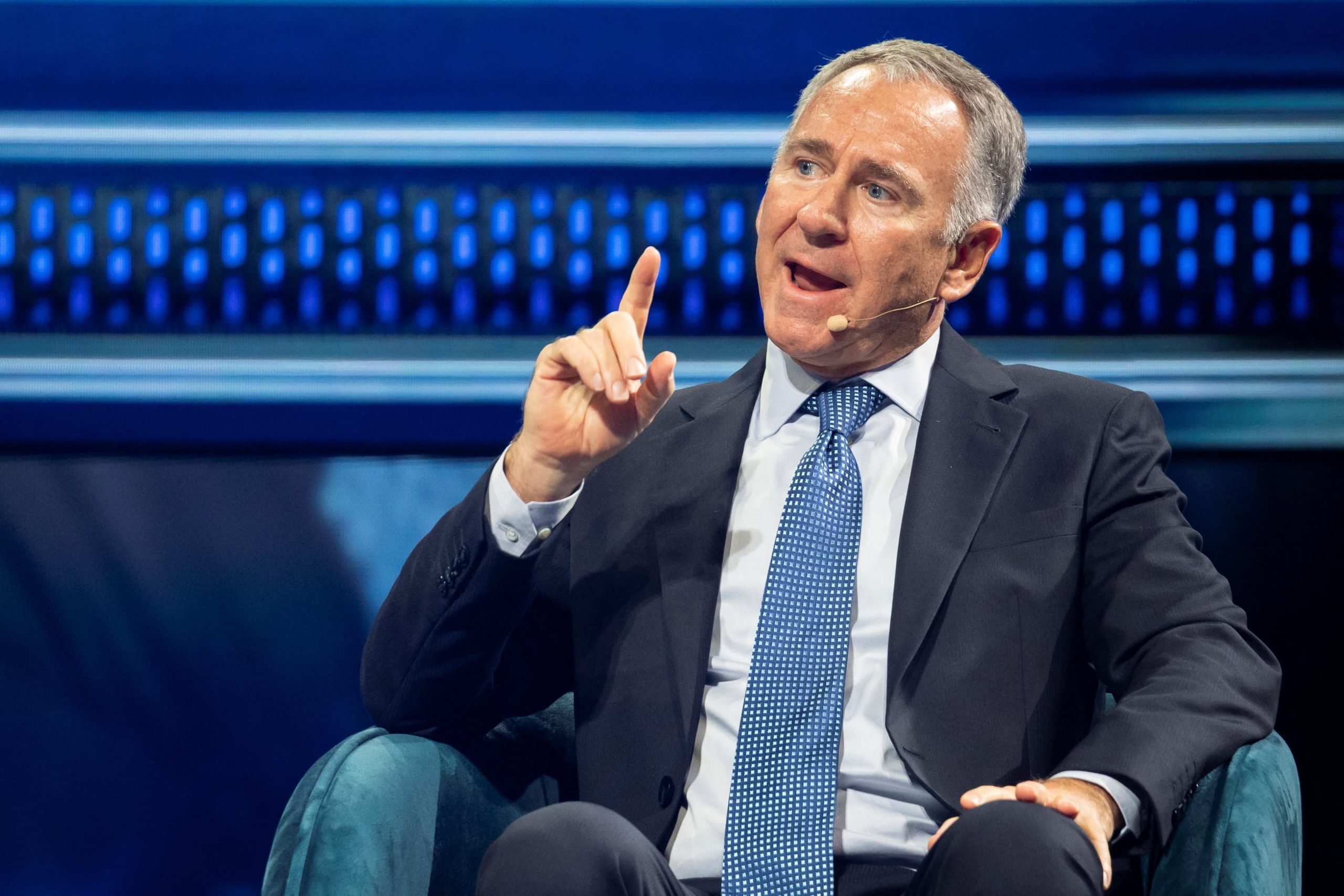
The global hedge fund industry is witnessing a masterclass in capital discipline as Ken Griffin’s Citadel prepares to return approximately $5 billion in profits to its clients. This move, slated for the beginning of 2026, underscores a sophisticated approach to asset management where size is treated not merely as a metric of success, but as a potential hurdle to performance. According to sources familiar with the firm’s internal operations, the decision to distribute these earnings follows a year of robust gains, particularly within the firm’s flagship Wellington fund, which has reportedly surged by 9.3% through the penultimate month of 2025. By opting to shed this capital, Citadel aims to enter the new year with an optimized asset base of $67 billion, down from its current peak of $72 billion, ensuring that its investment team can remain nimble in an increasingly volatile global marketplace.
This planned distribution is not an admission of a lack of opportunity, but rather a calculated effort to match the firm’s "dry powder" with the specific opportunity sets identified by its quantitative and fundamental analysts. In the high-stakes world of multi-strategy hedge funds, the "diseconomies of scale" represent a constant threat. When a fund becomes too large, it risks becoming the market itself, making it difficult to enter and exit positions without moving prices against its own interests. By capping its assets at $67 billion for the start of 2026, Citadel is signaling to the institutional world that it prioritizes the percentage of "alpha"—the excess return generated by active management—over the sheer volume of management fees collected on total assets under management (AUM).
Citadel’s performance in 2025 continues a long-standing streak of dominance that has redefined the hierarchy of high finance. The 9.3% gain in the Wellington fund is particularly notable when viewed against the backdrop of a complex macroeconomic environment characterized by fluctuating interest rates, geopolitical tensions in Europe and the Middle East, and the shifting dynamics of the artificial intelligence trade. While broader equity indices have shown resilience, Citadel’s multi-strategy approach—which diversifies across equities, fixed income and macro, commodities, credit, and quantitative strategies—allows it to harvest gains even when specific sectors face headwinds. This "all-weather" capability is why the firm has become the preferred vehicle for sovereign wealth funds, pensions, and ultra-high-net-worth individuals who seek uncorrelated returns.
The historical context of Citadel’s capital returns provides a glimpse into the firm’s long-term philosophy. Since 2017, including the projected $5 billion for this cycle, the firm has returned a staggering $32 billion to its investors. This practice is relatively rare in an industry where many managers are incentivized to grow their AUM as large as possible to maximize the 1% or 2% management fee. Citadel’s willingness to "shrink to grow" demonstrates a level of confidence in its ability to generate high double-digit returns on a smaller, more concentrated pool of capital. It also serves as a powerful marketing tool; by returning capital, the firm creates a sense of scarcity, ensuring that when it does eventually decide to raise new funds, the demand from institutional investors will far outstrip the available capacity.
To understand Citadel’s current position, one must look at its standing in the broader financial ecosystem. According to data from LCH Investments, which tracks the net gains of hedge fund managers since their inception, Citadel remains the most profitable hedge fund in history. As of the end of 2024, the firm had generated $83 billion in net gains for its clients since Ken Griffin founded the company in 1990. With the 2025 performance factored in, industry analysts expect this figure to eclipse $88 billion when the official rankings are updated in early 2026. This level of wealth creation is unprecedented, surpassing legendary peers like Ray Dalio’s Bridgewater Associates and Steve Cohen’s Point72.

The success of the multi-strategy model, of which Citadel is the primary architect, has triggered a fundamental shift in the hedge fund industry. Traditional "single-manager" shops—where a lone star stock-picker makes the final call—are increasingly losing ground to "platform" or "multi-manager" shops like Citadel, Millennium Management, and Balyasny Asset Management. These platforms employ hundreds of specialized investment teams, often referred to as "pods," each focused on a specific niche. This structure allows the central firm to aggregate thousands of small, idiosyncratic bets into a single, diversified portfolio. The $5 billion return is a reflection of the efficacy of this "pod" model; when the model works too well, the resulting profits must be recycled back to investors to prevent the "pods" from becoming bloated and inefficient.
However, the decision to return capital also highlights the intense "war for talent" currently raging in Manhattan, London, and Miami. To sustain 9% to 15% annual returns on tens of billions of dollars, Citadel requires a constant influx of the world’s most elite mathematicians, data scientists, and traders. The costs associated with recruiting and retaining this talent are immense, often passed through to investors via "pass-through" fee structures that have become the industry standard for top-tier multi-strategy firms. By keeping the AUM at a manageable $67 billion, Citadel can maintain its high performance-to-headcount ratio, ensuring that its compensation pools remain competitive enough to lure talent away from Silicon Valley and rival Wall Street banks.
From a global economic perspective, Citadel’s move is a barometer for market liquidity and volatility. When a major player like Citadel decides that $72 billion is "too much" for the current market to absorb efficiently, it suggests that the "alpha" available in the markets is becoming harder to capture. As central banks begin to pivot away from the era of "Easy Money" and high liquidity, the "price of entry" for profitable trades has increased. Markets are becoming more efficient, and the "low-hanging fruit" of the post-pandemic recovery has largely been picked. In this environment, the most successful managers are those who recognize that chasing marginal returns with excessive capital often leads to catastrophic "drawdowns" or losses.
The impact of this $5 billion distribution will be felt across the institutional investment landscape. For the pension funds and endowments receiving these checks, the windfall provides much-needed liquidity at a time when many of their private equity and real estate holdings remain "locked up" due to a sluggish IPO market and high interest rates. These investors are likely to reinvest a significant portion of the returned capital back into other alternative assets, potentially providing a boost to mid-sized hedge funds or emerging managers who are still in their growth phases.
Looking ahead to 2026, the financial world will be watching closely to see if Citadel’s "optimized" $67 billion portfolio can outperform its larger rivals. The firm’s ability to consistently return capital while remaining at the top of the performance charts has created a "Citadel Premium" in the minds of investors. While a 9.3% return might seem modest compared to the triple-digit gains seen in certain volatile cryptocurrencies or individual tech stocks, the value of Citadel lies in its consistency and its low correlation to the broader S&P 500. In a year where a traditional 60/40 portfolio might be vulnerable to inflation or interest rate shocks, a 9.3% gain with the added benefit of $5 billion in returned cash is a powerful proposition.
Ultimately, Citadel’s strategic pivot is a testament to the maturation of the hedge fund industry. It marks a transition from an era of unbridled growth to an era of tactical precision. By prioritizing the integrity of its investment process over the prestige of managing the world’s largest pool of capital, Ken Griffin and his leadership team are reinforcing a culture of excellence that has defined the firm for three and a half decades. As the $5 billion makes its way back to investors in the coming months, it serves as a reminder that in the world of high finance, sometimes the most aggressive move a firm can make is the decision to step back and re-calibrate for the challenges of the future.