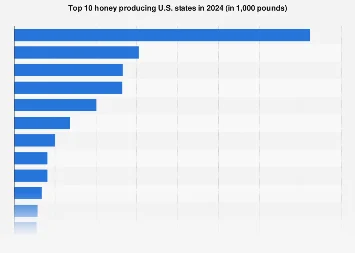
The United States, a significant player in the global honey market, relies on a patchwork of states to meet its domestic demand and contribute to international trade. While precise, up-to-the-minute production figures for 2024 remain a closely guarded proprietary metric for many data providers, an analysis of historical trends and current agricultural indicators points to a consistent group of states leading the nation’s honey output. These states, characterized by favorable agricultural conditions, vast open spaces, and a long-standing tradition of beekeeping, form the backbone of the American apiary industry, ensuring a steady supply of this vital sweetener and pollinator service.
The economic significance of honey production extends far beyond the amber liquid itself. Beekeepers are critical partners in the agricultural ecosystem, providing pollination services essential for a wide array of crops, from fruits and nuts to vegetables. The value of this pollination service often dwarfs the revenue generated from honey sales alone, making the health and productivity of bee colonies a matter of national food security and agricultural sustainability. Factors such as weather patterns, pest and disease management, and the availability of forage all play a crucial role in determining the success of apiaries in any given year.
Historically, North Dakota has consistently held the top position as the nation’s leading honey producer. Its expansive plains, abundant fields of clover and alfalfa, and relatively low pesticide use create an ideal environment for honeybees. The sheer scale of agricultural land available for foraging allows for large-scale beekeeping operations to thrive. These conditions have historically translated into millions of pounds of honey harvested annually, often representing a substantial percentage of the total U.S. production. The economic impact on North Dakota is considerable, supporting rural economies and providing employment opportunities in harvesting, processing, and distribution.
Following closely behind North Dakota, South Dakota and Montana also emerge as major contributors to the national honey supply. Similar to North Dakota, these states benefit from vast agricultural landscapes, particularly those dominated by grasslands and flowering crops. The presence of large national parks and wilderness areas further provides unpolluted foraging grounds, contributing to the quality and quantity of honey produced. The economic ripple effect in these states includes support for local businesses involved in apiary equipment, honey processing facilities, and agricultural cooperatives.
California, despite its diverse agricultural output and significant water challenges, also plays a notable role, particularly in the production of specific varietal honeys and as a critical hub for managed pollination services. While its honey production volume might not always rival the prairie states, its contribution to the pollination of high-value crops like almonds is indispensable. The economic reliance of California’s fruit and nut industries on bee pollination underscores the multifaceted importance of beekeeping, with the value of these services often exceeding direct honey sales.
Other states that consistently feature in the top tier of honey production include Wyoming, Nebraska, and Minnesota. Wyoming’s vast open spaces and rangelands offer ample foraging opportunities. Nebraska, with its significant corn and soybean cultivation, also provides secondary forage sources and a strong agricultural infrastructure. Minnesota, known for its vibrant agricultural sector and numerous flowering plants, contributes to the national honey pot with its own unique varietals. The economic contributions of these states, while perhaps smaller in absolute terms than the top producers, are vital for regional agricultural economies and the broader national honey market.
The global honey market is a complex and competitive arena, with the United States vying for market share against major producers like China, Argentina, and the European Union. While U.S. production is substantial, the nation also remains a significant importer of honey to meet consumer demand, which has been growing steadily. This dynamic creates a dual challenge for domestic beekeepers: competing with lower-priced imported honey while also ensuring the viability of their operations, which are often burdened by higher labor and operational costs.
Statistics from organizations like the U.S. Department of Agriculture (USDA) and international trade bodies often highlight the fluctuating nature of both domestic production and import/export volumes. While precise 2024 figures are still being compiled and analyzed, historical data from previous years provides a clear indication of the leading states. For instance, in recent years, North Dakota has frequently produced tens of millions of pounds of honey, often accounting for over 20% of the national total. South Dakota and Montana typically follow with significant outputs, often in the range of 10-20 million pounds each.
The economic impact of these production levels is multifaceted. For the beekeepers themselves, honey sales represent direct income. However, the indirect economic benefits are arguably more significant. The pollination services provided by these bees are crucial for the production of crops valued in the billions of dollars annually. Without adequate pollination, yields for many fruits, vegetables, and nuts would plummet, leading to increased food prices and potential shortages. Therefore, the health and productivity of bee colonies in states like California, which produces a significant portion of the nation’s almonds, are of paramount importance to the U.S. food supply chain.
Furthermore, the honey industry supports a range of ancillary businesses. This includes manufacturers of beekeeping equipment, honey processing and packaging companies, transportation services, and retail outlets. The development of specialized honey varieties, catering to consumer preferences for distinct flavors and origins, also fosters niche markets and entrepreneurial opportunities within these leading states.
The challenges facing the U.S. honey industry are significant and are not confined to any single state. Colony Collapse Disorder (CCD), the proliferation of pests like the Varroa mite, and the impact of neonicotinoid pesticides continue to pose threats to bee health. Climate change also plays a role, with extreme weather events impacting floral blooms and foraging conditions. These challenges necessitate ongoing research, development of best practices in pest and disease management, and policies that support sustainable agriculture and pollinator health.
In conclusion, while the exact volume of honey produced by each U.S. state in 2024 will be subject to detailed reporting as the year progresses, the established leaders—North Dakota, South Dakota, Montana, and others like California and Wyoming—are expected to continue their dominance. Their contributions are not merely measured in pounds of honey but in their indispensable role in the nation’s agricultural productivity, food security, and the broader economic ecosystem that relies on the tireless work of honeybees. The ongoing health and sustainability of these apiary powerhouses remain a critical focus for policymakers, researchers, and the agricultural sector as a whole.