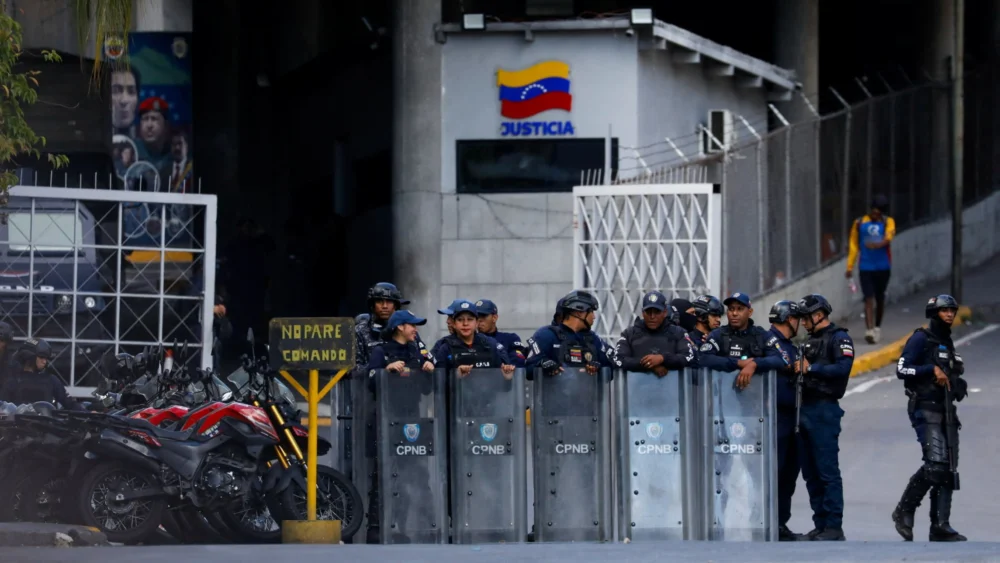
In a move that has sent ripples through both the diplomatic corridors of Washington and the volatile markets of South America, the Venezuelan government has announced its intention to release a significant number of individuals detained during the unrest following the country’s disputed July presidential election. Tarek William Saab, Venezuela’s Attorney General and a close ally of President Nicolás Maduro, confirmed that the Public Ministry has begun a formal review of approximately 225 cases, aiming to "rectify" legal actions where evidence may be insufficient. This sudden shift in judicial posture comes at a critical juncture for the Maduro administration, which faces a tightening web of international isolation, a stagnant domestic economy, and the looming expiration of temporary sanctions relief that remains the country’s only viable path toward fiscal recovery.
The announcement marks a rare moment of apparent concession from a government that, since the July 28 polls, has overseen one of the most intensive crackdowns on dissent in the nation’s modern history. According to local human rights organizations and international monitors, more than 2,400 people were swept up in "Operation Knock-Knock" (Operación Tun Tun), a state-led initiative targeting protesters, opposition activists, and even bystanders who questioned the official results of the election. The National Electoral Council (CNE) declared Maduro the winner without providing granular voting data, while the opposition, led by María Corina Machado and candidate Edmundo González Urrutia, published tally sheets suggesting a landslide victory for the democratic coalition.
From an economic perspective, the release of prisoners is rarely a purely humanitarian gesture in the Venezuelan context; rather, it often functions as a calibrated instrument of "hostage diplomacy" and sanctions maneuvering. The Venezuelan economy, while having emerged from the depths of hyperinflation that saw prices rise by over 65,000% in 2018, remains extraordinarily fragile. Inflation has stabilized at roughly 50% to 60% annually—a marked improvement but still among the highest in the world—and the country’s GDP is a mere fraction of its 2013 peak. For the Maduro administration, the primary objective is the permanent removal of U.S. sanctions on the state oil company, PDVSA, which would allow for a much-needed influx of hard currency and the rehabilitation of decaying energy infrastructure.
The timing of this judicial review is particularly notable given the shifting political landscape in the United States. With a change in the U.S. administration on the horizon, Caracas appears to be testing the waters for a "reset" in negotiations. Historically, the Biden administration utilized a "carrot and stick" approach, granting General License 44 to allow oil and gas transactions in exchange for progress toward democratic elections. When the Maduro government failed to meet those conditions, the license was revoked, though specific authorizations for companies like Chevron remained in place to ensure a level of global oil market stability. By releasing an "important number" of prisoners, Caracas may be attempting to signal a willingness to engage in a new round of dialogue, potentially seeking a deal that secures the survival of the current regime in exchange for energy security.
Market analysts suggest that any sustained release of political prisoners could marginally reduce the "political risk premium" associated with Venezuelan sovereign bonds and PDVSA debt. For years, these instruments have traded at deep distress levels, often pennies on the dollar, due to defaults and the legal complexities of U.S. trading bans. While the announcement did not trigger an immediate rally, it provides a glimmer of hope for creditors who believe that a normalized relationship between Caracas and the international community is the only path to a debt restructuring process. However, skepticism remains high; previous "revolving door" tactics—where some prisoners are released only for others to be arrested shortly after—have made investors and diplomats wary of celebratory headlines.
The geopolitical pressure on Maduro has also intensified from his own ideological neighbors. The presidents of Brazil and Colombia, Luiz Inácio Lula da Silva and Gustavo Petro, have both expressed deep concern over the lack of transparency in the July election. These regional leaders, who have traditionally maintained a more pragmatic or sympathetic relationship with Caracas, find themselves in a difficult position as the exodus of Venezuelan migrants continues to strain their domestic resources. Over 7.7 million Venezuelans have fled the country’s economic collapse, creating a regional migration crisis that rivals the scale of the Syrian conflict. By releasing detainees, Maduro may be attempting to appease Brasilia and Bogotá, offering them a "win" that justifies their continued diplomatic engagement rather than a full pivot toward the hardline isolationist stance favored by the U.S. and the Lima Group.
Within Venezuela, the human rights situation remains the most significant hurdle to international legitimacy. Organizations such as Foro Penal have documented systemic abuses within the SEBIN and DGCIM detention centers, ranging from lack of legal counsel to allegations of physical mistreatment. The "important number" of releases promised by Saab represents only a fraction of the total number of political detainees, which the NGO estimates to be at an all-time high for the century. For the families of those held in El Helicoide—the notorious spiral-shaped prison in Caracas—the announcement is a source of agonizing hope tempered by the reality of a judicial system that operates largely at the whim of the executive branch.
The broader economic impact of this move will largely depend on the reaction from the U.S. Department of the Treasury’s Office of Foreign Assets Control (OFAC). If the U.S. perceives this as a genuine step toward de-escalation, it could pave the way for more "individual" licenses for European and American energy firms to operate in the Orinoco Belt. Venezuela holds the world’s largest proven oil reserves, yet its production hovers around 800,000 to 900,000 barrels per day—far below its historical output of 3 million barrels per day. The recovery of the oil sector is not just a matter of national pride for Caracas; it is a necessity for the survival of the state. Without significant capital investment, which is currently blocked by sanctions, the infrastructure will continue to degrade, leading to more frequent environmental disasters and blackouts.
Furthermore, the domestic political landscape is entering a period of high tension as the January 10 inauguration date approaches. Under the Venezuelan constitution, this is the date the new presidential term begins. The opposition continues to insist that Edmundo González is the rightful president-elect, while Maduro prepares for a third term. The release of prisoners could be a tactical maneuver to lower the temperature of domestic protests before the inauguration, effectively neutralizing one of the opposition’s primary rallying cries. By removing the "political prisoner" narrative from the immediate spotlight, Maduro may hope to consolidate his position with less friction from the international press and grassroots activists.
Expert insights suggest that the international community must remain vigilant about the conditions of these releases. "A release without the restoration of full civil rights is merely a change in the form of detention," noted one Caracas-based political analyst. Many of those previously released from Venezuelan prisons remain under "precautionary measures," which include bans on leaving the country, prohibitions on speaking to the media, and the requirement to report to a court every 15 days. Such conditions effectively stifle political participation and ensure that the "released" individuals remain under the thumb of the state.
As the Public Ministry proceeds with its review, the global community is watching for more than just numbers. The quality of the releases—whether they include high-profile opposition figures or just those with the least evidence against them—will serve as a barometer for Maduro’s true intentions. If this is the beginning of a broader liberalization, it could mark the start of a long and arduous path toward economic reintegration. However, if it is merely a strategic pause designed to secure temporary concessions, the cycle of sanctions, poverty, and political strife is likely to continue unabated. For now, the promised releases offer a rare moment of reprieve in a nation that has spent the better part of a decade defined by its crises. The ultimate success of this gesture will not be measured by the opening of prison gates alone, but by whether it leads to a credible restoration of the democratic norms required to bring Venezuela back into the global economic fold.