The diplomatic landscape of the High North has been thrust back into the global spotlight following British Prime Minister Keir Starmer’s firm assertion that any discussion regarding the future of Greenland must remain the exclusive prerogative of the island’s inhabitants and the Kingdom of Denmark. This intervention comes at a critical juncture as geopolitical tensions in the Arctic intensify, and renewed interest from the United States—specifically under the potential return of a transactional foreign policy—threatens to destabilize the delicate "High North, Low Tension" consensus that has governed the region for decades. Starmer’s remarks, delivered against a backdrop of shifting North Atlantic security priorities, signal a robust European commitment to international law and the principle of self-determination, countering a worldview that treats strategic territories as tradable assets.
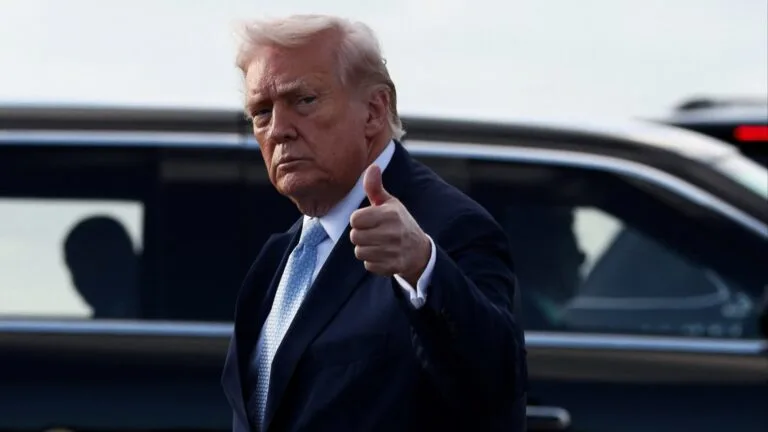
The debate over Greenland is not merely a curiosity of diplomatic history; it is a central pillar of modern global strategy. In 2019, the world was caught off guard when then-President Donald Trump publicly expressed interest in the United States purchasing Greenland, a suggestion that was met with swift rejection from both Copenhagen and Nuuk. However, what was initially dismissed as a peripheral eccentricity has evolved into a serious point of contention in international relations. As the 2024 U.S. election cycle looms and global powers scramble for control over critical minerals and new shipping lanes, the question of who "owns" or influences the world’s largest island has become a litmus test for the rules-based international order.
For the United Kingdom, Greenland represents a vital component of the "GIUK Gap"—the naval transit corridor between Greenland, Iceland, and the UK that serves as a gateway for the Russian Northern Fleet into the Atlantic. Starmer’s decision to weigh in on the matter reflects a broader British strategy to re-engage with European security frameworks and uphold the sovereignty of democratic partners. By emphasizing that Greenland’s destiny is not for sale, London is reinforcing the legitimacy of the 2009 Act on Greenland Self-Government, which grants the island’s 56,000 residents the right to seek independence from Denmark should they choose to do so through a democratic mandate.
The economic underpinnings of this geopolitical tug-of-war are staggering. Greenland is increasingly viewed as the "frontier of the green transition" due to its vast, untapped reserves of critical raw materials. The island is believed to hold some of the world’s largest deposits of rare earth elements, including neodymium and praseodymium, which are essential for the production of permanent magnets used in electric vehicle motors and wind turbines. Currently, China controls approximately 85% of the global processing capacity for these minerals. For the United States and its allies, securing access to Greenlandic resources is not just an economic opportunity but a national security imperative aimed at de-risking supply chains from Beijing’s influence.
Market analysts point to projects like the Tanbreez and Kvanefjeld sites as bellwethers for the island’s economic future. While the Greenlandic government has historically been cautious—imposing a ban on uranium mining in 2021 that effectively stalled the Kvanefjeld project—the pressure to monetize its mineral wealth is growing. Greenland currently relies on an annual block grant from Denmark of approximately 3.9 billion Danish kroner (roughly $570 million), which accounts for nearly half of its public budget. True independence, a goal shared by many in Nuuk, requires a diversified economy capable of replacing this Danish subsidy. This creates a complex paradox: to achieve sovereignty, Greenland may need to invite massive foreign investment, which in turn brings the very geopolitical pressures Starmer is warning against.
The strategic importance of Greenland is further magnified by the accelerating effects of climate change. The Arctic is warming nearly four times faster than the global average, leading to a rapid retreat of sea ice. This environmental catastrophe is paradoxically opening up new commercial opportunities, including the potential for the Transpolar Sea Route. Such a path would significantly shorten transit times between Asia and Europe compared to the Suez Canal. Control over the ports and infrastructure along these emerging routes is a high-stakes game. Russia has already militarized much of its Arctic coastline, and China has declared itself a "near-Arctic state," seeking to integrate the region into its Polar Silk Road initiative. In this context, Greenland’s vast coastline and its host status for the Pituffik Space Base (formerly Thule Air Base) make it the most valuable piece of real estate in the Western defense architecture.
Pituffik, located 750 miles north of the Arctic Circle, provides the U.S. Space Force with a critical early-warning system for ballistic missile launches and satellite tracking. It is a cornerstone of the North American Aerospace Defense Command (NORAD). Any shift in Greenland’s political status or a perceived "sale" of the island would have profound implications for the NATO alliance. Starmer’s insistence on the Denmark-Greenland axis is a move to ensure that these strategic assets remain within a stable, predictable, and democratic framework, rather than being subjected to the whims of bilateral "deals" that could bypass traditional alliance protocols.
From a legal perspective, the concept of purchasing a semi-autonomous territory in the 21st century is fraught with complications. The UN Charter and the International Covenant on Civil and Political Rights both uphold the right of peoples to self-determination. Denmark’s relationship with Greenland has evolved from colonial rule to a "Unity of the Realm" model, where Greenland manages its domestic affairs, including judicial systems, natural resources, and aviation, while Denmark retains control over foreign policy and defense. Any attempt by an external power to bypass this relationship would be viewed by the international community as a violation of established norms. Starmer’s rhetoric serves to remind Washington that the Atlanticist alliance is built on shared values and legal structures, not just strategic convenience.
Furthermore, the domestic politics of Greenland itself cannot be ignored. The island’s leadership, including Prime Minister Múte B. Egede, has been clear: Greenland is "open for business, but not for sale." The Greenlandic people are navigating a delicate path between utilizing their resources for economic growth and preserving their indigenous Inuit culture and a fragile ecosystem. The social impact of large-scale mining and increased military presence is a major concern for the local population. International interventions that ignore the voices of the Greenlandic people risk triggering a backlash that could push the island toward more populist or isolationist stances.
Economically, the European Union has also recognized the stakes. The EU’s Critical Raw Materials Act specifically identifies the need for strategic partnerships with resource-rich neighbors. Greenland, while not a member of the EU (having left the EEC in 1985), remains an Overseas Country and Territory (OCT) of the bloc. This status allows for a unique level of cooperation. By aligning with the Danish and Greenlandic positions, the UK is also signaling its desire to cooperate with European neighbors on resource security, even post-Brexit.
As the Arctic continues to thaw, the competition for its future will only intensify. The "scramble for the Arctic" is no longer a distant possibility but a present reality. Keir Starmer’s warning to Donald Trump is a preemptive strike in a larger diplomatic battle to define the rules of this new era. It asserts that in the modern age, sovereignty is not a commodity to be traded between superpowers, but a right held by the people who inhabit the land. The stability of the North Atlantic depends on this principle. Whether Greenland remains part of the Danish Realm, moves toward full independence, or deepens its security partnership with the United States, the decision must be made in Nuuk and Copenhagen, not in a boardroom in Washington. By reinforcing this stance, the UK seeks to anchor the Arctic’s future in the bedrock of international law, ensuring that the "High North" remains a region of cooperation rather than a theater of territorial acquisition.