The global energy landscape is undergoing a profound transformation, with solar power emerging as a pivotal force in the transition towards a decarbonized future. Among the key players driving this monumental shift, China, the United States, and the European Union stand out, each pursuing distinct strategies and achieving remarkable milestones in solar capacity expansion. These three economic powerhouses are not only meeting their own burgeoning energy demands but are also significantly influencing global supply chains, technological innovation, and the broader geopolitical dynamics of renewable energy.
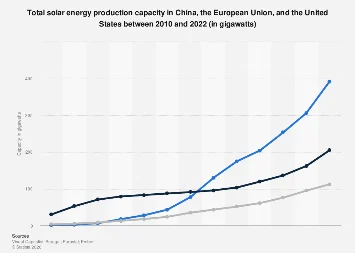
China has unequivocally cemented its position as the world’s undisputed leader in solar energy deployment. For years, the People’s Republic has been aggressively expanding its solar photovoltaic (PV) capacity, driven by a dual imperative: to curb its reliance on coal-fired power generation, which has historically fueled its rapid economic growth but also contributed significantly to air pollution and carbon emissions, and to secure a dominant position in the manufacturing and export of solar technologies. Official data and industry analyses consistently show China adding more solar capacity annually than the rest of the world combined in recent periods. This relentless expansion is supported by substantial government subsidies, favorable industrial policies, and a vast domestic market hungry for electricity. The sheer scale of China’s solar installations, which now represent a significant portion of its total energy mix, is a testament to its strategic vision and execution. Beyond mere installation, China has also become the global manufacturing hub for solar panels, inverters, and other critical components, creating an intricate and often dominant global supply chain that other nations must navigate. This manufacturing prowess has, in turn, driven down global solar costs, making the technology more accessible worldwide.
In contrast, the United States has been on a more dynamic trajectory, with its solar capacity growth accelerating significantly in recent years, albeit with more pronounced regional variations and a greater reliance on private sector investment and evolving policy incentives. While the US lags behind China in absolute installed capacity, its growth rate has been impressive, particularly in the utility-scale solar sector. States like California, Texas, and Arizona have been at the forefront, leveraging abundant sunshine and supportive regulatory environments to build massive solar farms. The Inflation Reduction Act (IRA), a landmark piece of legislation, has injected substantial momentum into the US solar market, offering long-term tax credits and incentives for both renewable energy generation and domestic manufacturing. This policy shift is designed not only to accelerate clean energy deployment but also to reshore critical parts of the solar supply chain, aiming to reduce dependence on foreign manufacturing and foster domestic job creation. The US solar industry is characterized by a diverse array of developers, financiers, and technology providers, fostering innovation and a competitive market. However, challenges related to grid integration, permitting processes, and intermittency management remain key areas of focus for continued expansion.
The European Union, a bloc committed to ambitious climate targets and a green transition, has also made substantial strides in solar energy. The EU’s approach is multifaceted, combining binding renewable energy targets for member states with a strong emphasis on research and development, grid modernization, and consumer-centric solutions like rooftop solar and energy storage. Countries like Germany, Spain, and the Netherlands have long been pioneers in solar adoption, driven by early feed-in tariffs and a strong public commitment to environmental sustainability. The EU’s "Fit for 55" package and the REPowerEU plan underscore the bloc’s determination to rapidly scale up renewables, including solar, to achieve energy independence and meet its climate goals. While the EU faces some challenges in terms of land availability for large-scale projects and the pace of permitting in certain member states, its focus on innovation, particularly in areas like building-integrated photovoltaics (BIPV) and advanced solar technologies, positions it as a significant player in the future of solar. Furthermore, the EU’s regulatory framework and commitment to a just transition aim to ensure that the benefits of solar energy are widely shared.
The economic implications of these divergent yet interconnected paths are profound. China’s dominance in manufacturing has created a global market where solar panels are increasingly affordable, accelerating adoption rates worldwide. However, this concentration also presents supply chain vulnerabilities and geopolitical considerations for importing nations. The US’s strategic push for domestic manufacturing, spurred by the IRA, aims to create a more resilient and localized supply chain, potentially reshaping global trade flows in solar components. The EU’s commitment to ambitious targets and innovation, coupled with its focus on energy security, reinforces the strategic importance of solar power in its long-term economic planning.
Globally, the expansion of solar capacity is not just an environmental imperative but also a significant economic opportunity. The International Energy Agency (IEA) has consistently highlighted solar PV as the cheapest source of electricity generation in many parts of the world. The continued growth in solar capacity contributes to lower energy prices for consumers and businesses, enhances energy security by diversifying power sources, and stimulates job creation in manufacturing, installation, and maintenance. The interplay between these major economic blocs in the solar sector will continue to shape the trajectory of global energy markets, influencing investment decisions, technological advancements, and the collective effort to combat climate change. As these nations continue to invest in and deploy solar power at an unprecedented rate, the world inches closer to a cleaner, more sustainable energy future, with the dynamics between China, the US, and the EU serving as a crucial barometer of progress.