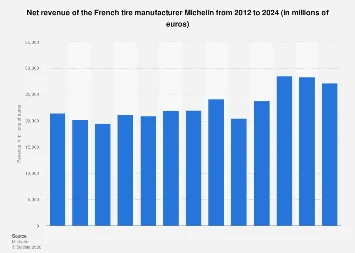
The global automotive and industrial sectors are keenly observing the projected financial trajectory of Michelin, the renowned French tire manufacturer, as it anticipates a notable increase in net revenues for the 2024 fiscal year. While specific figures remain proprietary until official disclosures, industry analysis and market indicators suggest a robust performance driven by a confluence of strategic initiatives, evolving consumer demand, and a dynamic macroeconomic landscape. Michelin’s ability to navigate inflationary pressures, supply chain complexities, and the accelerating transition towards electric mobility will be pivotal in shaping its financial outcomes.
The tire industry, a critical barometer for global industrial activity and consumer spending, has experienced a period of significant recalibration. Post-pandemic recovery, coupled with geopolitical events, has led to fluctuating raw material costs, particularly for natural rubber, synthetic polymers, and carbon black – key components in tire production. Michelin, with its extensive global manufacturing footprint and diversified product portfolio, is strategically positioned to absorb some of these cost volatilities through efficient procurement, advanced manufacturing processes, and prudent pricing strategies. Analysts anticipate that the company’s focus on high-value specialty tires, particularly for the burgeoning electric vehicle (EV) market and the resilient truck and bus radial (TBR) segment, will be a primary revenue driver.
The demand for tires is intrinsically linked to vehicle production and sales. Despite global economic uncertainties, the automotive sector, particularly in key markets like North America, Europe, and Asia, is showing signs of sustained recovery and transformation. The increasing adoption of electric vehicles presents both challenges and opportunities. EVs, with their heavier weight and different torque characteristics, often require specialized tires designed for enhanced durability, lower rolling resistance to maximize range, and reduced noise levels. Michelin has been proactively investing in research and development to meet these evolving demands, launching new tire lines specifically engineered for EVs. This foresight is expected to translate into increased market share and higher average selling prices for its premium products.
Furthermore, the replacement tire market continues to be a bedrock of Michelin’s revenue stream. As global vehicle fleets age, the demand for replacement tires remains consistently strong, providing a stable revenue base. The company’s strong brand recognition, reputation for quality, and extensive distribution network across over 170 countries empower it to maintain a significant presence in this segment. The ongoing trend of consumers prioritizing tire performance, safety, and longevity over the lowest price point further benefits premium manufacturers like Michelin.
Economic indicators from various regions provide a mixed but generally positive outlook for Michelin’s revenue projections. In Europe, while facing inflationary headwinds, there’s a gradual uptick in automotive production, especially in the premium and electric segments. North America continues to be a stronghold for the automotive industry, with robust demand for both new vehicles and replacement tires. Asia, particularly China, remains a crucial growth engine, with its vast consumer market and expanding automotive manufacturing capabilities. Michelin’s strategic partnerships and manufacturing facilities in these key regions are designed to capitalize on these diverse market dynamics.
Market data suggests that the global tire market, valued at over USD 250 billion in recent years, is projected to experience a compound annual growth rate (CAGR) of around 5-7% in the coming years. Michelin, as one of the top three global players, is expected to capture a significant portion of this growth. Its revenue streams are diversified across several key segments: passenger car and light truck tires, truck and bus radial tires, specialty tires (including agricultural, construction, and aviation), and its burgeoning high-performance and EV-focused offerings. The synergy between these segments, coupled with Michelin’s commitment to innovation, underpins its optimistic revenue forecast.
The company’s strategic focus on sustainability and digitalization also plays a crucial role in its long-term financial health and market positioning. Michelin is investing in sustainable materials, such as bio-sourced and recycled components, to reduce its environmental footprint and appeal to an increasingly eco-conscious consumer base. Digitalization efforts, including the development of smart tires with integrated sensors and data analytics capabilities, are opening up new revenue streams in fleet management, predictive maintenance, and performance optimization, particularly for commercial clients. These innovations not only enhance product value but also foster deeper customer relationships and loyalty.
The competitive landscape in the tire industry is intense, with key rivals such as Bridgestone, Goodyear, and Continental vying for market dominance. However, Michelin’s consistent investment in R&D, its premium brand positioning, and its strategic diversification efforts provide it with a competitive edge. The company’s ability to command premium pricing for its high-performance and specialized tires, coupled with its operational efficiencies, is expected to contribute to healthy profit margins, which in turn will support its revenue growth targets.
Looking ahead, the automotive industry’s ongoing transition to electrification and autonomous driving technologies will continue to shape tire requirements. Michelin’s proactive engagement with automotive manufacturers and its commitment to developing cutting-edge tire solutions for these future mobility trends position it favorably to capitalize on emerging market opportunities. The projected revenue growth for 2024 is not merely a reflection of market expansion but also a testament to Michelin’s strategic agility and its capacity to innovate and adapt in a rapidly evolving global economic and industrial environment. The company’s financial performance in the coming year will undoubtedly be a closely watched indicator of the broader health and direction of the global automotive ecosystem.