The humble quinoa, once a staple grain of the ancient Inca civilization, has transformed into a global superfood, driving significant international trade and influencing agricultural economies worldwide. Its surge in popularity is attributed to its complete protein profile, high fiber content, gluten-free nature, and versatility in culinary applications. This increased demand has created a robust global market, with several key nations emerging as primary importers, shaping the trajectory of quinoa production and distribution. Analyzing these import trends provides critical insights into consumer preferences, market accessibility, and the economic impact of this nutrient-dense pseudocereal.
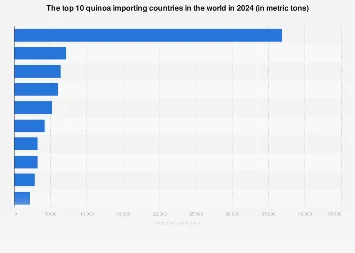
The United States stands as a dominant force in the global quinoa import market, consistently ranking among the top consumers. This is fueled by a confluence of factors including a growing health-conscious population, a rising interest in plant-based diets, and a well-developed retail infrastructure capable of distributing specialty food items. The U.S. market has embraced quinoa not only as a healthy alternative to traditional grains but also as a key ingredient in a wide array of processed foods, from breakfast cereals to ready-to-eat meals. Market research indicates a steady year-on-year growth in quinoa consumption within the U.S., underscoring its entrenched position in the American diet. This sustained demand necessitates substantial import volumes, as domestic production, while growing, often struggles to meet the sheer scale of consumer appetite.
Following closely behind, the European Union as a collective bloc represents another significant import hub for quinoa. Individual member states like Germany, the Netherlands, and France are particularly strong importers. Germany, with its large population and a burgeoning organic and health food sector, exhibits a particularly robust demand. Dutch ports, being major logistical gateways for European trade, play a crucial role in the distribution of quinoa throughout the continent. The increasing adoption of vegetarian and vegan lifestyles across Europe, coupled with a heightened awareness of sustainable and ethically sourced food products, has propelled quinoa’s market penetration. European consumers are increasingly scrutinizing the origins and production methods of their food, a trend that favors quinoa’s reputation as a crop that can be grown sustainably, particularly in its traditional Andean regions.
Canada also features prominently in the list of major quinoa importers. Its proximity to the United States and similar consumer trends in health and wellness contribute to its substantial import volumes. Canadian consumers, much like their U.S. counterparts, are actively seeking out nutritious and versatile food options, and quinoa has successfully carved out a niche in their dietary habits. The country’s diverse population also contributes to a broader acceptance of international cuisines and ingredients, further bolstering the demand for quinoa.
Beyond these leading importers, several other nations contribute to the global quinoa trade. Australia, despite being a producer of some grains, also imports significant quantities of quinoa, reflecting a growing domestic demand that outstrips its current production capacity. The Australian market’s embrace of healthy eating trends and a vibrant food scene has created fertile ground for quinoa’s popularity. In Asia, countries like Japan and South Korea are witnessing a gradual but significant increase in quinoa imports. While not yet at the scale of Western markets, the rising middle class and increasing exposure to global food trends are slowly integrating quinoa into their diets, particularly in urban centers.
The economic implications of this global trade are far-reaching. For the primary producing countries, predominantly in the Andean region of South America (Bolivia, Peru, Ecuador), quinoa exports represent a vital source of foreign exchange and rural economic development. The "quinoa boom" of the early 2010s brought unprecedented economic opportunities to farming communities, leading to increased incomes and improved living standards. However, this rapid growth also presented challenges, including concerns about food security in some producing regions as more land was dedicated to export crops, and price volatility that could disproportionately affect smallholder farmers.
Market analysis of the quinoa sector reveals a complex interplay of supply and demand, influenced by factors such as weather patterns in producing regions, global trade policies, and evolving consumer perceptions. The price of quinoa, while having stabilized somewhat after the initial surge, remains higher than many staple grains, reflecting its niche market status and the specialized cultivation and processing required. This premium pricing is often justified by its nutritional superiority and perceived health benefits.
The logistics of quinoa trade are also a critical consideration. The journey from the high-altitude farms of the Andes to dinner tables in North America and Europe involves intricate supply chains, often including multiple intermediaries, cleaning, sorting, packaging, and international shipping. Ensuring the quality and traceability of quinoa throughout this process is paramount for maintaining consumer trust and meeting import regulations in destination countries.
Looking ahead, the global quinoa market is expected to continue its upward trajectory, albeit perhaps at a more measured pace than in its early years of rapid expansion. The ongoing emphasis on health, wellness, and sustainable food systems globally will likely sustain demand. Innovations in agricultural technology and processing methods may also play a role in increasing yields and potentially reducing costs, making quinoa more accessible to a wider consumer base. Furthermore, as more countries explore domestic quinoa cultivation, the global import landscape may see subtle shifts, though the established import hubs are likely to retain their dominance in the foreseeable future due to scale and established demand. The story of quinoa is a compelling case study in how a once-obscure ancient grain can capture the global imagination and reshape agricultural economies, driven by the persistent human quest for healthier and more sustainable food choices.