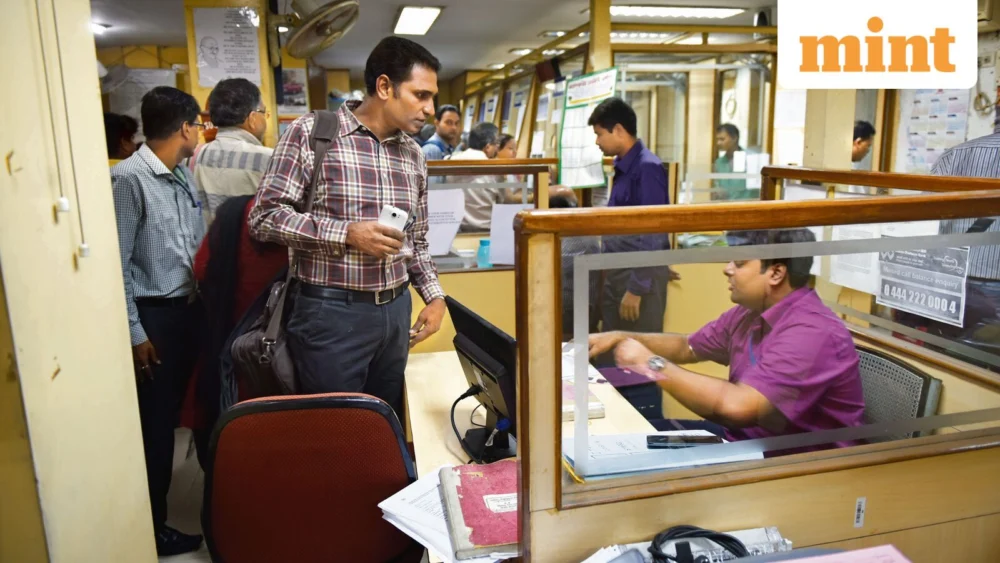
As India transitions into the new year, the festive calendar ushers in a series of significant regional bank holidays, presenting a complex interplay between cultural tradition and economic continuity. The upcoming week, in particular, will see varied banking closures across different states, largely attributed to prominent winter and harvest festivals such as Pongal, Lohri, Makar Sankranti, and Magh Bihu. While the overall count of holidays nationwide may reach up to seven days, including standard weekend offs, the impact is distinctly localized, underscoring the granular nature of India’s banking operations and the unique challenges it poses for seamless financial transactions across its diverse economy.
A notable example of this regional variation is Tamil Nadu, which is poised for an extended four-day consecutive bank closure. This hiatus, commencing around mid-January, is primarily driven by the multi-day Pongal festivities, a harvest festival celebrated with immense fervour, followed by Thiruvalluvar Day and Uzhavar Thirunal. Pongal, equivalent to Thanksgiving in other cultures, is a four-day festival dedicated to the Sun God, Surya, and the celebration of the harvest season, signifying agricultural prosperity and gratitude. Thiruvalluvar Day honours the revered Tamil poet and philosopher Thiruvalluvar, whose literary work, the ‘Tirukkural,’ is a seminal text on ethics and morality. Uzhavar Thirunal, or Farmers’ Day, further extends the celebration of the agricultural community’s contributions. These sequential holidays, deeply embedded in the state’s cultural fabric, mean that banking services beyond automated tellers will be largely inaccessible for nearly half a week, impacting businesses and individuals reliant on traditional banking channels.
Beyond Tamil Nadu, other states will also observe specific closures tailored to their regional festivals. January 12th, for instance, marks a bank holiday in West Bengal for Swami Vivekananda’s birthday, honouring the influential spiritual leader. Two days later, on January 14th, banks in Gujarat, Odisha, Arunachal Pradesh, and Assam will remain closed for Makar Sankranti or Magh Bihu. Makar Sankranti, celebrated across various parts of India, signifies the sun’s transit into the Capricorn zodiac sign, marking the end of the winter solstice and the beginning of longer days. It is often associated with agricultural cycles and the harvest. In Assam, this period coincides with Magh Bihu, another significant harvest festival, characterized by feasting and traditional games. Further extending the closures, January 15th will see banks shut in Karnataka, Andhra Pradesh, Telangana, and Sikkim, alongside Tamil Nadu, for Uttarayana Punyakala, Pongal, Maghe Sankranti, or Makara Sankranti – reflecting the pan-Indian observance of the sun’s northward journey, albeit under different regional names and customs. These state-specific declarations, based on the Reserve Bank of India’s (RBI) holiday calendar, highlight a system designed to respect local traditions but one that inherently creates a fragmented operational landscape for the national banking sector.
The economic implications of such a decentralized holiday schedule are multifaceted. For businesses, particularly small and medium-sized enterprises (SMEs) and those engaged in inter-state commerce, these closures can pose significant operational hurdles. Cheque clearances, which still form a substantial part of business transactions in many sectors, will be delayed, impacting cash flow and liquidity management. Businesses relying on timely loan disbursements or large-value interbank transfers, often crucial for managing supply chains and payrolls, may face disruptions. Industries with tight production schedules or export commitments could experience bottlenecks due to delayed financial settlements. Financial analysts estimate that a single national bank holiday can impact transaction volumes by as much as 15-20% on average, with regional closures causing more acute, localized shocks. For a state like Tamil Nadu, a major economic hub with a significant manufacturing and IT sector, a four-day banking hiatus could temporarily constrain commercial activity, affecting everything from vendor payments to customer remittances.

However, the modern Indian financial ecosystem has evolved significantly to mitigate some of these challenges. The exponential growth of digital banking platforms, spearheaded by the Unified Payments Interface (UPI), along with 24/7 availability of NEFT (National Electronic Funds Transfer) and RTGS (Real-Time Gross Settlement) systems, offers crucial alternatives. Recent data from the National Payments Corporation of India (NPCI) indicates that UPI transactions consistently surpass 10 billion per month, with festive periods often seeing spikes in usage. This digital infrastructure allows individuals and many businesses to conduct transactions, pay bills, and transfer funds instantaneously, even during bank holidays. ATMs also continue to operate, ensuring access to physical cash. Mobile banking and internet banking services provide comprehensive functionality, reducing reliance on physical bank branches. This digital pivot has been instrumental in ensuring that economic activity does not grind to a complete halt during these traditional breaks, shifting the emphasis from branch-based services to always-on digital channels.
Despite the digital advancements, the closures still affect certain critical banking functions that require human intervention, such as foreign exchange transactions, certain types of loan applications and approvals, complex advisory services, and specific government-related financial operations. The human element in banking, especially for complex or high-value transactions, remains indispensable, and its absence during these extended holidays can lead to backlogs. Experts in financial economics often highlight the delicate balance between honouring cultural heritage and maintaining economic efficiency. While a holiday provides respite and promotes cultural unity, an overly fragmented holiday calendar can create administrative overheads for national banks and businesses operating across state lines, demanding meticulous planning and forecasting. Some global comparisons reveal that while many countries observe national public holidays, the degree of regional variation seen in India, especially within the banking sector, is relatively unique, stemming from its vast cultural and linguistic diversity. Countries like the United States have fewer national bank holidays, and often, financial markets remain open even on some public holidays.
The Reserve Bank of India plays a crucial role in managing the financial system during these periods. While it dictates the official list of holidays, it also ensures that critical interbank settlement systems and payment infrastructures remain robust and operational. The RBI’s proactive communication of holiday schedules well in advance allows banks, businesses, and consumers to plan accordingly, shifting transactions to non-holiday periods or leveraging digital alternatives. This foresight is vital for maintaining liquidity and stability within the financial markets.
Looking ahead, the evolving landscape of banking suggests a future where physical branch closures might have a progressively diminishing impact on overall economic activity. As India continues its journey towards a truly digital economy, the convenience and efficiency of online platforms will increasingly buffer the effects of traditional holidays. However, the cultural significance of these festivals will undoubtedly ensure their continued observance. The challenge for policymakers and the banking sector will be to further integrate technology and policy to ensure that cultural celebrations can coexist seamlessly with an ever-moving, digitally driven economy, minimizing any potential friction points for businesses and consumers alike. The upcoming festive period serves as a timely reminder of this ongoing calibration, demonstrating both the enduring power of tradition and the transformative force of digital innovation in India’s financial ecosystem.