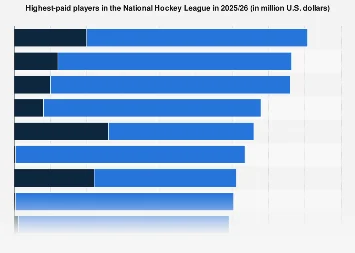
The National Hockey League (NHL) in 2026 continues to be a global powerhouse of athletic talent and lucrative contracts, with a select group of players commanding astronomical salaries that reflect their on-ice dominance, marketability, and the ever-growing commercial appeal of the sport. Examining the highest-paid athletes provides a fascinating glimpse into the economic engine of professional hockey and the strategies employed by teams to secure and retain top-tier talent in an increasingly competitive global market.
The landscape of NHL salaries is shaped by a complex interplay of factors, including player performance metrics, career achievements, leadership qualities, and, crucially, their impact on team success and fan engagement. These individuals are not merely athletes; they are brand ambassadors, drawing significant revenue through endorsements, merchandise sales, and their ability to fill arenas. As such, their compensation packages often extend beyond base salary to include substantial signing bonuses, performance incentives, and, in some cases, equity stakes or revenue-sharing agreements, though the latter remains less common in North American professional sports compared to other global leagues.
For the 2026 season, the upper echelon of NHL earners are positioned to eclipse previous records, a testament to the league’s sustained growth and the escalating value placed on elite hockey players. While precise figures can fluctuate based on contract renegotiations and unforeseen market shifts, projections indicate that the top 10 highest-paid players are likely to command annual earnings well into the tens of millions of U.S. dollars. This concentration of wealth at the very peak of the sport highlights the significant disparity between superstar status and the average NHL player’s salary, a common characteristic across major professional sports leagues worldwide.
Leading the charge are perennial contenders who have consistently delivered championship-level performances and maintained a high public profile. These athletes often possess a unique blend of skill, physicality, and a charismatic presence that resonates with fans and sponsors alike. Their contracts are not just a reflection of their current value but also an investment in their continued ability to perform at an elite level and serve as cornerstones for their respective franchises. For instance, a player who consistently registers over 100 points, leads their team in crucial defensive metrics, and excels in high-pressure playoff situations is likely to command a premium that far exceeds league averages. The average salary in the NHL, while substantial, hovers significantly below these superstar figures, underscoring the unique economic stratification within the league.
The economic impact of these high-earning athletes extends beyond their individual paychecks. Their presence on a team often translates to increased ticket sales, higher television viewership, and a surge in merchandise demand. This phenomenon creates a positive feedback loop, further justifying the substantial investments made by team ownership. Furthermore, the visibility of these players can attract new fans to the sport, both domestically and internationally, contributing to the league’s overall growth and expanding its global footprint. The NHL’s strategic expansion into new markets and its increasing appeal in non-traditional hockey regions can be partly attributed to the star power of its highest-paid athletes.
Analyzing the geographical distribution of these top earners also reveals important trends. Traditionally, franchises in larger, more established hockey markets have often been better positioned to offer the most lucrative contracts, benefiting from greater revenue streams from ticket sales, corporate sponsorships, and broadcasting rights. However, the league’s salary cap system, while designed to promote parity, also influences where teams can allocate their financial resources. Teams with astute management and a strong scouting network can identify and develop talent, leveraging the cap to their advantage and potentially securing key players at competitive rates, even if they don’t possess the same historical market appeal as Original Six franchises.
Beyond the direct financial compensation, the negotiation of these contracts involves sophisticated financial planning and the expertise of specialized agents. These professionals navigate complex collective bargaining agreements, understand market valuations, and employ strategic leverage to secure the best possible terms for their clients. Factors such as the duration of the contract, the structure of payments (e.g., signing bonuses versus base salary), and the inclusion of no-movement or no-trade clauses all play a critical role in the overall value and security of a player’s deal. The current NHL collective bargaining agreement, which governs player salaries and contract structures, is a critical document that shapes these negotiations.
The global nature of the NHL means that top players are scouted and developed from a diverse range of countries. While Canada and the United States have historically been dominant in producing NHL talent, the influx of skilled players from European nations like Sweden, Russia, Finland, and the Czech Republic has significantly enriched the league. These international stars often bring unique skill sets and playing styles, contributing to the league’s dynamic and exciting brand of hockey. Their ability to adapt to the North American game and succeed at the highest level further solidifies their value and their place among the highest earners. The increasing presence of these international stars also fuels the league’s global marketing efforts, attracting fans and media attention from their home countries.
Looking ahead, the economic trajectory of the NHL and the earning potential of its top players are poised for continued growth. Factors such as increasing media rights deals, expansion into new territories, and the ongoing development of innovative revenue streams will likely fuel further salary increases. The league’s commitment to enhancing the fan experience through advanced technology and engaging content also contributes to its commercial viability. As the sport continues to evolve and capture the attention of a wider audience, the financial rewards for its most exceptional talents are expected to keep pace, solidifying their status as global sports icons and significant economic contributors. The trend of increasing player salaries, when viewed against the backdrop of the league’s overall revenue growth, suggests a sustainable economic model for the NHL and its stars.