The notion of the United States acquiring Greenland, once dismissed as a diplomatic curiosity or a relic of 19th-century expansionism, has evolved into a centerpiece of a broader debate regarding Arctic sovereignty, resource security, and the shifting balance of global power. What began as an unconventional proposal during the first Trump administration has matured into a persistent geopolitical friction point, forcing European capitals to confront a reality where the High North is no longer a peripheral concern but a primary theater of economic and military competition. This renewed American interest in the world’s largest island is not merely a matter of territorial ambition; it is a calculated response to the accelerating climate crisis, the opening of new maritime trade routes, and the urgent need to secure supply chains for critical minerals essential to the green energy transition.
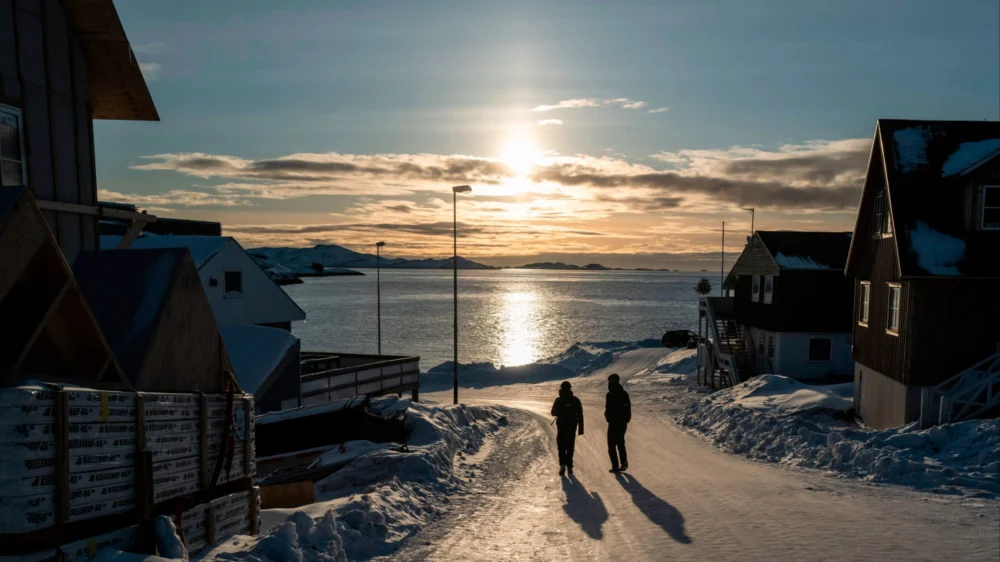
For the Kingdom of Denmark, the proposition of selling Greenland remains fundamentally non-negotiable, yet the pressure from Washington has exposed deep-seated vulnerabilities within the transatlantic alliance. Copenhagen finds itself in a delicate balancing act, attempting to honor its historic ties with the United States while defending the dignity and burgeoning autonomy of the Greenlandic people. The Greenlandic government in Nuuk, meanwhile, views the sudden international attention with a mixture of opportunism and caution. While the island remains economically dependent on an annual block grant from Denmark—amounting to approximately $600 million, or roughly half of Greenland’s public budget—the prospect of massive American investment offers a potential, albeit controversial, path toward full fiscal independence.
The economic gravity of Greenland lies beneath its receding ice sheet. As global temperatures rise at nearly four times the global average in the Arctic, the accessibility of the island’s vast mineral wealth has shifted from theoretical to commercially viable. Greenland is home to some of the world’s most significant undeveloped deposits of rare earth elements (REEs), including neodymium, praseodymium, dysprosium, and terbium. These minerals are the lifeblood of modern technology, vital for everything from permanent magnets in electric vehicle motors and wind turbines to sophisticated guidance systems in precision weaponry. Currently, China controls approximately 85% of global rare earth processing capacity, a monopoly that Washington views as a critical national security risk. The Tanbreez and Kvanefjeld projects in southern Greenland represent two of the largest REE deposits outside of China, making the island a focal point in the West’s strategy to "de-risk" its high-tech supply chains.
However, the extraction of these resources presents a profound ethical and environmental dilemma for Europe. The European Union’s Arctic policy emphasizes environmental protection and the "precautionary principle" regarding deep-sea mining and large-scale terrestrial extraction. In contrast, the American approach, particularly under a transactional foreign policy framework, prioritizes rapid development and strategic acquisition. This ideological rift leaves Brussels struggling to formulate a unified response. If Europe cannot provide the investment capital and infrastructure support Greenland needs to develop its economy, Nuuk may have little choice but to look toward the United States or, more transformatively, toward Beijing.
China’s presence in the Arctic has already sent tremors through Western intelligence circles. Identifying itself as a "Near-Arctic State," Beijing has integrated the region into its "Polar Silk Road" initiative. In recent years, Chinese state-owned enterprises have attempted to bid on the construction of three major airports in Greenland and sought to revive defunct mining sites. While the Danish government, under significant pressure from the U.S. State Department, ultimately blocked these infrastructure bids, the incident served as a wake-up call. It demonstrated that in the absence of a robust Western economic alternative, Greenland’s strategic geography is for sale, even if its territory is not.
The military dimension of the Greenland question is equally consequential. The Pituffik Space Base (formerly Thule Air Base), located 750 miles north of the Arctic Circle, is a cornerstone of the U.S. Integrated Tactical Warning and Attack Assessment system. It provides essential ballistic missile early warning and space surveillance capabilities. As Russia continues to militarize its Northern Sea Route and modernize its Northern Fleet—housing its second-strike nuclear capabilities in the Kola Peninsula—Greenland’s position in the "GIUK gap" (the naval chokepoint between Greenland, Iceland, and the United Kingdom) has regained the strategic importance it held during the Cold War. For the United States, securing Greenland is not just about resources; it is about ensuring that the Arctic does not become a "denied area" where Russian or Chinese naval assets can operate with impunity.
The diplomatic fallout of the U.S. claim on Greenland has also forced a re-evaluation of European "strategic autonomy." For many in the European Union, the American interest in Greenland is perceived as a symptom of a broader trend where traditional diplomatic norms are being replaced by "realpolitik" and transactionalism. This has placed Denmark in an unenviable position. While Copenhagen is a stalwart NATO ally, the suggestion that its territory could be purchased like a piece of commercial real estate was met with public indignation. Yet, behind the scenes, Danish officials recognize that they cannot ignore the American security umbrella. The result is a surge in "soft power" competition, with the U.S. reopening its consulate in Nuuk and providing aid packages aimed at education and sustainable tourism—measures designed to win the hearts and minds of the 56,000 residents of Greenland.
From a market perspective, the "Greenland Claim" has sparked a speculative interest in Arctic logistics. As the Northwest Passage and the Northern Sea Route become increasingly navigable during summer months, the potential for Greenland to serve as a transshipment hub grows. A voyage from Shanghai to Rotterdam via the Arctic is roughly 40% shorter than the route through the Suez Canal. While the commercial viability of these routes is currently hampered by unpredictable ice conditions and high insurance costs, long-term investors are beginning to price in a future where the High North is a primary artery of global trade. The development of deep-water ports in Greenland could fundamentally alter the economics of the North Atlantic, positioning the island as a "Gibraltar of the North."
The internal politics of Greenland add a final layer of complexity. The desire for independence from Denmark is a powerful force in Greenlandic society, but the path to sovereignty is paved with economic hurdles. The Greenlandic parliament, the Inatsisartut, must weigh the benefits of American investment against the risks of trading one form of colonial dependence for another. There is also a significant generational divide: younger Greenlanders often view international investment as a means to modernize the economy beyond traditional fishing, which currently accounts for over 90% of the island’s exports. However, indigenous Inuit communities remain wary of large-scale mining projects that could threaten the fragile Arctic ecosystem and their traditional way of life.
Ultimately, the struggle for an answer in Europe reflects a broader realization that the Arctic is no longer a zone of "low tension." The American interest in Greenland has acted as a catalyst, forcing a transition from a policy of environmental preservation to one of strategic competition. Whether or not a formal purchase ever occurs—a prospect that remains diplomatically remote—the "Greenland Claim" has already succeeded in shifting the geopolitical center of gravity. It has signaled to the world that the United States views the Arctic as a vital frontier of its national interest, and it has challenged Europe to decide whether it will be a proactive player in the High North or merely a spectator to a new era of great power competition. As the ice continues to thin, the economic and political stakes in Greenland will only continue to rise, ensuring that this frozen expanse remains at the red-hot center of international discourse for decades to come.