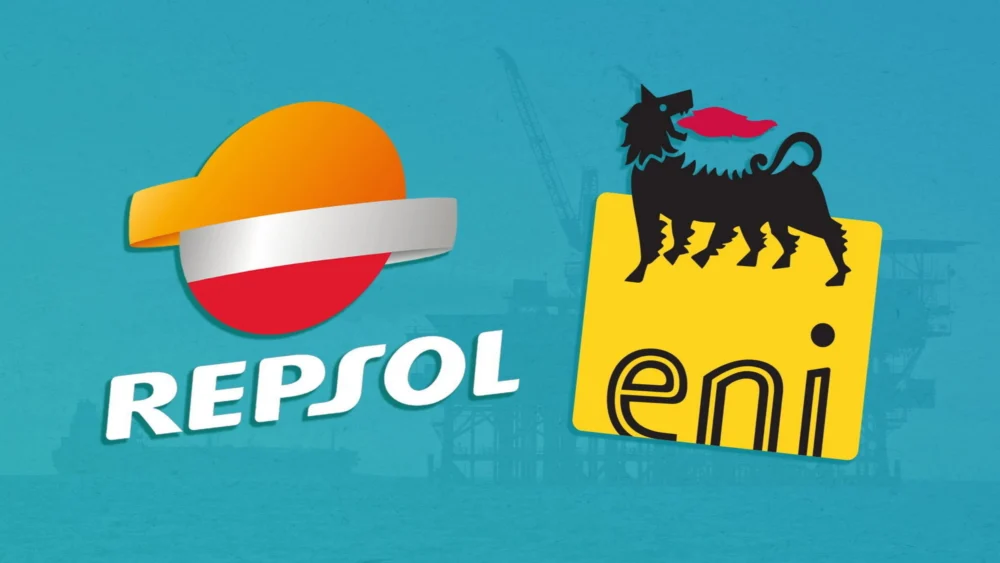
The protracted struggle for European energy majors Eni and Repsol to recover approximately $6 billion in outstanding payments from Venezuela has become a centerpiece of the complex intersection between global energy security and South American geopolitical instability. As the Italian and Spanish giants navigate the labyrinthine financial landscape of a nation crippled by sanctions and economic mismanagement, the stakes extend far beyond corporate balance sheets. This multi-billion dollar deficit represents one of the most significant outstanding commercial debts in the global oil and gas sector, highlighting the extreme risks inherent in operating within jurisdictions where the rule of law is often superseded by political expediency and international isolation.
At the heart of this financial quagmire is the Cardón IV project, a massive offshore gas venture located in the Gulf of Venezuela. Operated as a 50/50 joint venture between Eni and Repsol, the project manages the Perla field, one of the largest offshore gas discoveries in Latin America. While the field remains a crown jewel in Venezuela’s depleted energy portfolio, providing essential fuel for domestic power generation, the state-owned Petróleos de Venezuela (PDVSA) has consistently failed to meet its contractual payment obligations. The resulting $6 billion in receivables has accumulated over years of economic contraction, hyperinflation, and a tightening web of international sanctions that have effectively severed Venezuela from the global financial system.
The Perla Field: A Strategic Asset in a Fragile Economy
The Perla field was once hailed as a beacon of hope for Venezuela’s diversifying energy sector, moving away from a total reliance on heavy crude oil. Discovered in 2009, the field holds an estimated 17 trillion cubic feet of gas. For Eni and Repsol, the investment was predicated on the promise of long-term stability and a steady stream of revenue from supplying the Venezuelan domestic market. However, the collapse of the Venezuelan economy under the weight of the Maduro administration’s policies and subsequent U.S.-led sanctions transformed this strategic asset into a financial burden.
Currently, the gas produced at Cardón IV is critical for keeping the lights on in Caracas and other major urban centers. This creates a precarious "hostage" dynamic: while PDVSA cannot afford to pay for the gas in cash, Eni and Repsol cannot easily walk away from the project without forfeiting billions in infrastructure and future claims. Furthermore, any cessation of gas production would lead to a catastrophic failure of the Venezuelan power grid, likely triggering further social unrest and potentially leading to the expropriation of the companies’ assets by the state.
Sanctions, Licenses, and the "Oil-for-Debt" Workaround
The primary obstacle to debt recovery has been the stringent sanctions regime imposed by the United States Office of Foreign Assets Control (OFAC). These sanctions, designed to pressure the Maduro government toward democratic reforms, have historically prohibited PDVSA from making payments in U.S. dollars and restricted the export of Venezuelan hydrocarbons to Western markets. For years, this left Eni and Repsol with virtually no mechanism to recoup their investments.
In a significant shift, the geopolitical landscape flickered with a brief moment of pragmatism in late 2022 and throughout 2023. The U.S. government began granting specific licenses and "comfort letters" to European firms, allowing them to resume taking Venezuelan crude oil as payment for past-due debts and dividends. This "oil-for-debt" or "debt-for-cargo" mechanism allowed Eni and Repsol to lift cargoes of Venezuelan oil, sell them on the international market, and apply the proceeds toward their multi-billion dollar receivables.
However, this process is painstakingly slow. The volume of oil permitted for export is often limited by Venezuela’s crumbling infrastructure and the competing interests of other creditors, including China and Russia. Moreover, the quality of Venezuelan Merey crude often requires significant refining or is sold at a steep discount, further diluting the actual value recovered by the European majors. Industry analysts estimate that at current recovery rates, it could take over a decade for Eni and Repsol to clear the $6 billion backlog, assuming no further disruptions occur.
Political Uncertainty and the Revocation of General License 44
The recovery efforts faced a major setback in early 2024. Following the Venezuelan government’s failure to uphold the Barbados Agreement—a roadmap toward fair and free elections—the Biden administration chose not to renew General License 44. This license had broadly eased sanctions on Venezuela’s oil and gas sectors for a six-month window. Its expiration signaled a return to a more restrictive environment, though the U.S. has maintained a policy of reviewing individual license applications for specific companies.
For Eni and Repsol, the return to a "case-by-case" authorization model introduces a high degree of regulatory uncertainty. Every shipment of oil used to settle gas debts now requires rigorous compliance checks and potentially new approvals, complicating long-term planning. The political climate in Venezuela remains the ultimate wildcard; the disputed 2024 presidential election results have further isolated the Maduro regime, making it increasingly difficult for Western corporations to justify continued operations to their shareholders and ESG-conscious investors.
Global Energy Context and the European Shift
The persistence of Eni and Repsol in Venezuela must be viewed through the lens of Europe’s broader energy crisis. Since the Russian invasion of Ukraine, European nations have been desperate to diversify their energy sources away from Siberian gas. While Venezuela is currently a minor player in global gas exports, its potential as a long-term supplier of Liquefied Natural Gas (LNG) remains significant.
The European Union has expressed a strategic interest in stabilizing Venezuelan production to eventually integrate it into the global market. For Spain and Italy, maintaining a presence in Venezuela is not just about debt recovery; it is about maintaining a foothold in one of the world’s largest hydrocarbon reserves for a post-transition era. If the debt is ever cleared and sanctions are fully lifted, the infrastructure already in place at Cardón IV could be expanded to export gas to Europe, providing a crucial alternative to pipeline gas from the east.
Comparative Risks: Venezuela vs. The Global Frontier
The plight of Eni and Repsol stands in stark contrast to the burgeoning energy sectors in neighboring Guyana and Brazil. While ExxonMobil and its partners have turned Guyana into the world’s fastest-growing oil province under a stable, pro-market regulatory framework, Venezuela remains a cautionary tale of "resource nationalism" gone wrong.
Investors are increasingly weighing the "sovereign risk" of Venezuela against more stable jurisdictions. The $6 billion owed to the European firms is a figure that exceeds the total annual capital expenditure of many mid-sized energy companies. The fact that Eni and Repsol continue to negotiate rather than declare a total loss and exit via international arbitration—as ConocoPhillips and Exxon did years ago—suggests they still see a path to value, however narrow and treacherous it may be.
The Road Ahead: Financial Restructuring or Permanent Default?
The future of the $6 billion debt hinges on three factors: the stability of U.S. foreign policy, the operational capacity of PDVSA, and the political evolution of the Venezuelan state. There are ongoing discussions regarding the possibility of PDVSA granting Eni and Repsol more operational control over the gas fields, potentially allowing them to export gas directly to neighboring Trinidad and Tobago, where it could be liquefied and sold globally. This "operational swap" would bypass the inefficient domestic payment system and provide a more direct route to debt settlement.
However, such a move would require a level of trust and legal certainty that currently does not exist. PDVSA’s total debt is estimated to be over $150 billion, including defaulted bonds and arbitration awards. Eni and Repsol are essentially competing in a crowded room of creditors, many of whom have already secured court orders to seize Venezuelan assets abroad, such as the parent company of the U.S.-based refiner Citgo.
As the fiscal year progresses, both Eni and Repsol will likely face increased pressure from analysts to provide clarity on the impairment risks associated with their Venezuelan exposure. While they have successfully recovered hundreds of millions through oil swaps over the last eighteen months, the bulk of the $6 billion remains an intangible figure on a ledger, tied to the fate of a nation in deep crisis. The battle to recoup these funds is no longer just a corporate accounting exercise; it is a high-stakes diplomatic marathon that tests the limits of how much risk global energy giants are willing to endure in the pursuit of long-term strategic positioning.